
Omega-3 EPA and DHA,
does it really help with Clinically meaningful weight and body-fat reduction in adults with overweight or obesity?
research showsOmega-3 EPA and DHA supplements are rated D for producing clinically meaningful weight or body-fat loss in adults with overweight or obesity. A meta-analysis of 11 randomized trials and 617 participants pooled nine trials for body weight and found exactly 0.00 kg (95% CI −0.42 to 0.43), with no significant body-mass-index effect. A separate meta-analysis of 21 trials and 1,329 participants was also null for weight, SMD −0.07 (95% CI −0.21 to 0.07). Small signals for waist circumference or body fat appear in some analyses but are inconsistent and do not establish clinically meaningful weight loss. Safety is assessed separately.
ads claimMarketing expands animal mechanisms such as fatty-acid oxidation or brown-fat activation, triglyceride reduction, and small waist changes into actual weight and body-fat loss. Clinical weight-loss outcomes are not reproducible when capsules are simply added without effective diet and activity changes.
Useful facts when choosing a product
- The EPA and DHA content is not the same as total fish-oil weight, so the actual labeled amounts of EPA and DHA matter more than milligrams of fish oil per capsule.
- Products differ in EPA-to-DHA ratio, chemical form, oxidation control, and purity, so a research formulation cannot automatically represent every commercial product.
- Fishy taste, belching, gastrointestinal discomfort, and diarrhea can occur at commonly used doses.
- Higher doses warrant assessment of bleeding risk in people taking anticoagulants or antiplatelet drugs, and meta-analyses of large cardiovascular trials have reported a dose-related atrial-fibrillation signal; neither issue is evidence of weight-loss efficacy.
Chamgap Semantic Classification Code
Candidate index · review held
S.omega-3-epa-and-dha.UNK.clinically-meaningful-weight-and-body-fat-reduction-with-overweight-or-obesity.reduce.placeboSupplements and nutraceuticals > Omega-3 EPA and DHA > Unknown > Clinically meaningful weight and body-fat reduction with overweight or obesity > Reduction claim > Placebo
An automated migration candidate, not an issued permanent code; exact claim scope remains under review. This machine-generated migration candidate helps retrieval but is not a permanent assignment. The original verdict ID and URL remain authoritative.
What the research actually shows
Zhang 2017 searched PubMed, Embase, and CENTRAL through May 2015 and included 11 randomized trials with 617 participants. The weight WMD across nine trials was 0.00 kg (95% CI −0.42 to 0.43), and body mass index did not differ, although waist circumference across seven trials was −0.53 cm (95% CI −0.90 to −0.16). Du 2015 included 21 studies, 30 comparisons, and 1,652 participants overall; it found no reduction in the 21 weight comparisons with 1,329 participants or the 27 BMI comparisons with 1,514 participants, with small changes in abdominal measures only in selected analyses involving lifestyle modification. Delpino 2021 found that 11 of 20 human experiments were null and nine reported some benefit, concluding that weight and body-fat effects were inconsistent. This verdict is separate from omega-3 claims involving triglycerides, cardiovascular outcomes, cognition, or prevention of type 2 diabetes.
Why this is classified as D (30)
Nine randomized trials found a weight WMD of 0.00 kg (95% CI −0.42 to 0.43), and a separate synthesis was also null for weight in its weight-analysis sample of 1,329 participants and for body mass index in its BMI-analysis sample of 1,514 participants. Small positive body-fat or abdominal measures are conflicting and of limited clinical importance, so the central null evidence supports D with 30 points. Bleeding precautions and atrial-fibrillation signals are recorded under safety rather than used as efficacy points.
Counterpoint. Using omega-3 for fish replacement or triglyceride management is a separate question from weight loss. Proven dietary, activity, and behavioral interventions remain central for reducing weight and body fat; adding fish-oil capsules does not ensure clinically meaningful loss.
Rejudgment record. New verdict — Applied D based on the exact 0.00-kg weight difference across nine randomized trials and null weight and body-mass-index results in a 21-trial meta-analysis; small conflicting waist and body-fat surrogates do not establish clinically meaningful weight or fat loss
Sub-claim grades by effect
This ingredient is marketed for several effects. A single overall grade blends strong and weak claims together, so each effect is graded separately here. The overall grade reflects the strongest disconfirming or core claim.
| Effect (sub-claim) | Grade | Basis |
|---|---|---|
| Clinically meaningful weight reduction | D | Nine randomized trials found WMD 0.00 kg (95% CI −0.42 to 0.43), and a larger meta-analysis was also null. |
| Clinically meaningful body-fat reduction | D | Human body-fat results are conflicting, and small positive estimates do not constitute a reproducible clinical effect. |
| Added weight-loss benefit beyond lifestyle intervention | D | Lifestyle-combination subgroups did not show consistent weight loss, with only small changes in selected abdominal measures. |
Cross-check — AI research and Codex final gate
Evidence Table
| Study | Design | Sample | Funding | Endpoint | Result | Weight |
|---|---|---|---|---|---|---|
| Zhang YY et al. 2017 | Meta-analysis of randomized clinical trials | Eleven randomized trials and 617 participants; nine trials in the weight analysis | Funding was not reported in the PubMed abstract | Body weight, body mass index, waist circumference, and serum lipids | Weight was null at WMD 0.00 kg (95% CI −0.42 to 0.43; p=0.99), body mass index was null, and waist circumference was −0.53 cm (95% CI −0.90 to −0.16). | Key direct meta-analysis |
| Du S et al. 2015 | Systematic review and meta-analysis of randomized placebo-controlled trials | Twenty-one trials, 30 study arms, and 1,329 participants in the weight analysis | Funding was not reported in the PubMed abstract; authors reported no conflicts of interest | Body weight, body mass index, waist circumference, and waist-to-hip ratio | There was no significant reduction in weight, SMD −0.07 (95% CI −0.21 to 0.07), or body mass index, SMD −0.09 (95% CI −0.22 to 0.03). | Larger independent null synthesis |
| Delpino FM et al. 2021 | Systematic review of human experimental studies | Twenty studies | Funding was not reported in the PubMed abstract | Weight loss and change in body-fat mass | Eleven studies found no effect and nine reported some benefit, leaving weight and body-fat effects inconsistent. | Assessment of inconsistency in body-fat outcomes |
Receipt — 5 References
All 5 cited sources were verified for existence at the original page (as of 2026-07-21).
Final verification and publication gate: Codex · Evidence date: 2026-07-21 · Corrections: none
Cite this verdict
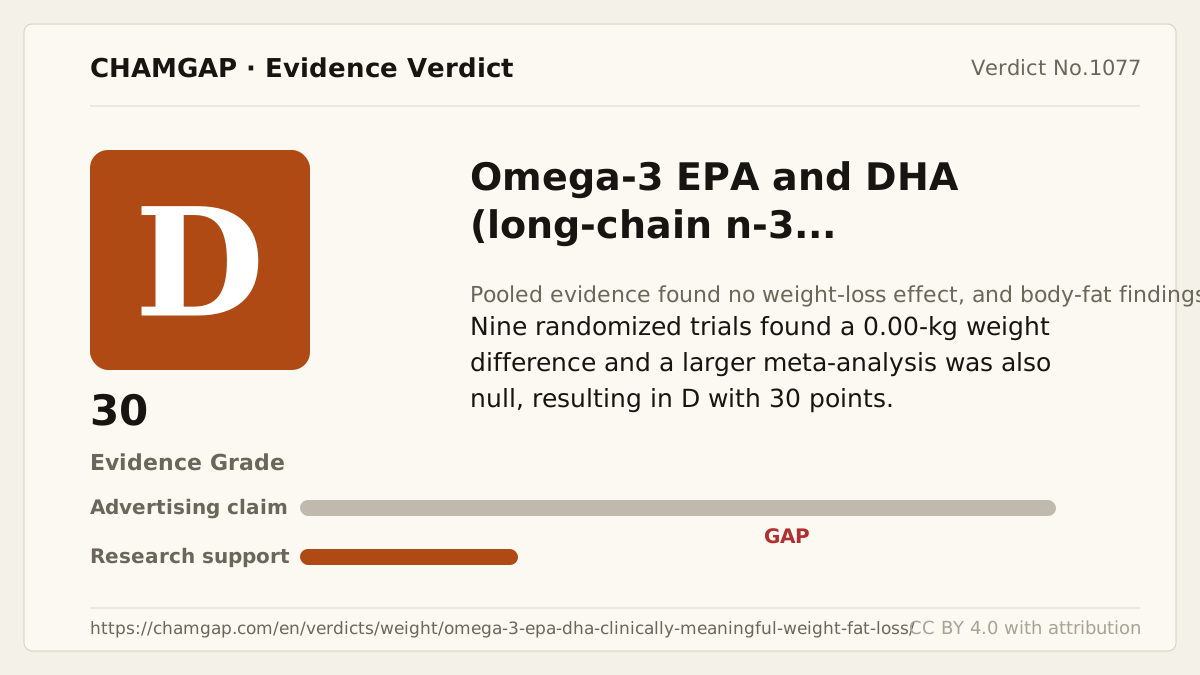
[Chamgap] Omega-3 EPA and DHA x clinically meaningful weight and body-fat reduction — Evidence Grade D·30. 5 cited sources checked. Source: https://chamgap.com/en/verdicts/weight/omega-3-epa-dha-clinically-meaningful-weight-fat-loss/ · CC BY 4.0CC BY 4.0 — free to use with attribution; do not distort grades, numbers, or verdict meaning.
What this document does and does not do
Chamgap is an information source. It reports what research has and has not confirmed; it does not tell readers what to take or buy. That decision belongs to readers and, when needed, medical or legal professionals. This verdict reflects literature available up to the search date and may change as new research appears. Nothing here is medical advice.