
Liraglutide 3.0 mg,
does it really help with Delay or prevention of type 2 diabetes onset in adults with obesity and prediabetes?
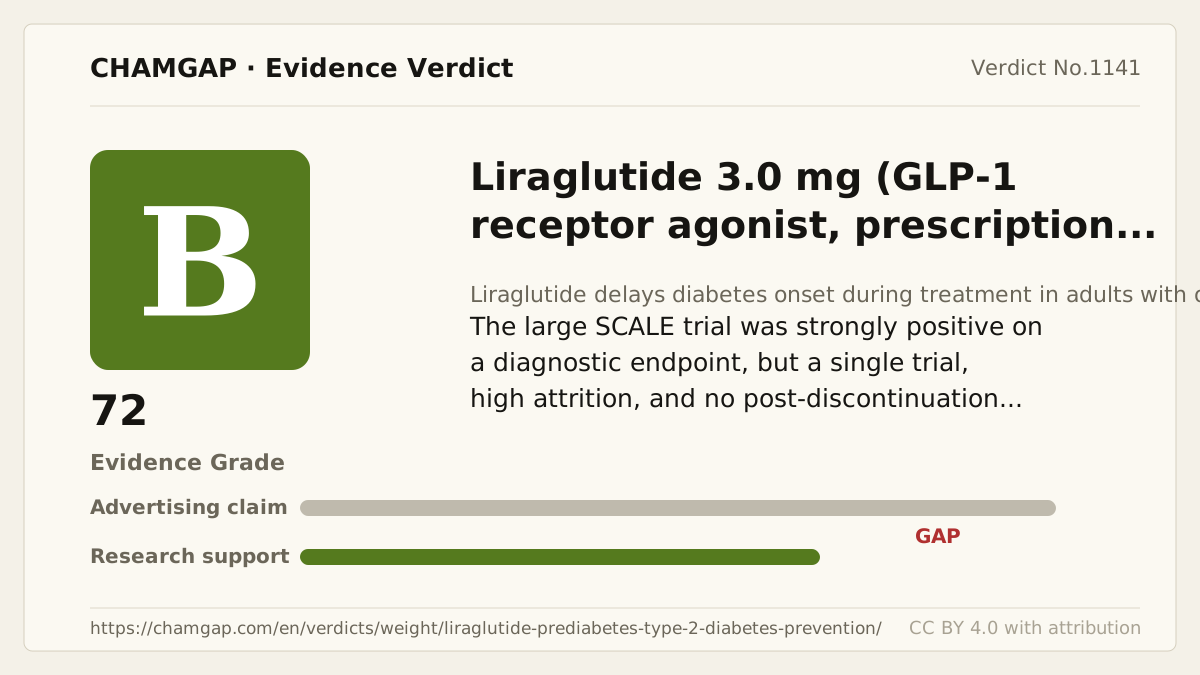
research showsLiraglutide 3.0 mg is rated B because a large randomized trial showed delayed diagnosis of type 2 diabetes while adults with obesity and prediabetes remained on treatment. In the 160-week SCALE trial, diabetes was diagnosed in 2% of liraglutide participants and 6% of placebo participants, with a hazard ratio of 0.21 (95% CI 0.13 to 0.34). The evidence is nevertheless concentrated in one manufacturer-funded trial, only half of participants completed 160 weeks, and people who discontinued were not followed, so persistence after stopping is unknown. Weight loss and improved glycemia are important mediators; weight-loss efficacy is therefore distinguished from diabetes-prevention efficacy, and adverse effects are assessed separately under safety.
ads claimMarketing can expand fewer diabetes diagnoses during treatment into claims that the drug permanently prevents diabetes or reverses prediabetes. The evidence specifically applies to a 160-week period of continued liraglutide use with lifestyle intervention in adults with obesity and prediabetes.
Useful facts when choosing a product
- Liraglutide 3.0 mg is a prescription GLP-1 receptor agonist injected subcutaneously once daily and marketed as Saxenda for chronic weight management.
- The SCALE prevention result applies to adults with obesity, or overweight with comorbidity, who also received reduced-calorie diet and physical-activity counseling; it should not be generalized to every person with prediabetes at normal weight.
- Nausea, vomiting, and diarrhea are common, while gallbladder disease, dehydration, and uncommon pancreatitis require attention.
- The label carries a thyroid C-cell tumor warning and contraindicates use with a personal or family history of medullary thyroid carcinoma or multiple endocrine neoplasia type 2. The product label and prescriber's monitoring take priority.
Chamgap Semantic Classification Code
Candidate index · review held
M.liraglutide.UNK.delay-or-prevention-of-type-2-diabetes-onset-with-obesity-and-prediabetes.prevent.placeboMedicinal interventions > Liraglutide > Unknown > Delay or prevention of type 2 diabetes onset with obesity and prediabetes > Occurrence-prevention claim > Placebo
An automated migration candidate, not an issued permanent code; exact claim scope remains under review. This machine-generated migration candidate helps retrieval but is not a permanent assignment. The original verdict ID and URL remain authoritative.
What the research actually shows
The 2017 Lancet report by le Roux and the SCALE study group randomized 2,254 adults with prediabetes and obesity or overweight in a 2:1 ratio at 191 sites in 27 countries. By 160 weeks, diabetes was diagnosed in 26 of 1,472 liraglutide participants and 46 of 738 placebo participants, with a time-to-event hazard ratio of 0.21. The 56-week report from the same program confirmed weight and metabolic improvement in 3,731 participants, providing the weight-mediated context for the prevention signal. Only 1,128 participants completed 160 weeks, and those who discontinued were not followed; direct evidence for persistence after stopping is absent.
Why this is classified as B (72)
The large randomized trial's direct clinical endpoint, a hazard ratio of 0.21 for type 2 diabetes diagnosis during treatment, is persuasive. Evidence is concentrated in one manufacturer-funded trial, the 160-week completion rate was 50%, and post-discontinuation follow-up was absent, so durable prevention is unproven. These limitations yield B with 72 points. Weight-loss mediation and gastrointestinal, gallbladder, pancreatic, and thyroid-related risks remain separate efficacy-context and safety issues.
Counterpoint. For adults with obesity and prediabetes whose risk remains high despite lifestyle measures, liraglutide can be a practical option to manage weight and delay diabetes. Continued treatment, cost, and adverse effects require individualized prescribing decisions.
Rejudgment record. New verdict — Accepted the direct clinical diagnostic endpoint in the 2,254-participant 160-week SCALE trial, hazard ratio 0.21, while accounting for concentration in one manufacturer-funded trial, 50% completion, lack of follow-up after discontinuation, weight-loss mediation, and uncertain durability
Sub-claim grades by effect
This ingredient is marketed for several effects. A single overall grade blends strong and weak claims together, so each effect is graded separately here. The overall grade reflects the strongest disconfirming or core claim.
| Effect (sub-claim) | Grade | Basis |
|---|---|---|
| Delayed type 2 diabetes onset during treatment in adults with obesity and prediabetes | B | The direct clinical endpoint was 2% versus 6% diabetes diagnosis through 160 weeks, HR 0.21, but evidence comes from one trial with high attrition. |
| Reduced diabetes risk accompanied by weight loss | B | Greater weight loss accompanied the 160-week risk reduction and is an important mediator, but direct and weight-mediated effects were not separated. |
| Persistence of diabetes prevention after liraglutide discontinuation | ? | Participants who discontinued were not followed, leaving no human efficacy evidence that suppression of diabetes onset persists after stopping. |
Cross-check — AI research and Codex final gate
Evidence Table
| Study | Design | Sample | Funding | Endpoint | Result | Weight |
|---|---|---|---|---|---|---|
| le Roux CW et al. and SCALE Obesity Prediabetes NN8022-1839 Study Group. 2017 | Multinational randomized double-blind placebo-controlled trial | 2,254 adults with prediabetes and obesity or overweight | Novo Nordisk | Time to diagnosis of type 2 diabetes through 160 weeks | Diagnosis during treatment was 2% versus 6%, HR 0.21 (95% CI 0.13 to 0.34); completion was 50%, and discontinuers were not followed. | Pivotal randomized trial with a direct clinical endpoint |
| Pi-Sunyer X et al. and SCALE Obesity and Prediabetes NN8022-1839 Study Group. 2015 | 56-week randomized double-blind placebo-controlled trial | 3,731 adults with obesity or overweight without type 2 diabetes | Novo Nordisk | Weight change and proportions losing at least 5% or more than 10% | Weight loss at 56 weeks was 8.4 kg versus 2.8 kg, providing the weight-mediated context for metabolic improvement. | Context for mediation of the prevention effect |
Receipt — 2 References
All 2 cited sources were verified for existence at the original page (as of 2026-07-22).
Final verification and publication gate: Codex · Evidence date: 2026-07-22 · Corrections: none
Cite this verdict
[Chamgap] Liraglutide 3.0 mg x delayed type 2 diabetes onset in adults with obesity and prediabetes — Evidence Grade B·72. 2 cited sources checked. Source: https://chamgap.com/en/verdicts/weight/liraglutide-prediabetes-type-2-diabetes-prevention/ · CC BY 4.0CC BY 4.0 — free to use with attribution; do not distort grades, numbers, or verdict meaning.
What this document does and does not do
Chamgap is an information source. It reports what research has and has not confirmed; it does not tell readers what to take or buy. That decision belongs to readers and, when needed, medical or legal professionals. This verdict reflects literature available up to the search date and may change as new research appears. Nothing here is medical advice.