
Liquid sodium copper chlorophyllin,
does it really help with Appetite suppression and reductions in weight and body fat without dietary or exercise changes?
research showsLiquid sodium copper chlorophyllin is rated ? because no human efficacy literature was identified that tested appetite, weight, or body-fat reduction without dietary or exercise changes. The frequently cited study in 38 women did not use liquid sodium copper chlorophyllin; it used 5 g of spinach-derived green-plant thylakoid membranes, and all participants were instructed to eat three meals without snacks and increase physical activity. That trial found a weight difference, but body-fat reduction did not differ between groups. Neither a 2014 systematic review of chlorophyll and chlorophyllin nor a 2026 phase 1 human study of sodium copper chlorophyllin evaluated weight or appetite efficacy. Results for a different green pigment or plant membrane cannot be transferred to the chemically distinct liquid derivative.
ads claimSocial media combines spinach thylakoids, natural chlorophyll, and chlorophyllin under the label liquid chlorophyll and claims that the green pigment itself suppresses appetite. The chemical forms and membrane structure differ, and no lifestyle-unchanged weight trial of liquid sodium copper chlorophyllin exists.
Useful facts when choosing a product
- Many products marketed as liquid chlorophyll contain water-soluble sodium copper chlorophyllin rather than natural chlorophyll. The actual ingredient and amount per serving should be checked on the label.
- Spinach thylakoid membranes, chlorophyll-rich vegetables, natural chlorophyll, and sodium copper chlorophyllin are not interchangeable test substances.
- Oral chlorophyllin is generally tolerated but can cause loose stools, abdominal discomfort, green urine or feces, yellow or black tongue discoloration, and rare photosensitivity.
- Chlorophyllin concentration, copper and sodium content, and added ingredients vary among products, so the safety or composition of one product cannot be assumed for another. Pregnancy and lactation safety data are also inadequate.
Chamgap Semantic Classification Code
Candidate index · review held
S.liquid-sodium-copper-chlorophyllin.UNK.appetite-suppression-and-reductions-in-weight-and-body-fat-without-dietary-or-exercise-changes.reduce.placeboSupplements and nutraceuticals > Liquid sodium copper chlorophyllin > Unknown > Appetite suppression and reductions in weight and body fat without dietary or exercise changes > Reduction claim > Placebo
An automated migration candidate, not an issued permanent code; exact claim scope remains under review. This machine-generated migration candidate helps retrieval but is not a permanent assignment. The original verdict ID and URL remain authoritative.
What the research actually shows
Ulbricht and colleagues systematically reviewed efficacy and safety literature on chlorophyll and chlorophyllin without presenting a direct human weight-management trial. Patwardhan and colleagues in 2026 administered sodium copper chlorophyllin at doses from 500 to 3,000 mg to healthy men and assessed safety, pharmacokinetics, and immunomodulation; it was generally tolerated up to 3,000 mg, but appetite, weight, and body fat were not assessed. Montelius and colleagues randomized 38 women with overweight to 5 g of green-plant membranes or placebo for 12 weeks. Everyone was told to eat three meals without snacks and increase activity. Weight fell by 5.0 versus 3.5 kg, while reductions in body fat and waist circumference did not differ between groups. The tested material was spinach thylakoid membrane, not liquid chlorophyllin.
Why this is classified as ?
A systematic review and the latest phase 1 human study were checked, but no human efficacy trial evaluated appetite, weight, or body fat with the claimed ingredient and liquid formulation. The positive study often cited used a nonidentical spinach-thylakoid complex and also changed diet and activity. Absence of claim-matched human efficacy literature requires ? with a null score, while mild adverse effects and product variability remain separate safety issues.
Counterpoint. Weight management should prioritize intake, meal structure, physical activity, sleep, and medication or disease contributors rather than testimonials or liquid color. Anyone using chlorophyllin should not assume proven weight effects and should review adverse effects and total copper and sodium exposure.
Rejudgment record. New verdict — Applied ? for absence of claim-matched human efficacy literature because neither the systematic review nor the latest sodium copper chlorophyllin phase 1 study included appetite, weight, or body-fat outcomes, while the known positive study used nonidentical spinach thylakoid membranes alongside dietary and activity changes
Sub-claim grades by effect
This ingredient is marketed for several effects. A single overall grade blends strong and weak claims together, so each effect is graded separately here. The overall grade reflects the strongest disconfirming or core claim.
| Effect (sub-claim) | Grade | Basis |
|---|---|---|
| Appetite suppression without dietary or exercise changes | ? | No controlled human efficacy trial of liquid sodium copper chlorophyllin for appetite was identified. |
| Weight loss without dietary or exercise changes | ? | The known positive trial used a nonidentical spinach-thylakoid product with concurrent meal and activity changes. |
| Body-fat loss without dietary or exercise changes | ? | No direct chlorophyllin human trial exists, and body-fat reduction in the thylakoid trial did not differ from placebo. |
Cross-check — AI research and Codex final gate
Evidence Table
| Study | Design | Sample | Funding | Endpoint | Result | Weight |
|---|---|---|---|---|---|---|
| Ulbricht C et al. 2014 | Evidence-based systematic review | Clinical and preclinical chlorophyll and chlorophyllin literature; zero claim-matched human weight-management trials | Natural Standard Research Collaboration | Efficacy, safety, and interactions across multiple indications | No human efficacy trial of liquid sodium copper chlorophyllin for appetite, weight, or body fat was presented. | Claim-specific human-literature gap assessment |
| Patwardhan RS et al. 2026 | High-dose phase 1 human study in healthy men with parallel preclinical work | Small sample of healthy men; exact human sample size not stated in the public abstract | Supported by the Indian Departments of Atomic Energy and Biotechnology and IDRS Labs | Safety, tolerability, pharmacokinetics, and immune proteomics; appetite, weight, and body fat not assessed | Doses up to 3,000 mg were generally tolerated, but the study provided no weight-management efficacy data. | Direct human exposure with nonapplicable efficacy outcomes |
| Montelius C et al. 2014 | Twelve-week randomized placebo-controlled trial | Thirty-eight women with overweight | Supported by FORMAS, the Swedish Research Council, and others; the corresponding author disclosed advisory work for Greenleaf Medical and ownership and board interests in Thylabisco | Body weight, body fat and waist circumference, food urges, and GLP-1 | The spinach-thylakoid group lost 5.0 versus 3.5 kg, but body-fat and waist changes did not differ and all participants received meal and activity instructions. | Nonidentical ingredient with concomitant lifestyle change; not directly attributable |
Receipt — 3 References
All 3 cited sources were verified for existence at the original page (as of 2026-07-21).
Final verification and publication gate: Codex · Evidence date: 2026-07-21 · Corrections: none
Cite this verdict
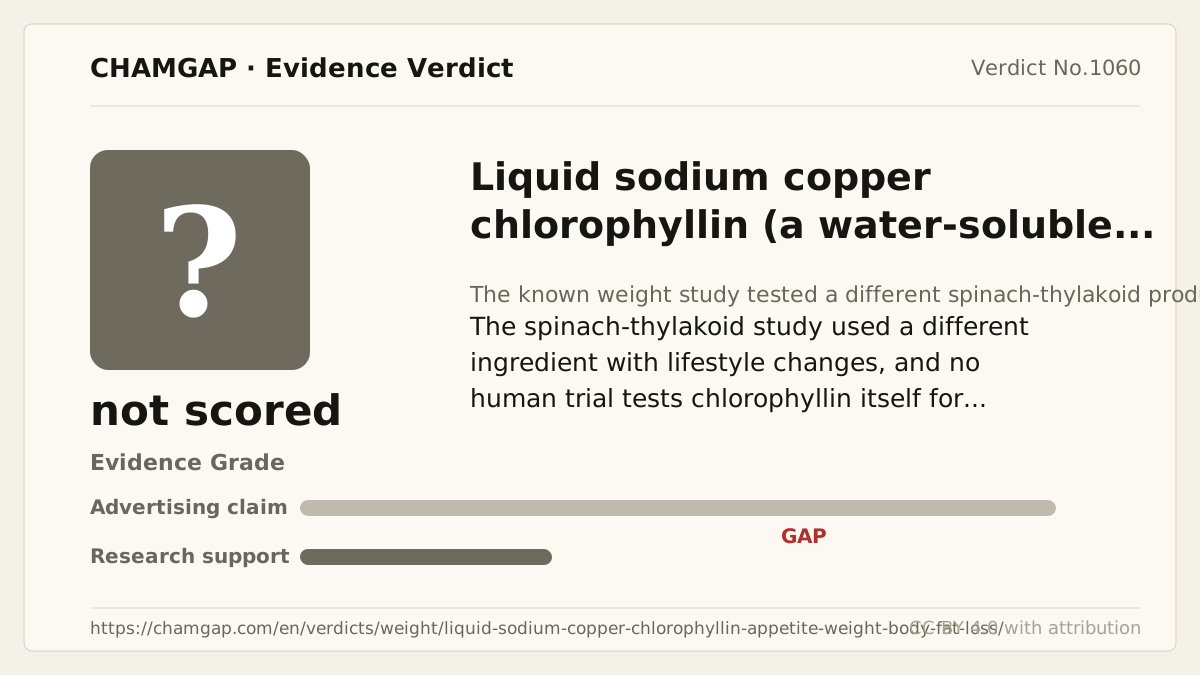
[Chamgap] Liquid sodium copper chlorophyllin x appetite suppression and weight and body-fat loss without lifestyle changes — Evidence Grade ?. 3 cited sources checked. Source: https://chamgap.com/en/verdicts/weight/liquid-sodium-copper-chlorophyllin-appetite-weight-body-fat-loss/ · CC BY 4.0CC BY 4.0 — free to use with attribution; do not distort grades, numbers, or verdict meaning.
What this document does and does not do
Chamgap is an information source. It reports what research has and has not confirmed; it does not tell readers what to take or buy. That decision belongs to readers and, when needed, medical or legal professionals. This verdict reflects literature available up to the search date and may change as new research appears. Nothing here is medical advice.