
Weight-loss diet containing beef,
does it really help with Added weight loss over an otherwise similar high-protein diet without red meat?
research showsThe grade is D with 30 points. Beef WISE randomized 120 adults and 99 completed 16 weeks. Weight fell 7.8% with beef and 7.7% without beef, a between-group difference of 0.06 percentage points (90% CI -1.7 to 1.8). The interval was within the prespecified equivalence range of -2.5 to 2.5 points. This shows that comparable weight loss was possible with beef, not that beef caused extra loss.
ads claimLean beef is a protein food, but it did not outperform a calorie- and protein-matched non-beef diet for weight loss. Verdict 2035 is D with 28 points for replacing red meat with mushrooms; this trial asks the separate question of beef inclusion within the same high-protein program.
Useful facts when choosing a product
- The beef prescription was at least four weekly servings, and reported intake ranged from about 4.65 to 5.75 servings weekly across phases.
- Both groups followed the same high-protein weight-loss program and a progressive exercise goal reaching 70 minutes daily.
- Participants selected cuts and preparation, so grilling, frying, smoking, and doneness were not standardized.
- Saturated fat varies by cut, ground-beef fat percentage, and preparation and must be checked from the actual product.
Chamgap Semantic Classification Code
Candidate index · review held
D.high-protein-weight-loss-diet-containing-lean-beef-at-least-four-times.dietary.added-weight-loss-over-an-otherwise-similar-high-protein-diet-without-red-meat.assess.UNKDietary patterns and eating practices > high-protein weight-loss diet containing lean beef at least four times > Dietary regimen > Added weight loss over an otherwise similar high-protein diet without red meat > Association or change assessment > Unknown
An automated migration candidate, not an issued permanent code; exact claim scope remains under review. This machine-generated migration candidate helps retrieval but is not a permanent assignment. The original verdict ID and URL remain authoritative.
What the research actually shows
Ninety-nine of 120 participants, 82.5%, completed the program; seven withdrew from beef and 14 from non-beef. The study was designed for equivalence and used baseline observation carried forward for missing outcomes. NCT02627105 listed 16-week weight change but was posted after the study began. Funding combined the Beef Checkoff/National Cattlemen's Beef Association with NIH programs; Hill and Wyatt disclosed conflicts including book royalties.
Why this is classified as D (30)
The registered between-group effect was near zero and its 90% interval stayed within the prespecified equivalence range. Small sample size, 17.5% attrition, an equivalence design, and mixed industry-public funding support D with 30 points.
Counterpoint. D does not mean weight loss is impossible while eating beef. The precise conclusion is that comparable loss occurred with or without beef when the overall program was matched.
Rejudgment record. Cross-check applied — Checked the original 90% between-group interval against the prespecified equivalence margin, separated equivalence from superiority, and incorporated funding, attrition, and registration timing
| Endpoint | P | Symptom or function itself is the target - including patient reports and performance tests |
| Replication | R1 | Single confirmatory trial |
| Independence | I1 | Mixed funding sources |
| Effect size | E0 | Null |
| Precision | C1 | The confidence interval excludes meaningful benefit |
Stored derived and displayed grades match; this is not a current recalculation or validity check (D).
Sub-claim grades by effect
This ingredient is marketed for several effects. A single overall grade blends strong and weak claims together, so each effect is graded separately here. The overall grade reflects the strongest disconfirming or core claim.
| Effect (sub-claim) | Grade | Basis |
|---|---|---|
| Added weight loss over a non-beef high-protein diet | D | The difference was 0.06 percentage points and remained within the equivalence range. |
| Ability to lose weight while including beef | C | Both groups lost about 8% within the full weight-loss program. |
Cross-check — AI research and Codex final gate
Evidence Table
| Study | Design | Sample | Funding | Endpoint | Result | Weight |
|---|---|---|---|---|---|---|
| Sayer et al. 2017 Beef WISE | Sixteen-week randomized equivalence weight-loss trial | 120 randomized and 99 completed; baseline observation carried forward for missing outcomes | Mixed funding from the Beef Checkoff/NCBA and NIH programs | Percent weight change at 16 weeks | 7.8+/-5.9% versus 7.7+/-5.5%; difference 0.06 points, 90% CI -1.7 to 1.8, within the +/-2.5-point equivalence margin | Direct null evidence for added weight-loss superiority |
Receipt — 2 References
All 2 cited sources were verified for existence at the original page (as of 2026-08-03).
Final verification and publication gate: Codex · Evidence date: 2026-08-03 · Corrections: none
Cite this verdict
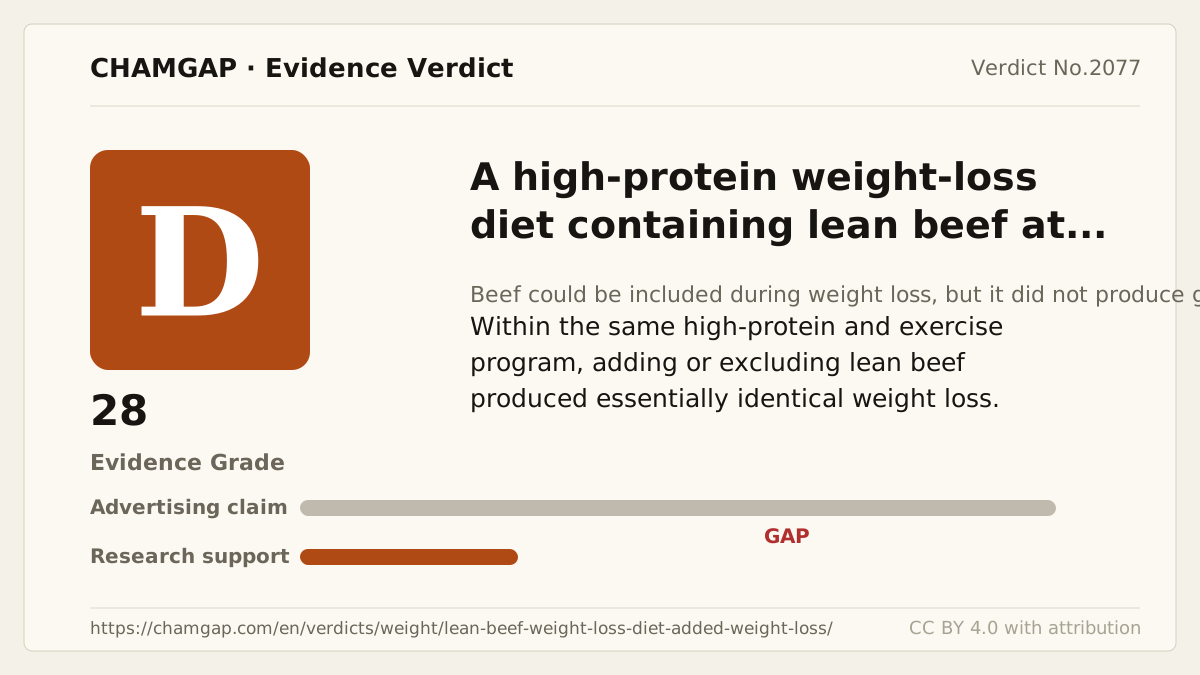
[Chamgap] Weight-loss diet containing beef x added weight loss — Evidence Grade D·30. 2 cited sources checked. Source: https://chamgap.com/en/verdicts/weight/lean-beef-weight-loss-diet-added-weight-loss/ · CC BY 4.0CC BY 4.0 — free to use with attribution; do not distort grades, numbers, or verdict meaning.
What this document does and does not do
Chamgap is an information source. It reports what research has and has not confirmed; it does not tell readers what to take or buy. That decision belongs to readers and, when needed, medical or legal professionals. This verdict reflects literature available up to the search date and may change as new research appears. Nothing here is medical advice.