
Laparoscopic sleeve gastrectomy,
does it really help with Long-term medication-free remission of type 2 diabetes associated with obesity?
research showsLaparoscopic sleeve gastrectomy is rated B because it can produce long-term medication-free remission in some patients with obesity and type 2 diabetes. At five years in STAMPEDE, 23% of 47 sleeve patients achieved glycated hemoglobin of 6.0% or less with or without medication, medication-free glycemic targets were superior to intensive medical therapy, and 25% were taking no diabetes medicine. The sleeve group was a small, separate surgical arm within a 150-patient three-group trial, and surgery carries harm and relapse risk, supporting B with 69 points.
ads claimRemoving most of the stomach can be portrayed as permanently eliminating diabetes. Remission depends on diabetes duration, insulin use, pancreatic reserve, and weight trajectory, and lifelong follow-up remains necessary.
Useful facts when choosing a product
- Laparoscopic sleeve gastrectomy irreversibly removes the greater-curvature portion of the stomach to create a narrow gastric tube without bypassing the intestine.
- A multidisciplinary metabolic-surgery team evaluates eligibility using body mass index, glycemic control, comorbidities, prior therapy, and operative risk.
- Early risks include bleeding, staple-line leak, venous thromboembolism, and infection; long-term risks include worsened gastroesophageal reflux, stenosis, nutritional deficiency, weight regain, and revisional surgery.
- Long-term protein, vitamin, and mineral supplementation, glycemic and nutritional monitoring, and lifestyle management remain necessary.
Chamgap Semantic Classification Code
Candidate index · review held
P.laparoscopic-sleeve-gastrectomy.procedural.long-term-medication-free-remission-of-type-2-diabetes-associated-with-obesity.treat.activeProcedures, devices and tests > Laparoscopic sleeve gastrectomy > Procedural > Long-term medication-free remission of type 2 diabetes associated with obesity > Treatment or remission claim > Active comparator
An automated migration candidate, not an issued permanent code; exact claim scope remains under review. This machine-generated migration candidate helps retrieval but is not a permanent assignment. The original verdict ID and URL remain authoritative.
What the research actually shows
STAMPEDE by Schauer and colleagues randomized 150 patients with type 2 diabetes and a body mass index of 27 to 43 to intensive medical therapy, gastric bypass, or sleeve gastrectomy. Among five-year completers, glycated hemoglobin of 6.0% or less occurred in 5%, 29%, and 23%, respectively, while weight changed by -19% after sleeve surgery versus -5% with medical therapy. Exploratory medication-free glycated hemoglobin targets of 6.0% or less and 6.5% or less also favored each surgical group. In the 240-patient SLEEVEPASS trial, sleeve gastrectomy produced 49% excess-weight loss and 37% complete or partial diabetes remission at five years, although prespecified equivalence to bypass for weight loss was not met.
Why this is classified as B (69)
Direct five-year glycemic and medication endpoints in STAMPEDE and durable weight and remission data from independent randomized trials are credited. The small separate sleeve arm within a 150-patient trial, unblinded procedure, surgical harms, and relapse support B with 69 points.
Counterpoint. In properly selected patients the procedure can substantially reduce weight and medication burden for years. Severe reflux or a need for a stronger metabolic effect makes comparison with other surgery and medical therapy important.
Rejudgment record. Cross-check applied — The separate randomized sleeve-gastrectomy arm in STAMPEDE improved five-year medication-free glycemic targets and weight versus medical therapy, with other trials supporting durability, but the small arm, unblinded procedure, operative harm, and relapse limit the verdict to B. At cross-check the score was lowered to 69 because the STAMPEDE sleeve arm included about 47 participants and the SLEEVEPASS diabetes subgroup was also small (grade B retained).
Sub-claim grades by effect
This ingredient is marketed for several effects. A single overall grade blends strong and weak claims together, so each effect is graded separately here. The overall grade reflects the strongest disconfirming or core claim.
| Effect (sub-claim) | Grade | Basis |
|---|---|---|
| Medication-free type 2 diabetes remission at five years | B | The separate STAMPEDE sleeve arm outperformed intensive medical therapy. |
| Achievement of five-year glycemic targets with reduced diabetes medication | B | Glycated hemoglobin of 6.0% or less and reduced medication use persisted. |
| Maintenance of long-term weight loss | B | Five-year weight loss was demonstrated in STAMPEDE and SLEEVEPASS. |
Cross-check — AI research and Codex final gate
Evidence Table
| Study | Design | Sample | Funding | Endpoint | Result | Weight |
|---|---|---|---|---|---|---|
| Schauer PR et al. STAMPEDE five-year trial, 2017 | Single-center open-label three-group randomized active-control trial with five-year follow-up | 150 randomized, 134 assessed at five years, and 47 sleeve completers | Public, academic, and industry support reported | Five-year glycated hemoglobin targets, medication-free remission, weight, and medication use | Sleeve gastrectomy outperformed intensive medical therapy for glycemic targets, medication reduction, and weight loss. | Key direct but small procedure arm |
| Salminen P et al. SLEEVEPASS five-year trial, 2018 | Multicenter open-label randomized procedure-comparison trial | 240 participants; 121 sleeve and 119 bypass | Academic and public research; an author reported industry lecture fees | Five-year excess-weight loss and comorbidity remission | Sleeve gastrectomy produced 49% excess-weight loss and 37% complete or partial diabetes remission. | Randomized support for durability |
Receipt — 2 References
All 2 cited sources were verified for existence at the original page (as of 2026-07-23).
Final verification and publication gate: Codex · Evidence date: 2026-07-23 · Corrections: none
Cite this verdict
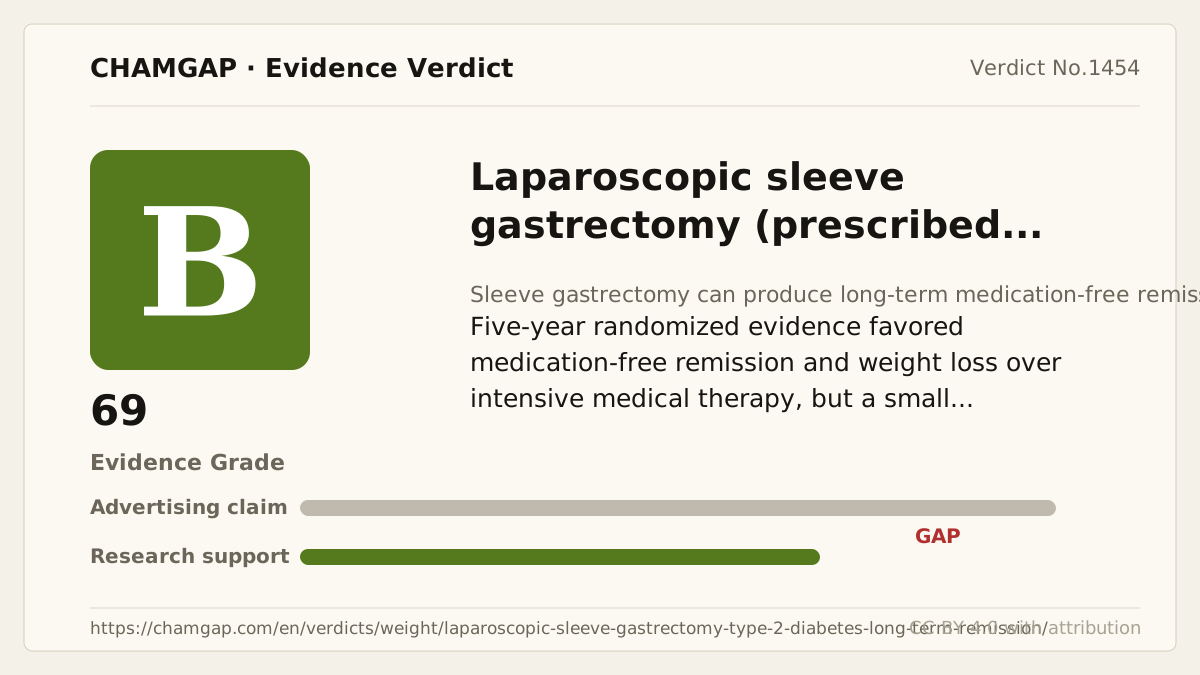
[Chamgap] Laparoscopic sleeve gastrectomy x long-term medication-free remission of type 2 diabetes associated with obesity — Evidence Grade B·69. 2 cited sources checked. Source: https://chamgap.com/en/verdicts/weight/laparoscopic-sleeve-gastrectomy-type-2-diabetes-long-term-remission/ · CC BY 4.0CC BY 4.0 — free to use with attribution; do not distort grades, numbers, or verdict meaning.
What this document does and does not do
Chamgap is an information source. It reports what research has and has not confirmed; it does not tell readers what to take or buy. That decision belongs to readers and, when needed, medical or legal professionals. This verdict reflects literature available up to the search date and may change as new research appears. Nothing here is medical advice.