
Hoodia gordonii,
does it really help with Appetite suppression and weight loss?
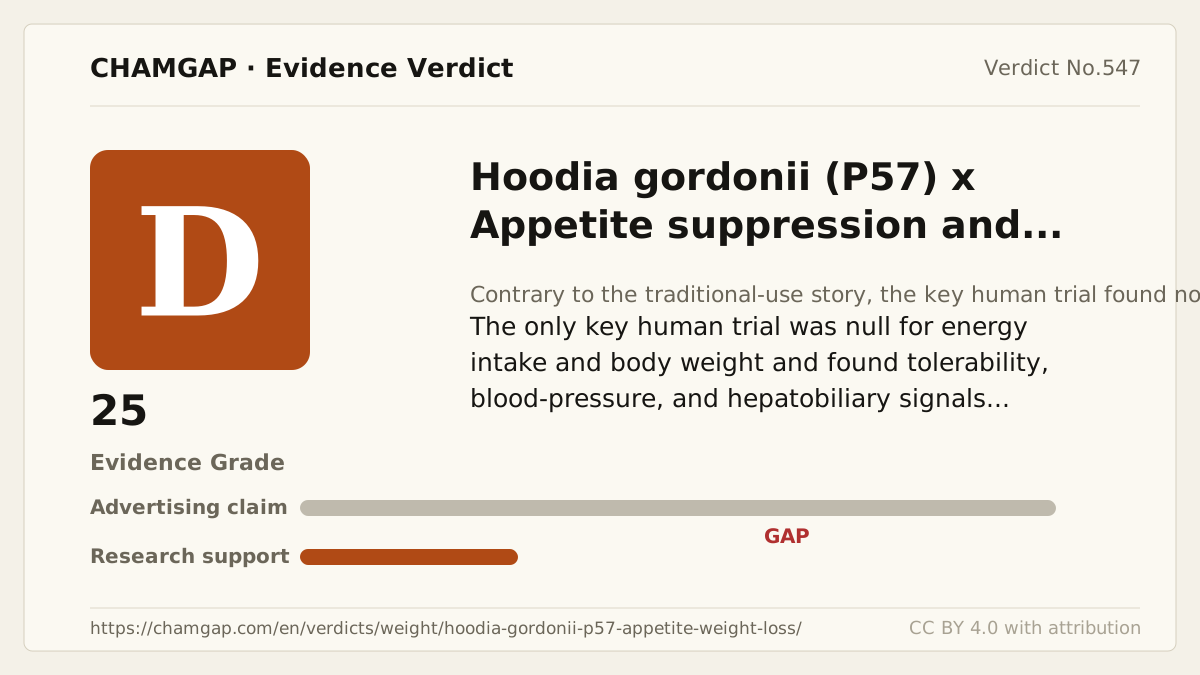
research showsThe story that San hunters used hoodia to blunt hunger became a diet-marketing narrative, but the key placebo-controlled human trial found the opposite. Forty-nine women with overweight received 1,110 mg of purified hoodia extract twice daily for 15 days, with no reduction in ad-libitum energy intake or body weight versus placebo and with signals involving blood pressure, pulse, hepatobiliary tests, nausea, and vomiting. Direct null human evidence supports D.
ads claimMarketing connects San traditional use, a proposed hypothalamic ATP mechanism for P57, and reduced intake in animals to the promise that hunger disappears and weight falls. Traditional use and mechanism are not human energy-intake or weight outcomes.
Useful facts when choosing a product
- Hoodia is not a standard obesity treatment in Korea and was not identified as a generally recognized health-functional-food ingredient for weight loss; available products may be imported or multi-ingredient diet supplements.
- The key trial tested a standardized purified hoodia extract rather than isolated P57, using 1,110 mg twice daily.
- Species identity, P57 content, and extraction methods in commercial powders and capsules may differ from the trial product, so doses are not directly interchangeable.
- Nausea, vomiting, altered skin sensation, and increases in blood pressure, pulse, heart rate, bilirubin, and alkaline phosphatase warrant particular avoidance in hypertension, heart or liver disease, pregnancy, and lactation.
Chamgap Semantic Classification Code
Candidate index · review held
UNK.hoodia-gordonii.UNK.appetite-suppression-and-weight-loss.assess.placeboUnknown > Hoodia gordonii > Unknown > Appetite suppression and weight loss > Association or change assessment > Placebo
An automated migration candidate, not an issued permanent code; exact claim scope remains under review. This machine-generated migration candidate helps retrieval but is not a permanent assignment. The original verdict ID and URL remain authoritative.
What the research actually shows
Blom and colleagues in 2011 stratified 49 healthy women with overweight by body-fat percentage and randomized them in a residential setting to purified hoodia extract or placebo. Participants received 1,110 mg one hour before breakfast and dinner, totaling 2,220 mg/day for 15 days, and could eat freely from standardized menus. Neither energy intake nor body weight differed between groups. NCCIH and the US NIH Office of Dietary Supplements likewise summarize that essentially one small human study exists, found no effect on energy intake or body weight, and raised concerns including increased heart rate and blood pressure.
Why this is classified as D (25)
Human efficacy literature exists, so the rating is not ?. The placebo-controlled trial directly measured the behavioral appetite outcome of ad-libitum energy intake and body weight and was null for both, but it was one short, small trial; D with 25 points is therefore more appropriate than repeated-refutation F. Safety signals are recorded separately as caution.
Counterpoint. Uncertainty remains because no longer independent trial exists, but current evidence does not support calling hoodia or P57 a validated appetite suppressant or weight-loss agent.
Rejudgment record. New verdict — A placebo-controlled trial in women with overweight was null for both ad-libitum energy intake and body weight, with no positive human replication; one small trial supports D rather than F
Sub-claim grades by effect
This ingredient is marketed for several effects. A single overall grade blends strong and weak claims together, so each effect is graded separately here. The overall grade reflects the strongest disconfirming or core claim.
| Effect (sub-claim) | Grade | Basis |
|---|---|---|
| Appetite suppression and reduced ad-libitum energy intake | D | The only key placebo-controlled trial found no reduction in ad-libitum energy intake versus placebo. |
| Weight loss | D | In the same direct trial, 15-day body-weight change did not differ from placebo, with no positive human replication. |
Cross-check — AI research and Codex final gate
Evidence Table
| Study | Design | Sample | Funding | Endpoint | Result | Weight |
|---|---|---|---|---|---|---|
| Blom WAM et al. 2011 | Randomized double-blind placebo-controlled residential trial | 15 | Conducted and funded by Unilever; all authors were then affiliated with Unilever | Ad-libitum energy intake, body weight, vital signs, and laboratory safety | At 2,220 mg/day, energy intake and body weight were null versus placebo; blood pressure, pulse, heart rate, bilirubin, and alkaline phosphatase increased. | Key direct null evidence |
| NIH Office of Dietary Supplements 2022 | Official evidence summary | 1 | US National Institutes of Health | Weight-loss efficacy and safety | Summarized very little human research, no effect on energy intake or weight in one trial, and concerns including increased heart rate and blood pressure. | Independent context |
Receipt — 3 References
All 3 cited sources were verified for existence at the original page (as of 2026-07-18).
Final verification and publication gate: Codex · Evidence date: 2026-07-18 · Corrections: none
Cite this verdict
[Chamgap] Hoodia gordonii (P57) x appetite suppression and weight loss — Evidence Grade D·25. 3 cited sources checked. Source: https://chamgap.com/en/verdicts/weight/hoodia-gordonii-p57-appetite-weight-loss/ · CC BY 4.0CC BY 4.0 — free to use with attribution; do not distort grades, numbers, or verdict meaning.
What this document does and does not do
Chamgap is an information source. It reports what research has and has not confirmed; it does not tell readers what to take or buy. That decision belongs to readers and, when needed, medical or legal professionals. This verdict reflects literature available up to the search date and may change as new research appears. Nothing here is medical advice.