
Chia seeds,
does it really help with Reduced body weight and body fat through satiety?
research showsChia is rich in fiber and alpha-linolenic acid, and one acute meal study found less hunger and lower intake at the next meal. In adults with overweight or obesity, however, 50 g/day for twelve weeks did not reduce weight or DXA body fat versus placebo. The claim that acute satiety produces long-term weight loss is rated D.
ads claimMarketing turns water absorption, expansion, fiber and omega-3 content, and one-meal satiety into a claim that daily use automatically removes weight and body fat. Nutrient content and acute appetite signals do not establish a sustained energy deficit or weight-loss effect.
Useful facts when choosing a product
- Chia seeds are widely sold as whole food in Korean grocery and online channels and should be distinguished from an approved functional ingredient for body-fat reduction.
- The acute satiety trial used 7 and 14 g, while the key longer null trial used 50 g/day.
- Some overseas regulatory and product labels use an intake near 15 g/day, which is not the same as research dosing.
- Swallowing dry seeds can cause expansion and esophageal obstruction. They should be hydrated or taken with adequate liquid; dysphagia, gastrointestinal narrowing, and anticoagulant, glucose, or blood-pressure medication warrant caution.
Chamgap Semantic Classification Code
Candidate index · review held
UNK.chia-seeds.UNK.body-weight-and-body-fat-through-satiety.reduce.placeboUnknown > Chia seeds > Unknown > body weight and body fat through satiety > Reduction claim > Placebo
An automated migration candidate, not an issued permanent code; exact claim scope remains under review. This machine-generated migration candidate helps retrieval but is not a permanent assignment. The original verdict ID and URL remain authoritative.
What the research actually shows
Nieman and colleagues recruited 90 adults, with 76 completing a single-blind randomized trial of 25 g twice daily, or 50 g/day, for twelve weeks. Plasma alpha-linolenic acid rose, but weight and DXA body composition did not differ from placebo. The 2017 Ayaz study was a one-meal crossover trial in 24 healthy adults using yogurt with 0, 7, or 14 g chia and found better satiety scores and lower ad-libitum lunch intake. The 2024 Karimi meta-analysis of ten trials and 424 participants found no BMI effect but a smaller waist circumference, requiring separation of a central-adiposity surrogate from actual weight loss.
Why this is classified as D (30)
Human acute satiety evidence prevents ?, but the target weight and body-fat outcomes were null in a twelve-week direct trial and BMI was null in meta-analysis, supporting D with 30 points. Nutrient content and waist-circumference signals are separate.
Counterpoint. Chia can be useful as a fiber-rich food, but it has not been shown to act as a weight-loss agent that reduces weight or body fat versus placebo.
Rejudgment record. New verdict — Acute satiety and next-meal intake signals were recognized, but weight and DXA body fat were null in a twelve-week trial and BMI was null in a 2024 meta-analysis, supporting D for actual weight loss
Sub-claim grades by effect
This ingredient is marketed for several effects. A single overall grade blends strong and weak claims together, so each effect is graded separately here. The overall grade reflects the strongest disconfirming or core claim.
| Effect (sub-claim) | Grade | Basis |
|---|---|---|
| Increased acute satiety and reduced intake at the immediately following meal | C | A 24-person single-meal crossover trial was positive, but evidence is limited to visual analog scales and one subsequent meal. |
| Long-term reduction in body weight and body fat | D | A twelve-week trial of 50 g/day was null for weight and DXA body composition, and meta-analytic BMI was also null. |
Cross-check — AI research and Codex final gate
Evidence Table
| Study | Design | Sample | Funding | Endpoint | Result | Weight |
|---|---|---|---|---|---|---|
| Nieman DC et al. 2009 | Randomized single-blind placebo-controlled trial | 76 | Funded by the Nutritional Science Research Institute | Twelve-week weight, DXA body composition, and metabolic risk markers | At 50 g/day, body weight and composition were null versus placebo. | Key |
| Ayaz A et al. 2017 | Randomized single-meal crossover trial | n=24 | Academic research; no commercial funding reported | Satiety visual analog scales and ad-libitum lunch energy intake | Seven and fourteen grams in yogurt increased subjective satiety and reduced intake at the next lunch. | Acute subclaim |
| Karimi M et al. 2024 | Systematic review and meta-analysis of randomized trials | 424 | Academic research | BMI, waist circumference, and cardiometabolic markers | BMI was null while waist circumference decreased; study and formulation heterogeneity remained. | Synthesis |
Receipt — 4 References
All 4 cited sources were verified for existence at the original page (as of 2026-07-18).
Final verification and publication gate: Codex · Evidence date: 2026-07-18 · Corrections: none
Cite this verdict
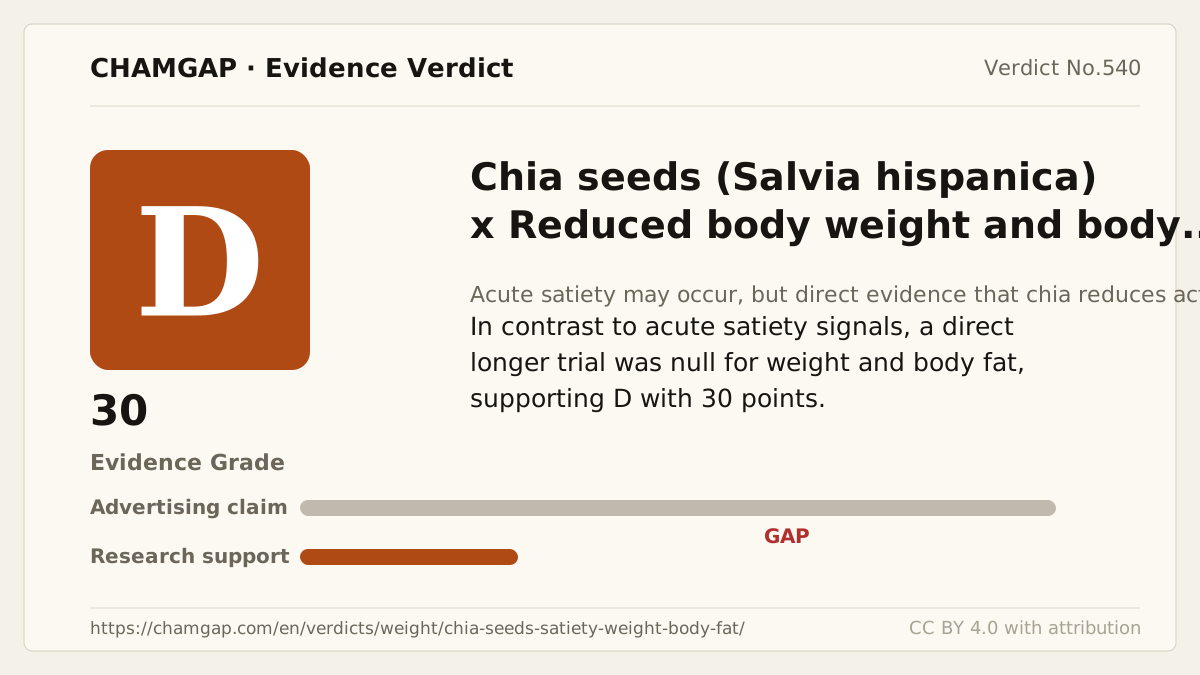
[Chamgap] Chia seeds x satiety-mediated weight and body-fat reduction — Evidence Grade D·30. 4 cited sources checked. Source: https://chamgap.com/en/verdicts/weight/chia-seeds-satiety-weight-body-fat/ · CC BY 4.0CC BY 4.0 — free to use with attribution; do not distort grades, numbers, or verdict meaning.
What this document does and does not do
Chamgap is an information source. It reports what research has and has not confirmed; it does not tell readers what to take or buy. That decision belongs to readers and, when needed, medical or legal professionals. This verdict reflects literature available up to the search date and may change as new research appears. Nothing here is medical advice.