
Cagrilintide,
does it really help with Long-term weight reduction in adults with overweight or obesity and without diabetes?
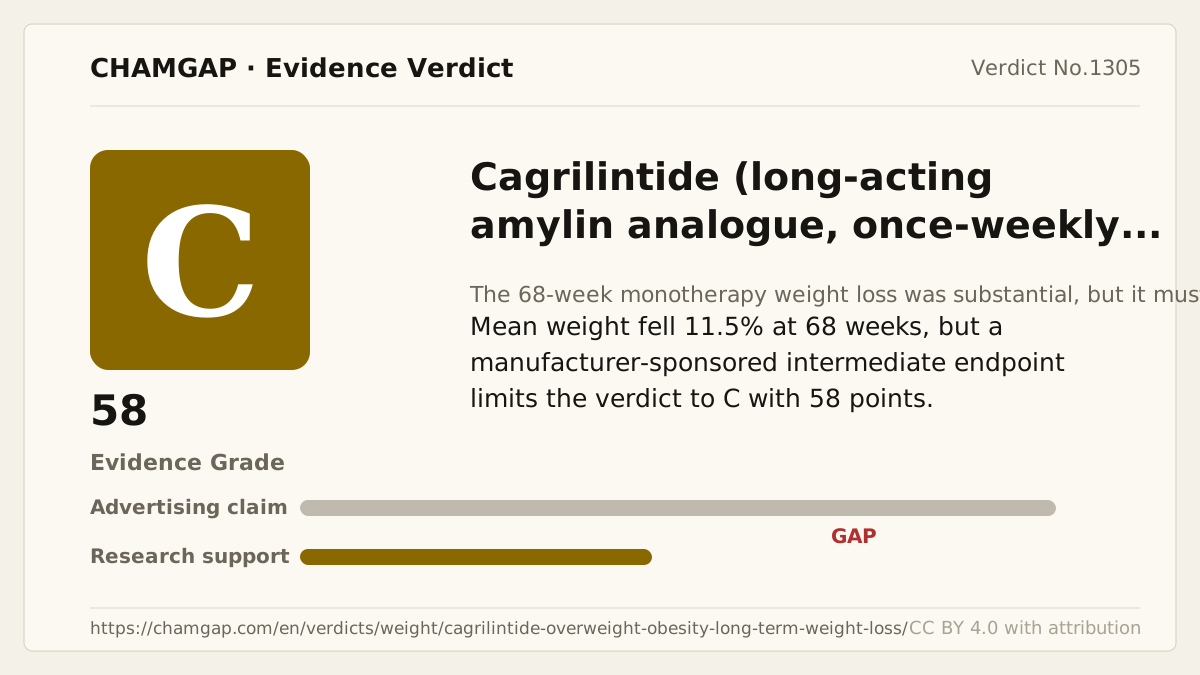
research showsOnce-weekly cagrilintide 2.4 mg is rated C because it produced a positive 68-week weight-loss signal in adults with overweight or obesity and without diabetes. REDEFINE 1 randomized 3,417 participants to CagriSema, semaglutide alone, cagrilintide alone, or placebo; mean weight change was -11.5% among the 302 assigned to cagrilintide alone and -3.0% among 705 assigned to placebo. The article's confirmatory primary comparison was CagriSema versus placebo, however, while the cagrilintide-alone result is a supportive comparison from one manufacturer-sponsored trial and body weight is an intermediate endpoint below cardiovascular events or death. Without independent hard-outcome evidence, the grade cannot exceed C.
ads claimPromotion can misattribute the -20.4% REDEFINE 1 result for combination CagriSema to cagrilintide alone or turn 68-week weight loss into proof of preventing cardiovascular disease and death. The monotherapy figure was -11.5%, distinct from the combination, and hard outcomes are unavailable.
Useful facts when choosing a product
- Cagrilintide is a long-acting amylin analogue targeting satiety and appetite pathways. The REDEFINE 1 monotherapy group used 2.4 mg subcutaneously once weekly together with lifestyle intervention.
- As of the verification date, cagrilintide monotherapy for weight management remains investigational and should not be regarded as an approved routine prescription or a lawful compounding ingredient.
- Only 302 participants in REDEFINE 1 received cagrilintide alone, compared with 2,108 receiving CagriSema, so the combination's -20.4% weight result must not be cited as monotherapy efficacy.
- Gastrointestinal adverse events such as nausea, vomiting, diarrhea, constipation, and abdominal pain are common and can be prominent during dose escalation. Unapproved online peptides do not ensure purity, dose accuracy, or sterility.
Chamgap Semantic Classification Code
Candidate index · review held
M.cagrilintide.subcutaneous.long-term-weight-reduction-with-overweight-or-obesity-and-without-diabetes.reduce.MULTIMedicinal interventions > Cagrilintide > Subcutaneous > Long-term weight reduction with overweight or obesity and without diabetes > Reduction claim > Multiple: primary unresolved
An automated migration candidate, not an issued permanent code; exact claim scope remains under review. This machine-generated migration candidate helps retrieval but is not a permanent assignment. The original verdict ID and URL remain authoritative.
What the research actually shows
Garvey and the REDEFINE 1 Study Group randomized 3,417 adults without diabetes and with a BMI of at least 30, or at least 27 with a weight-related condition, to four groups for 68 weeks. CagriSema was the main analysis group with 2,108 participants, while 302 received semaglutide alone, 302 received cagrilintide 2.4 mg alone, and 705 received placebo. Under the treatment-policy estimand, weight change was -11.5% with cagrilintide alone and -3.0% with placebo, although the paper's confirmatory coprimary analysis compared the combination with placebo. The 706-patient phase 2 trial by Lau showed dose-dependent loss from 0.3 to 4.5 mg, including -10.8% with 4.5 mg versus -3.0% with placebo at 26 weeks, but it also remains a sponsor-led weight-endpoint trial.
Why this is classified as C (58)
In REDEFINE 1, cagrilintide 2.4 mg alone produced -11.5% weight change at 68 weeks versus -3.0% with placebo, supported by a positive phase 2 dose response. Sponsor-led evidence, a 302-person monotherapy arm, an intermediate weight endpoint, and absent cardiovascular or mortality outcomes support C with 58 points.
Counterpoint. Weight loss of 5% to 10% can still improve metabolic risk, so the research signal is meaningful. Routine comparative evidence against approved obesity medicines is limited, however, and the finding does not justify self-injection of an unapproved product.
Rejudgment record. New verdict — Accepted the 68-week monotherapy weight loss in REDEFINE 1 and the phase 2 dose response, but applied the maximum grade C under rules ① and ②-b because the evidence is sponsor led, monotherapy was not the confirmatory coprimary comparison, body weight is intermediate, and cardiovascular and mortality outcomes are absent
Sub-claim grades by effect
This ingredient is marketed for several effects. A single overall grade blends strong and weak claims together, so each effect is graded separately here. The overall grade reflects the strongest disconfirming or core claim.
| Effect (sub-claim) | Grade | Basis |
|---|---|---|
| Mean weight reduction at 68 weeks with cagrilintide 2.4 mg monotherapy | C | REDEFINE 1 showed -11.5% versus -3.0% with placebo, but this was a supportive comparison in one sponsor trial. |
| Dose-dependent weight reduction with once-weekly cagrilintide monotherapy | C | A 706-patient phase 2 trial supported dose response over 26 weeks, but it is a weight endpoint from the same sponsor program. |
| Reduced cardiovascular events or mortality with cagrilintide monotherapy | ? | No human efficacy trial has established cardiovascular-event or mortality benefit. |
Cross-check — AI research and Codex final gate
Evidence Table
| Study | Design | Sample | Funding | Endpoint | Result | Weight |
|---|---|---|---|---|---|---|
| Garvey WT et al.; REDEFINE 1 Study Group. 2025 | Multinational double-blind randomized placebo- and active-controlled phase 3 trial | 3,417 total; 302 assigned to cagrilintide alone and 705 to placebo | Novo Nordisk | Weight change at 68 weeks; confirmatory coprimary comparison was CagriSema versus placebo | Weight change was -11.5% with cagrilintide 2.4 mg alone and -3.0% with placebo, distinct from -20.4% with combination CagriSema. | Positive monotherapy comparison within a large phase 3 trial, but sponsor led and intermediate |
| Lau DCW et al. 2021 | Multicenter double-blind randomized phase 2 dose-finding trial with placebo and liraglutide active control | 706 adults with overweight or obesity and without diabetes | Novo Nordisk | Weight change and weight-loss thresholds at 26 weeks | Cagrilintide 0.3 to 4.5 mg produced dose-dependent loss; 4.5 mg yielded -10.8% versus -3.0% with placebo. | Supportive dose-response and monotherapy evidence, but 26 weeks and sponsor led |
Receipt — 2 References
All 2 cited sources were verified for existence at the original page (as of 2026-07-24).
Final verification and publication gate: Codex · Evidence date: 2026-07-24 · Corrections: none
Cite this verdict
[Chamgap] Cagrilintide x long-term weight reduction in adults with overweight or obesity without diabetes — Evidence Grade C·58. 2 cited sources checked. Source: https://chamgap.com/en/verdicts/weight/cagrilintide-overweight-obesity-long-term-weight-loss/ · CC BY 4.0CC BY 4.0 — free to use with attribution; do not distort grades, numbers, or verdict meaning.
What this document does and does not do
Chamgap is an information source. It reports what research has and has not confirmed; it does not tell readers what to take or buy. That decision belongs to readers and, when needed, medical or legal professionals. This verdict reflects literature available up to the search date and may change as new research appears. Nothing here is medical advice.