
Auricular acupuncture or acupressure,
does it really help with Reduced weight and BMI in adults with overweight or obesity through appetite suppression?
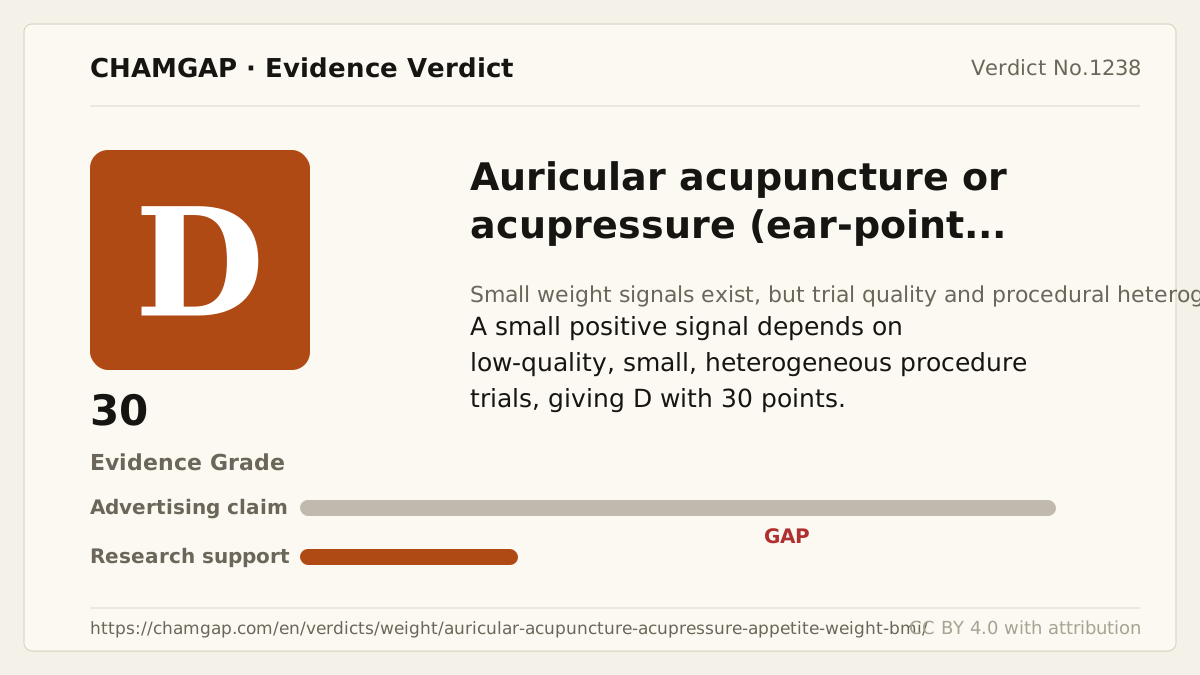
research showsAuricular acupuncture or acupressure is graded D. Meta-analyses show small signals for weight and BMI, but trials are small and heterogeneous in procedure, co-interventions, and sham controls, with substantial risk of bias. Appetite suppression is not confirmed by consistent objective food-intake data.
ads claimThe claim that an ear point switches off appetite and removes fat exceeds objective intake and long-term maintenance evidence.
Useful facts when choosing a product
- Auricular acupuncture uses needles or retained needles, whereas acupressure may use seeds, beads, or tape; these are distinct procedures.
- Points, frequency, duration, and diet or exercise co-interventions differ across studies, so results cannot be assigned to every commercial protocol.
- Pain, bleeding, skin irritation, and contact dermatitis can occur; nonsterile invasive procedures risk perichondritis or infection.
Chamgap Semantic Classification Code
Candidate index · review held
K.auricular-acupuncture-or-acupressure.UNK.weight-and-bmi-with-overweight-or-obesity-through-appetite-suppression.reduce.MULTIFolk and alternative interventions > Auricular acupuncture or acupressure > Unknown > weight and BMI with overweight or obesity through appetite suppression > Reduction claim > Multiple: primary unresolved
An automated migration candidate, not an issued permanent code; exact claim scope remains under review. This machine-generated migration candidate helps retrieval but is not a permanent assignment. The original verdict ID and URL remain authoritative.
What the research actually shows
Yeh 2017 pooled randomized trials in adults with overweight or obesity and reported significant reductions in weight, BMI, body fat, and waist circumference, while noting moderate-to-high heterogeneity. Huang 2019 pooled seven acupressure studies, but mixed stand-alone and diet or exercise co-interventions and no-treatment or sham controls.
Why this is classified as D (30)
A positive human signal exists, but low quality, small size, and procedural and comparator heterogeneity prevent it from qualifying as credible positive evidence. The heterogeneous-procedure rule gives D with 30 points.
Counterpoint. If chosen, the procedure should not replace validated nutrition, activity, and behavioral care, and weight and harms should be tracked objectively.
Rejudgment record. Cross-check applied — Confirmed modest meta-analytic signals for weight and BMI but applied the low-quality heterogeneous-procedure rule because trials were small, at risk of bias, varied in stimulation, co-interventions and sham controls, and lacked durable follow-up
Sub-claim grades by effect
This ingredient is marketed for several effects. A single overall grade blends strong and weak claims together, so each effect is graded separately here. The overall grade reflects the strongest disconfirming or core claim.
| Effect (sub-claim) | Grade | Basis |
|---|---|---|
| Appetite suppression | D | It has not been consistently confirmed with objective food-intake measures. |
| Weight reduction | D | A modest positive signal comes from small, heterogeneous, low-quality trials. |
| BMI reduction | D | The clinical magnitude and durability of the pooled signal are uncertain. |
Cross-check — AI research and Codex final gate
Evidence Table
| Study | Design | Sample | Funding | Endpoint | Result | Weight |
|---|---|---|---|---|---|---|
| Yeh TL et al. 2017 | Systematic review and meta-analysis of randomized trials | 18 randomized trials | Taiwanese academic and public support | Weight, BMI, body fat, and waist circumference | Several anthropometric measures decreased significantly, with moderate-to-high heterogeneity. | Key low-certainty synthesis |
| Huang CF et al. 2019 | Systematic review and meta-analysis of auricular acupressure | Seven studies in quantitative synthesis | Academic research | Weight, BMI, waist circumference, and body fat | Signals favored reduction, but co-interventions, controls, and duration were heterogeneous. | Low-quality acupressure-specific synthesis |
Receipt — 2 References
All 2 cited sources were verified for existence at the original page (as of 2026-07-23).
Final verification and publication gate: Codex · Evidence date: 2026-07-23 · Corrections: none
Cite this verdict
[Chamgap] Auricular acupuncture or acupressure x appetite, weight, and BMI reduction — Evidence Grade D·30. 2 cited sources checked. Source: https://chamgap.com/en/verdicts/weight/auricular-acupuncture-acupressure-appetite-weight-bmi/ · CC BY 4.0CC BY 4.0 — free to use with attribution; do not distort grades, numbers, or verdict meaning.
What this document does and does not do
Chamgap is an information source. It reports what research has and has not confirmed; it does not tell readers what to take or buy. That decision belongs to readers and, when needed, medical or legal professionals. This verdict reflects literature available up to the search date and may change as new research appears. Nothing here is medical advice.