
Alpha-lipoic acid,
does it really help with Reduction of body weight and BMI in adults with overweight or obesity?
research showsAlpha-lipoic acid is rated C because randomized-trial meta-analyses show a small signal for lower body weight and BMI in adults with overweight or obesity. A 2018 meta-analysis of 12 trials found placebo-adjusted mean differences of -0.69 kg in weight and -0.38 kg/m² in BMI, while a separate meta-analysis of 10 double-blind randomized trials reported -1.27 kg and -0.43 kg/m². These results are statistically positive but clinically small, with variation in duration, dose, population, and ALA formulation, and there is no large independent long-term trial with weight loss as the primary endpoint. BMI improvement in an 81-person publicly funded R-ALA trial was also a secondary endpoint. Commercial variation in R/S enantiomer composition, dose, and quality further limits generalization. Nausea, skin symptoms, hypoglycemia with diabetes medicines, and rare insulin autoimmune syndrome are separated under safety.
ads claimMarketing can expand the mitochondrial-cofactor or antioxidant mechanism into fat burning, appetite suppression, and conspicuous weight loss. Average additional loss in human trials was generally around 1 kg, and findings from a specific high dose or R-enantiomer product cannot be transferred to every commercial mixture.
Useful facts when choosing a product
- Alpha-lipoic acid occurs as a cofactor for mitochondrial enzymes, but commercial supplements differ between pure R-ALA and R/S mixtures and can have different bioavailability.
- Weight studies generally used research products at 600 to 1,800 mg daily for weeks to months; copying these doses without supervision does not guarantee the same efficacy or safety.
- Nausea, vomiting, heartburn, headache, rash, or itching can occur, and use with diabetes medicines may lower glucose further, so glucose and medicine doses should be reviewed with a clinician.
- ALA can rarely trigger severe hypoglycemia through insulin autoimmune syndrome; sweating, tremor, confusion, or fainting warrants stopping the supplement and seeking urgent medical care.
Chamgap Semantic Classification Code
Candidate index · review held
S.alpha-lipoic-acid.UNK.body-weight-and-bmi-with-overweight-or-obesity.reduce.placeboSupplements and nutraceuticals > Alpha-lipoic acid > Unknown > body weight and BMI with overweight or obesity > Reduction claim > Placebo
An automated migration candidate, not an issued permanent code; exact claim scope remains under review. This machine-generated migration candidate helps retrieval but is not a permanent assignment. The original verdict ID and URL remain authoritative.
What the research actually shows
Namazi and colleagues pooled 12 placebo-controlled clinical trials in 2018 and reported a weight weighted mean difference of -0.69 kg (95% CI -1.27 to -0.10) and a BMI difference of -0.38 kg/m² (95% CI -0.53 to -0.24), while judging the clinical magnitude very small. Kucukgoncu and colleagues pooled 10 randomized double-blind placebo-controlled studies in 2017 and found -1.27 kg in weight (95% CI -2.29 to -0.25) and -0.43 kg/m² in BMI (95% CI -0.82 to -0.03). In the 360-person 20-week trial by Koh and colleagues, only 1,800 mg daily produced 2.1% greater weight loss than placebo (95% CI 1.4 to 2.8), whereas 1,200 mg did not produce a clear effect. The 2020 NIH-supported 81-person trial by Bobe and colleagues found a 24-week BMI difference of -0.8 kg/m² with R-ALA 600 mg daily, but weight and BMI were secondary endpoints and the sample was small. Repeated statistical positivity is offset by modest magnitude and limited generalizability.
Why this is classified as C (49)
Several randomized-trial meta-analyses found statistically lower weight and BMI, so D or F is not appropriate. Average differences were only about 0.7 to 1.3 kg in weight and 0.4 kg/m² in BMI, with diverse populations, doses, enantiomers, and cointerventions, and without a large long-term primary weight-loss trial or direct clinical outcomes. These limitations support C with 49 points. Product quality and safety are judged separately from the efficacy signal.
Counterpoint. Some adults seeking a small adjunctive effect may consider a trial after reviewing interactions with a clinician. Expectations should remain near the roughly 1-kg average signal, and the supplement should be stopped if it provides no benefit or causes hypoglycemia or skin symptoms.
Rejudgment record. New verdict — Accepted repeated statistical positivity in randomized-trial meta-analyses of weight and BMI, while accounting for an average weight difference of only about 0.7 to 1.3 kg, heterogeneity in populations, doses, and enantiomers, lack of a large long-term primary-endpoint trial or direct clinical outcomes, and commercial supplement variability
Sub-claim grades by effect
This ingredient is marketed for several effects. A single overall grade blends strong and weak claims together, so each effect is graded separately here. The overall grade reflects the strongest disconfirming or core claim.
| Effect (sub-claim) | Grade | Basis |
|---|---|---|
| Reduction of body weight in adults with overweight or obesity | C | Meta-analyses found a statistically significant reduction of about 0.7 to 1.3 kg versus placebo, but the clinical magnitude was small and long-term maintenance is unestablished. |
| Reduction of BMI in adults with overweight or obesity | C | BMI fell by about 0.4 kg/m² on average, but populations, doses, and formulations were heterogeneous, and BMI was a secondary endpoint in some positive trials. |
Cross-check — AI research and Codex final gate
Evidence Table
| Study | Design | Sample | Funding | Endpoint | Result | Weight |
|---|---|---|---|---|---|---|
| Namazi N et al. 2018 | Systematic review and random-effects meta-analysis of placebo-controlled clinical trials | 12 trials reporting weight and BMI | Detailed funding not stated in the PubMed abstract | Body weight, BMI, and waist circumference | Versus placebo, the weight weighted mean difference was -0.69 kg (95% CI -1.27 to -0.10) and BMI was -0.38 kg/m² (95% CI -0.53 to -0.24); waist circumference was not significant. | Key synthesis with a small effect |
| Kucukgoncu S et al. 2017 | Meta-analysis of randomized double-blind placebo-controlled trials | 10 randomized-trial articles | Academic analysis with mixed sponsorship across included studies | Placebo-adjusted changes in weight and BMI | ALA reduced weight by 1.27 kg (95% CI 0.25 to 2.29) and BMI by 0.43 kg/m² (95% CI 0.03 to 0.82) more than placebo. | Independent replicated synthesis |
| Bobe G et al. 2020 | Twenty-four-week randomized double-blind placebo-controlled parallel trial | 81 adults with overweight or obesity | Public funding from the United States NIH NCCAM and NCATS | Primary triglycerides; secondary weight, BMI, and body fat | R-ALA 600 mg daily did not improve triglycerides, but BMI fell 0.8 kg/m² more than placebo at 24 weeks (P=0.04). | Publicly funded supportive evidence with a small sample and secondary endpoint |
Receipt — 4 References
All 4 cited sources were verified for existence at the original page (as of 2026-07-22).
Final verification and publication gate: Codex · Evidence date: 2026-07-22 · Corrections: none
Cite this verdict
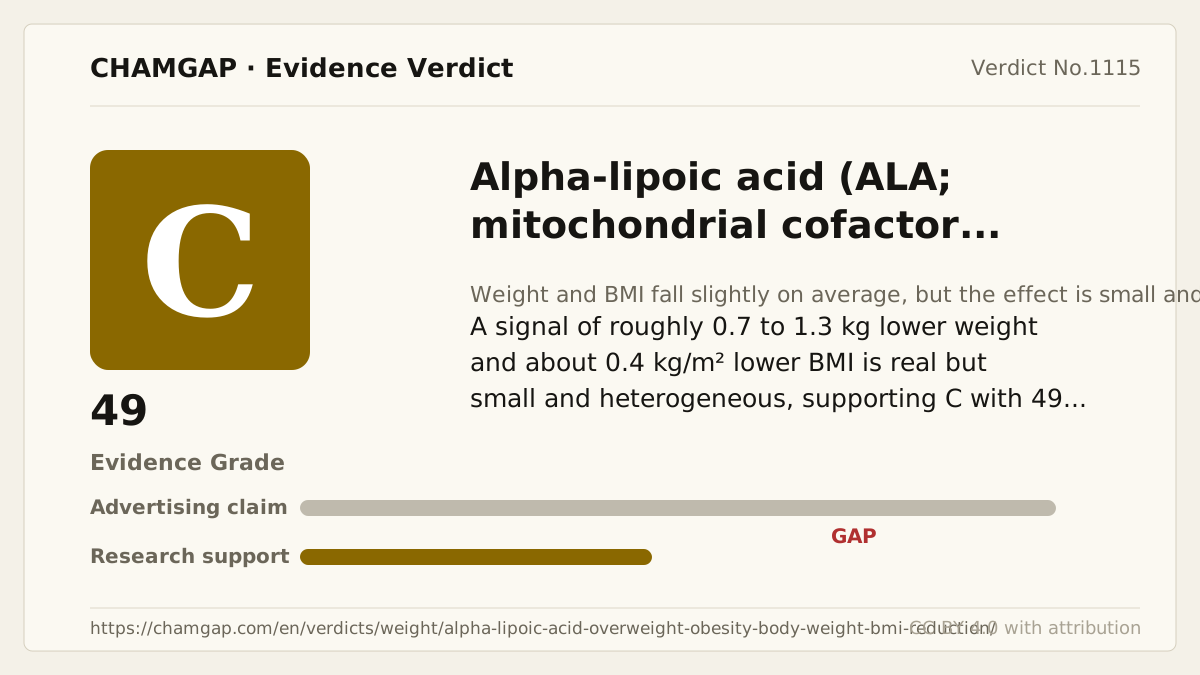
[Chamgap] Alpha-lipoic acid x reduced body weight and BMI in adults with overweight or obesity — Evidence Grade C·49. 4 cited sources checked. Source: https://chamgap.com/en/verdicts/weight/alpha-lipoic-acid-overweight-obesity-body-weight-bmi-reduction/ · CC BY 4.0CC BY 4.0 — free to use with attribution; do not distort grades, numbers, or verdict meaning.
What this document does and does not do
Chamgap is an information source. It reports what research has and has not confirmed; it does not tell readers what to take or buy. That decision belongs to readers and, when needed, medical or legal professionals. This verdict reflects literature available up to the search date and may change as new research appears. Nothing here is medical advice.