
Sodium citrate,
does it really help with Improved repeated high-intensity exercise and sport performance after pre-exercise loading?
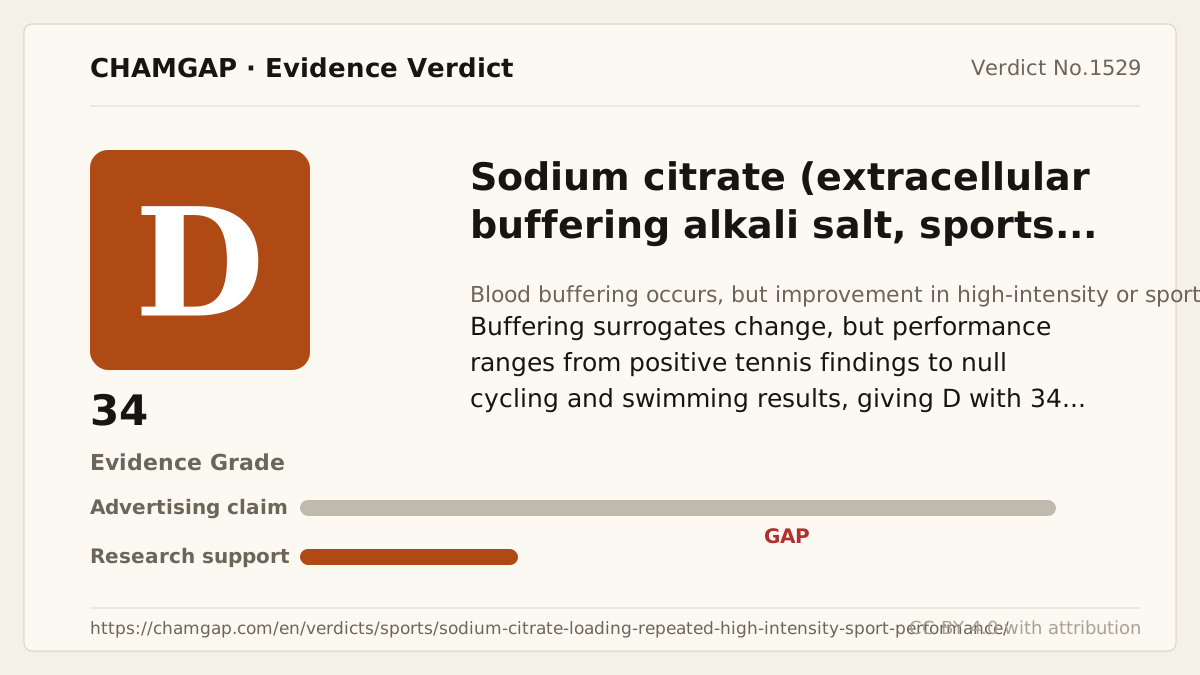
research showsPre-exercise sodium citrate loading is rated D for improving repeated high-intensity exercise and sport performance. A crossover trial in 10 tennis players reported better post-match skill performance, but other small studies found no benefit for repeated 45-second cycling or 200-m swimming. Buffering surrogates such as blood pH, bicarbonate, and lactate often change, while actual performance findings are inconsistent and effective doses increase gastrointestinal symptoms.
ads claimMarketing equates blood alkalinization and lactate changes with improved repeated sprint or competition results. Physiological buffering changes are more consistent than sport-specific performance benefits.
Useful facts when choosing a product
- Sodium citrate is an extracellular buffering alkali salt that raises blood bicarbonate and pH after absorption, and it is chemically distinct from sodium bicarbonate.
- Exercise trials commonly used about 0.5 g/kg two to three hours before exercise, creating a sodium and citrate load far larger than ordinary food-additive exposure.
- The timing and magnitude of peak alkalosis vary even within individuals, and physiological alkalosis does not guarantee better sport performance.
- High doses increase nausea, abdominal pain, bloating, diarrhea, and other gastrointestinal symptoms and deliver a substantial sodium load.
Chamgap Semantic Classification Code
Candidate index · review held
S.sodium-citrate.UNK.repeated-high-intensity-exercise-and-sport-performance-after-pre-exercise-loading.improve.placeboSupplements and nutraceuticals > Sodium citrate > Unknown > repeated high-intensity exercise and sport performance after pre-exercise loading > Improvement claim > Placebo
An automated migration candidate, not an issued permanent code; exact claim scope remains under review. This machine-generated migration candidate helps retrieval but is not a permanent assignment. The original verdict ID and URL remain authoritative.
What the research actually shows
Cunha and colleagues gave 10 nationally ranked male tennis players sodium citrate at 0.5 g/kg or placebo two hours before exercise and reported better post-match tennis skill scores with higher blood buffering markers. Van Someren and colleagues found higher blood bicarbonate but no performance difference over five repeated 45-second cycling bouts. Russell and colleagues tested acute and four-day loading in 10 adolescent male swimmers and found no improvement in 200-m time. Reviews and meta-analyses suggest a small average effect for extracellular buffers overall, but most data concern sodium bicarbonate and sodium-citrate-specific performance remains unclear across exercise types.
Why this is classified as D (34)
A small positive tennis trial coexists with null cycling and swimming trials, and syntheses find sodium-citrate-specific performance effects unclear. Discordance between buffering surrogates and performance plus gastrointestinal effects gives D with 34 points.
Counterpoint. The B-grade evidence for sodium bicarbonate comes from a distinct compound and many replicated trials and does not upgrade sodium citrate.
Rejudgment record. New verdict — A small positive tennis-skill trial coexists with null repeated-cycling and 200-m swimming trials, while buffering surrogates do not consistently track performance, so rule ② for inconsistent results supports D; sodium bicarbonate evidence was not transferred
Sub-claim grades by effect
This ingredient is marketed for several effects. A single overall grade blends strong and weak claims together, so each effect is graded separately here. The overall grade reflects the strongest disconfirming or core claim.
| Effect (sub-claim) | Grade | Basis |
|---|---|---|
| Improvement in repeated high-intensity exercise performance | D | Positive and null findings vary by protocol, and most trials are small. |
| Improvement in competition or sport-specific performance | D | Tennis skill was positive, but other competition-like outcomes such as 200-m swimming were null. |
| Delayed fatigue and greater exercise tolerance during high-intensity exercise | D | Buffering surrogates change, but actual fatigue delay and exercise-tolerance findings are inconsistent across protocols. |
Cross-check — AI research and Codex final gate
Evidence Table
| Study | Design | Sample | Funding | Endpoint | Result | Weight |
|---|---|---|---|---|---|---|
| Cunha VCR et al. 2019 | Randomized double-blind placebo-controlled crossover trial | 10 nationally ranked adolescent male tennis players | Brazilian public and academic research support | Tennis skill, repeated sprint, simulated match, and blood buffering markers | Post-match tennis skill and buffering markers improved, but the sample contained only 10 participants. | Small sport-specific positive trial |
| van Someren K et al. 1998 | Repeated high-intensity cycling clinical trial | 12 adults; nine men and three women | Inadequately reported | Five 45-second cycling bouts, blood bicarbonate, and lactate | Blood bicarbonate increased, but performance across five bouts did not differ. | Direct null repeated-exercise trial |
| Russell C et al. 2014 | Randomized double-blind placebo-controlled crossover trial of acute and four-day loading | 10 adolescent male swimmers | Canadian academic research | 200-m swim time, perceived exertion, pH, bicarbonate, and lactate | Neither acute nor chronic sodium citrate improved 200-m performance time. | Sport-specific direct null trial |
Receipt — 4 References
All 4 cited sources were verified for existence at the original page (as of 2026-07-23).
Final verification and publication gate: Codex · Evidence date: 2026-07-23 · Corrections: none
Cite this verdict
[Chamgap] Sodium citrate x improved repeated high-intensity exercise and sport performance — Evidence Grade D·34. 4 cited sources checked. Source: https://chamgap.com/en/verdicts/sports/sodium-citrate-loading-repeated-high-intensity-sport-performance/ · CC BY 4.0CC BY 4.0 — free to use with attribution; do not distort grades, numbers, or verdict meaning.
What this document does and does not do
Chamgap is an information source. It reports what research has and has not confirmed; it does not tell readers what to take or buy. That decision belongs to readers and, when needed, medical or legal professionals. This verdict reflects literature available up to the search date and may change as new research appears. Nothing here is medical advice.