
Immediate postexercise protein,
does it really help with Greater long-term muscle gain than pre-exercise or delayed intake?
research showsThe grade is D with 28 points. In a ten-week trial, 59 men enrolled, 38 dropped out, and 21 were analyzed: nine before-exercise and twelve after-exercise completers. The study did not detect group differences in DXA lean mass, ultrasound muscle thickness, or strength. Both groups received the same 25 g whey plus 1 g carbohydrate, but feeding was not controlled; self-reported daily protein merely showed no statistically detected difference. Attrition was about 64%, so this completer analysis is not precise disproof.
ads claimVerdict 074 is B with 78 points and evaluates whey protein itself for muscle and dieting outcomes. This verdict asks only whether immediate timing adds benefit with the same supplement dose. A statistically undetected self-reported protein-intake difference cannot be relabeled as equal daily intake.
Useful facts when choosing a product
- Acute stimulation of muscle protein synthesis differs from proof of a long-term 30-minute window.
- Both groups received the same 25 g whey plus 1 g carbohydrate, but feeding was not controlled and self-reported daily protein merely showed no statistically detected difference.
- Muscle outcomes used DXA lean mass and ultrasound thickness.
Chamgap Semantic Classification Code
Candidate index · review held
X.twenty-five-grams-of-whey-protein-within-after-resistance-exercise.oral.greater-long-term-muscle-gain-than-pre-exercise-or-delayed-intake.reduce.UNKBehaviors, exposures and policies > Twenty-five grams of whey protein within after resistance exercise > Oral > Greater long-term muscle gain than pre-exercise or delayed intake > Reduction claim > Unknown
An automated migration candidate, not an issued permanent code; exact claim scope remains under review. This machine-generated migration candidate helps retrieval but is not a permanent assignment. The original verdict ID and URL remain authoritative.
What the research actually shows
Fifty-nine resistance-trained men enrolled, 38 dropped out, and 21 were analyzed, nine before exercise and twelve after exercise. This was a roughly 64% attrition completer analysis. Participants completed supervised resistance training three times weekly for ten weeks, and both groups received the same 25 g whey plus 1 g carbohydrate immediately before or after training. DXA measured lean mass and ultrasound measured muscle thickness. Feeding was not controlled; self-reported food records merely showed no statistically detected protein-intake difference. No cash research funding was reported, but Dymatize supplied the protein supplement in kind, and the paper identifies James Krieger as affiliated with Weightology. A 2017 correction changed the second author's name to Alan A. Aragon.
Why this is classified as D (28)
The direct comparison did not detect a timing benefit, but about 64% attrition, 21 completers, ten weeks, uncontrolled feeding, and absent key intervals give D with 28 points.
Counterpoint. Older adults and prolonged fasting remain separate contexts.
Rejudgment record. Cross-check applied — The same supplement dose, ten weeks of supervised training, and DXA and ultrasound outcomes were considered, while uncontrolled feeding, 38 dropouts among 59 enrollees, completer analysis, in-kind product support, and an author affiliation were applied
| Endpoint | S | Surrogate marker - laboratory or imaging measures |
| Replication | R1 | Single confirmatory trial |
| Independence | I1 | Mixed funding sources |
| Effect size | E0 | Null |
| Precision | CX | No pooled confidence interval could be confirmed |
Stored derived and displayed grades match; this is not a current recalculation or validity check (D).
Sub-claim grades by effect
This ingredient is marketed for several effects. A single overall grade blends strong and weak claims together, so each effect is graded separately here. The overall grade reflects the strongest disconfirming or core claim.
| Effect (sub-claim) | Grade | Basis |
|---|---|---|
| Protein within 30 minutes after exercise builds more muscle than pre-exercise intake | D | A ten-week direct comparison with no detected self-reported protein-intake difference did not detect a group difference. |
| Postexercise protein acutely stimulates muscle protein synthesis | C | The acute physiological effect is real but distinct from a long-term 30-minute window. |
Cross-check — AI research and Codex final gate
Evidence Table
| Study | Design | Sample | Funding | Endpoint | Result | Weight |
|---|---|---|---|---|---|---|
| Schoenfeld et al. 2017 | Parallel randomized exercise-nutrition trial with completer analysis | 59 enrolled, 38 dropped out, and 21 analyzed: 9 before and 12 after exercise | No cash funding; supplement supplied in kind by Dymatize; one author affiliated with Weightology | DXA lean mass, ultrasound muscle thickness, and one-repetition-maximum strength | No group-change difference detected; key between-group confidence intervals not reported | Core direct timing comparison |
| Schoenfeld et al. 2013 | Meta-analysis and meta-regression of randomized trials | 525 participants and 132 effect sizes for hypertrophy | No external funding reported | Hypertrophy and strength | Independent timing effect disappeared after adjustment for total protein intake | Supporting evidence separating total intake from timing |
Receipt — 2 References
All 2 cited sources were verified for existence at the original page (as of 2026-08-04).
Final verification and publication gate: Codex · Evidence date: 2026-08-04 · Corrections: none
Cite this verdict
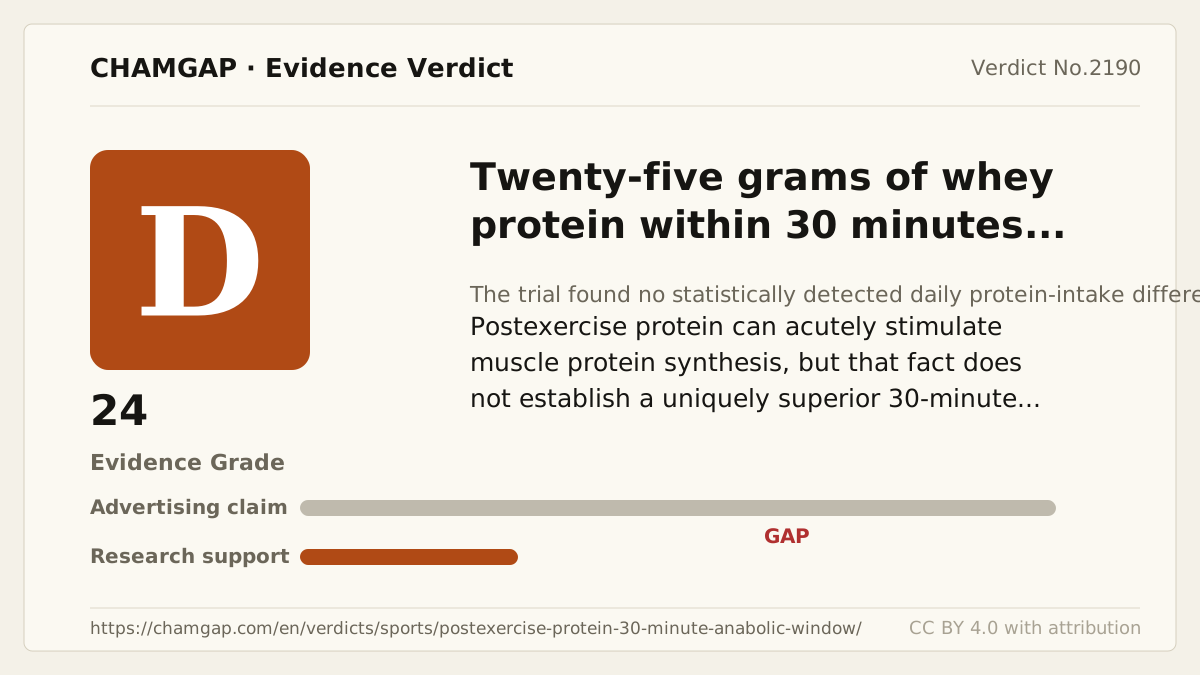
[Chamgap] Immediate postexercise protein x a 30-minute anabolic window for muscle gain — Evidence Grade D·28. 2 cited sources checked. Source: https://chamgap.com/en/verdicts/sports/postexercise-protein-30-minute-anabolic-window/ · CC BY 4.0CC BY 4.0 — free to use with attribution; do not distort grades, numbers, or verdict meaning.
What this document does and does not do
Chamgap is an information source. It reports what research has and has not confirmed; it does not tell readers what to take or buy. That decision belongs to readers and, when needed, medical or legal professionals. This verdict reflects literature available up to the search date and may change as new research appears. Nothing here is medical advice.