
Squalene,
does it really help with Skin and immunity?
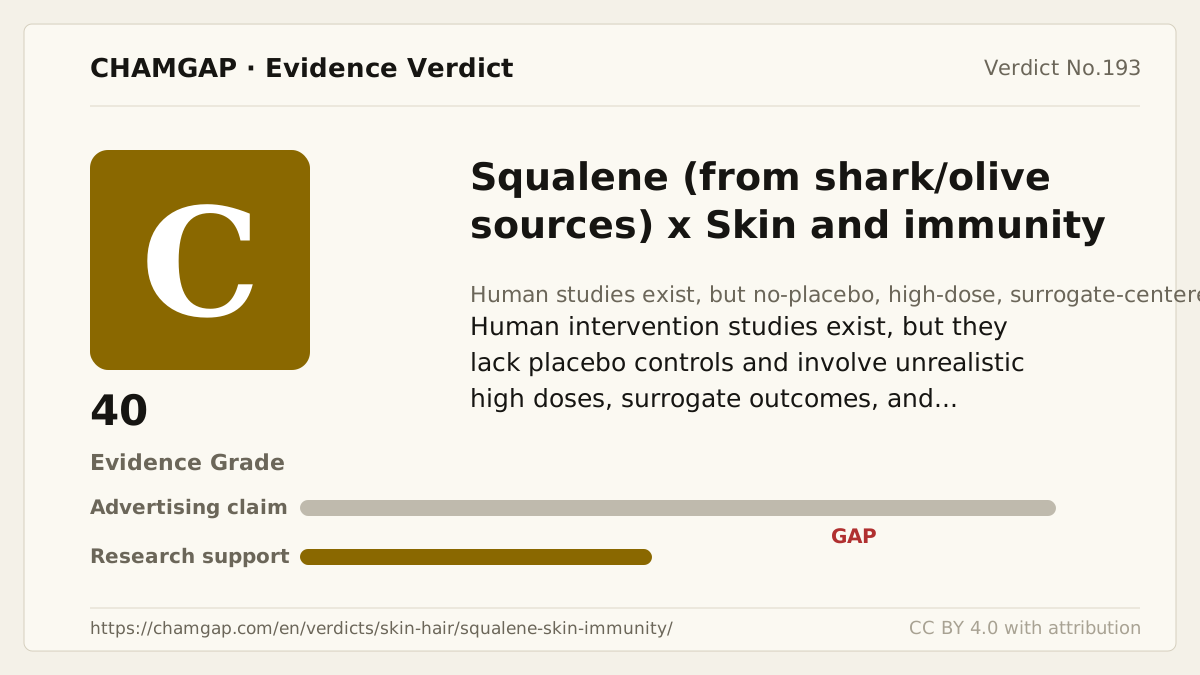
research showsOral squalene has human intervention studies addressing skin and immune markers. The skin study compared 13.5 with 27 g/day without placebo, and the immune study was an unblinded, no-placebo trial in patients with diabetes measuring cytokine and immunoglobulin surrogates. Clinical immune efficacy and skin efficacy at typical supplement doses are not established; overall evidence is lower-end C.
ads claimAdvertisements mention "shark liver oil," "immunity," "skin glow," and "antioxidant" together. The fact that it is a vaccine adjuvant or a sebum component should be separated from clinical effects of oral supplements.
Useful facts when choosing a product
- Squalene can be obtained from shark liver oil, olives, amaranth, and other sources.
- Shark-derived ingredients have separate issues involving marine contaminants, allergy, and sustainability.
- Squalane is a hydrogenated cosmetic ingredient and is distinguished from oral squalene.
- Long-term high-dose oral safety data are limited.
Chamgap Semantic Classification Code
Candidate index · review held
UNK.squalene.UNK.skin-and-immunity.assess.placeboUnknown > Squalene > Unknown > Skin and immunity > Association or change assessment > Placebo
An automated migration candidate, not an issued permanent code; exact claim scope remains under review. This machine-generated migration candidate helps retrieval but is not a permanent assignment. The original verdict ID and URL remain authoritative.
What the research actually shows
Cho 2009 (PMID 19522983; DOI 10.1111/j.1365-2230.2008.03133.x) assigned 40 women over age 50 to 13.5 or 27 g/day for 90 days; 37 completed. There was no placebo. Wrinkle reduction occurred only in the 27-g group versus baseline, while type I procollagen, UV-induced DNA damage, and other molecular surrogates and transient loose stool were reported. The doses are far removed from typical supplements. Martirosyan 2022 (DOI 10.31989/ffs.v2i8.979) was an unblinded no-placebo study in N=120 patients with diabetes, measured cytokines and immunoglobulins rather than infections, and reported contradictory IgA directions in its abstract and main text; funding was not verified in the public report. Lewkowicz 2005 (PMID 16124384) gave 13 volunteers shark liver oil for 4 weeks containing 3.6 g squalene, 3.6 g alkylglycerols, and 750 mg/day n-3 PUFA. Paul 2021 (PMID 34146594) also studied the mixed components of shark liver oil, so a squalene-only effect cannot be isolated. Gasparini 2001 (PMID 11599686) studied immunogenicity of injectable MF59 with antigen, and CIR assessed topical cosmetic safety of squalene/squalane. Squalane is a distinct hydrogenated substance. Spanova, O'Hagan, and WHO materials are biochemical or injectable-adjuvant context, not oral skin or immune efficacy evidence.
Why this is classified as C (40)
This is not ? because direct human intervention studies exist. Skin evidence is lower-end C because it is a no-placebo dose comparison at 13.5–27 g/day with baseline comparisons. Clinical immune efficacy is not established because evidence is unblinded, lacks placebo, uses surrogates, and has contradictory IgA reporting. Under boundary rule ①, the overall grade is capped at C and scored 40.
Counterpoint. A placebo-controlled skin trial at typical supplement doses or a blinded immune trial with infections as a prespecified primary endpoint could change the evidence position of the subclaims.
Rejudgment record. Reassessment (?→C) — This is not ? because direct human intervention studies exist. Skin evidence uses no placebo, unrealistic high doses, and baseline comparisons; immune evidence is unblinded, lacks placebo, uses surrogates, and has inconsistent reporting. Boundary rule ① therefore caps the evidence at C, specifically lower-end C.
Sub-claim grades by effect
This ingredient is marketed for several effects. A single overall grade blends strong and weak claims together, so each effect is graded separately here. The overall grade reflects the strongest disconfirming or core claim.
| Effect (sub-claim) | Grade | Basis |
|---|---|---|
| Skin | C | A human trial exists but is placebo-free and uses unrealistic 13.5-27 g/day doses |
| Immunity | D | Surrogate markers only (cytokines, immunoglobulins), low quality; no clinical infection-prevention endpoint |
Cross-check — AI research and Codex final gate
Evidence Table
| Study | Design | Sample | Funding | Endpoint | Result | Weight |
|---|---|---|---|---|---|---|
| Cho et al. 2009 (PMID 19522983) | Randomized dose comparison without placebo | 37 | Indexed as non-U.S. government research support | Wrinkles, type I procollagen, and UV DNA damage | 13.5 vs 27 g/day for 90 days; wrinkle reduction occurred only in the 27-g group versus baseline. | Core lower-end C skin evidence |
| Martirosyan et al. 2022 (DOI 10.31989/ffs.v2i8.979) | Unblinded human intervention without placebo | 120 | Unverified | Cytokine and immunoglobulin surrogates | No clinical infection endpoint; IgA direction conflicts between abstract and text. | Immune limitation |
| Lewkowicz 2005 (PMID 16124384) | Single-arm shark-liver-oil study; not squalene alone | 13 | Unverified | Immune and lipid surrogates | Contained 3.6 g squalene, 3.6 g alkylglycerols, and 750 mg/day n-3 PUFA; attribution is impossible. | Separate |
| Paul 2021 (PMID 34146594) | Placebo-controlled shark-liver-oil trial; mixed components | Unverified | Plasmalogens, lipids, and inflammatory markers | Alkylglycerols, PUFA, and other components prevent isolation of a squalene-only effect. | Separate | |
| Gasparini 2001 MF59 (PMID 11599686) | Vaccine comparative clinical trial; not an oral-efficacy RCT | 308 | Vaccine context | Vaccine immunogenicity and safety | Injectable MF59 with antigen is not evidence of oral immune efficacy. | Context |
| Study 6 | Cosmetic safety assessment; not an RCT | Includes cosmetics-industry use data | Topical cosmetic safety | Squalane is a distinct hydrogenated substance; this is not oral skin-efficacy evidence. | Context |
Receipt — 9 References
Of 9 cited sources, 3 had limited original-page access (blocked or summary-only) and were verified via index/summary, marked partial; the rest were verified at the original page. As of 2026-07-12.
Final verification and publication gate: Codex · Evidence date: 2026-07-12 · Corrections: 1
Correction log — 1
Corrections applied to this verdict, in chronological order. Changes are logged, not erased.
- 2026-07-11 · Re-adjudication (grade changed) — The previous 'judgment deferred (?)' cited unconfirmed oral-squalene efficacy RCTs, but a skin trial (Cho 2009, a placebo-free 13.5 vs 27 g/day dose comparison) and immune surrogate-marker human studies exist. Because the literature is not absent, this is a low C, not '?' (no placebo control, unrealistic high doses, surrogate markers cap it at C). Vaccine adjuvant (MF59) and cosmetic squalane were clearly separated as non-efficacy evidence. 2026-07-11 internal audit. (grade ?→C)
Cite this verdict
[Chamgap] Squalene x skin and immunity — Evidence Grade C·40. 9 cited sources checked. Source: https://chamgap.com/en/verdicts/skin-hair/squalene-skin-immunity/ · CC BY 4.0CC BY 4.0 — free to use with attribution; do not distort grades, numbers, or verdict meaning.
What this document does and does not do
Chamgap is an information source. It reports what research has and has not confirmed; it does not tell readers what to take or buy. That decision belongs to readers and, when needed, medical or legal professionals. This verdict reflects literature available up to the search date and may change as new research appears. Nothing here is medical advice.