
Yuja tea,
does it really help with Shorter common-cold duration and milder symptoms?
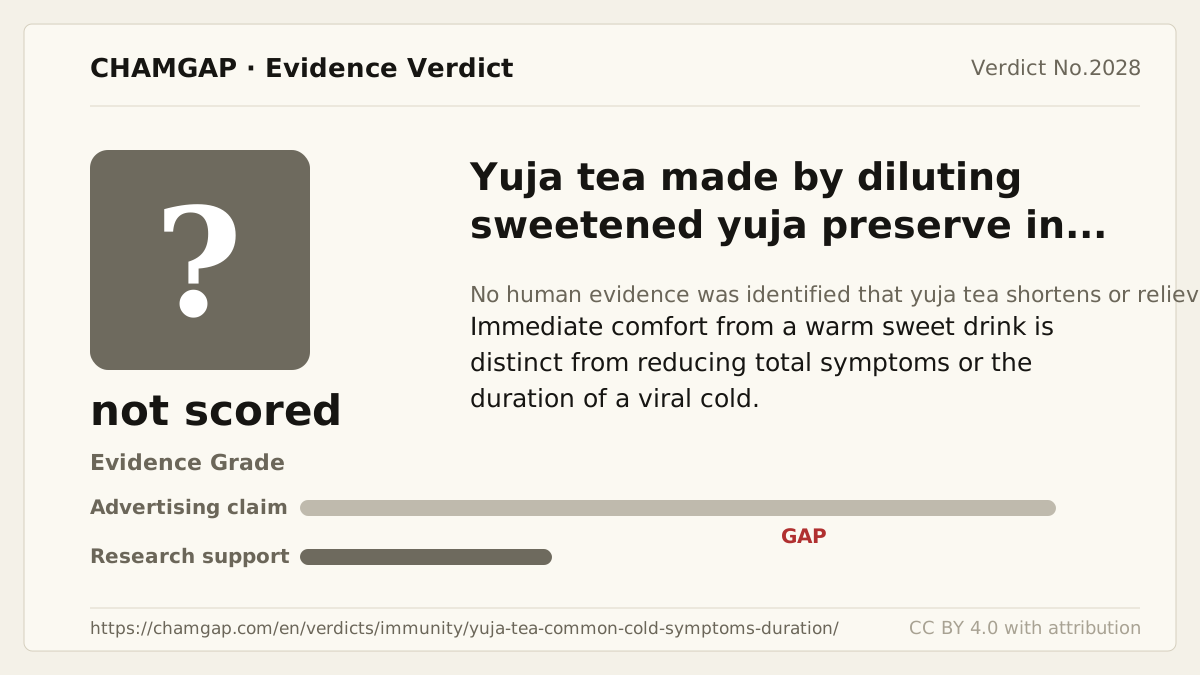
research showsThe verdict is pending. A warm yuja drink may feel soothing, but no human comparative study was found testing whether the preserve-based beverage lowers cold-symptom scores or shortens illness.
ads claimYuja tea is generally a non-caffeinated mixture of yuja preserve, sugar, and water, but that composition fact does not establish shorter colds. No prior corpus verdict concerns the same food, so no result from another indication was substituted.
Useful facts when choosing a product
- Yuja tea usually dilutes preserved yuja peel and pulp sweetened with sugar or honey; fruit and sugar content vary by product.
- Without tea leaf or another caffeine ingredient, yuja tea is not a caffeine source; blended products require label review.
- Donguibogam records yuja fruit under its fruit section, but that does not establish that today's sweetened yuja-tea beverage existed in 1613.
- Reproducible search: PubMed, ClinicalTrials.gov, and Google Scholar; exact PubMed query stated above plus yuzu tea, yuja tea, and yuja-cha variants; run 2026-08-03; no eligible human beverage study identified within the search scope. Other formulas, vitamin C, and citrus extracts were excluded for intervention mismatch.
Chamgap Semantic Classification Code
Candidate index · review held
F.yuja-tea-made-by-diluting-sweetened-yuja-preserve-in-water.food.shorter-common-cold-duration-and-milder-symptoms.assess.UNKFoods and beverages > Yuja tea made by diluting sweetened yuja preserve in water > Food consumption > Shorter common-cold duration and milder symptoms > Association or change assessment > Unknown
An automated migration candidate, not an issued permanent code; exact claim scope remains under review. This machine-generated migration candidate helps retrieval but is not a permanent assignment. The original verdict ID and URL remain authoritative.
What the research actually shows
Cold trials found in screening used Yin Qiao San, Samsoeum, vitamin C, or other plant extracts and were excluded for intervention mismatch. With no yuja-tea trial, no tea-bag dose, grams, milliliters, cups per day, primary endpoint, analyzed sample, effect size, or funding can be reported.
Why this is classified as ?
No human comparison measured cold symptoms or duration with this beverage, so the verdict remains unscored and pending.
Counterpoint. No evidence is not evidence of no effect. It means a treatment effect cannot currently be quantified.
Rejudgment record. Cross-check applied — Reproducible searches found no eligible human study measuring cold symptoms or duration with a yuja-preserve beverage
| Endpoint | P | Symptom or function itself is the target - including patient reports and performance tests |
Stored derived and displayed grades match; this is not a current recalculation or validity check (?).
Sub-claim grades by effect
This ingredient is marketed for several effects. A single overall grade blends strong and weak claims together, so each effect is graded separately here. The overall grade reflects the strongest disconfirming or core claim.
| Effect (sub-claim) | Grade | Basis |
|---|---|---|
| Reduced cold symptoms and duration | ? | No matching beverage study was identified within the search scope. |
Cross-check — AI research and Codex final gate
Evidence Table
| Study | Design | Sample | Funding | Endpoint | Result | Weight |
|---|---|---|---|---|---|---|
| Reproducible literature search on 2026-08-03 | PubMed, ClinicalTrials.gov, and Google Scholar searches | No eligible human study identified within the search scope | Not applicable | Cold symptom score and duration | No yuja-tea beverage trial identified within the search scope | Direct basis for a pending verdict |
Receipt — 1 References
Of 1 cited sources, 1 had limited original-page access (blocked or summary-only) and were verified via index/summary, marked partial; the rest were verified at the original page. As of 2026-08-03.
Final verification and publication gate: Codex · Evidence date: 2026-08-03 · Corrections: none
Cite this verdict
[Chamgap] Yuja tea x shorter and milder common colds — Evidence Grade ?. 1 cited sources checked. Source: https://chamgap.com/en/verdicts/immunity/yuja-tea-common-cold-symptoms-duration/ · CC BY 4.0CC BY 4.0 — free to use with attribution; do not distort grades, numbers, or verdict meaning.
What this document does and does not do
Chamgap is an information source. It reports what research has and has not confirmed; it does not tell readers what to take or buy. That decision belongs to readers and, when needed, medical or legal professionals. This verdict reflects literature available up to the search date and may change as new research appears. Nothing here is medical advice.