
Valacyclovir,
does it really help with Prevention of transmission to an uninfected partner through daily suppressive therapy by a person with symptomatic genital HSV-2?
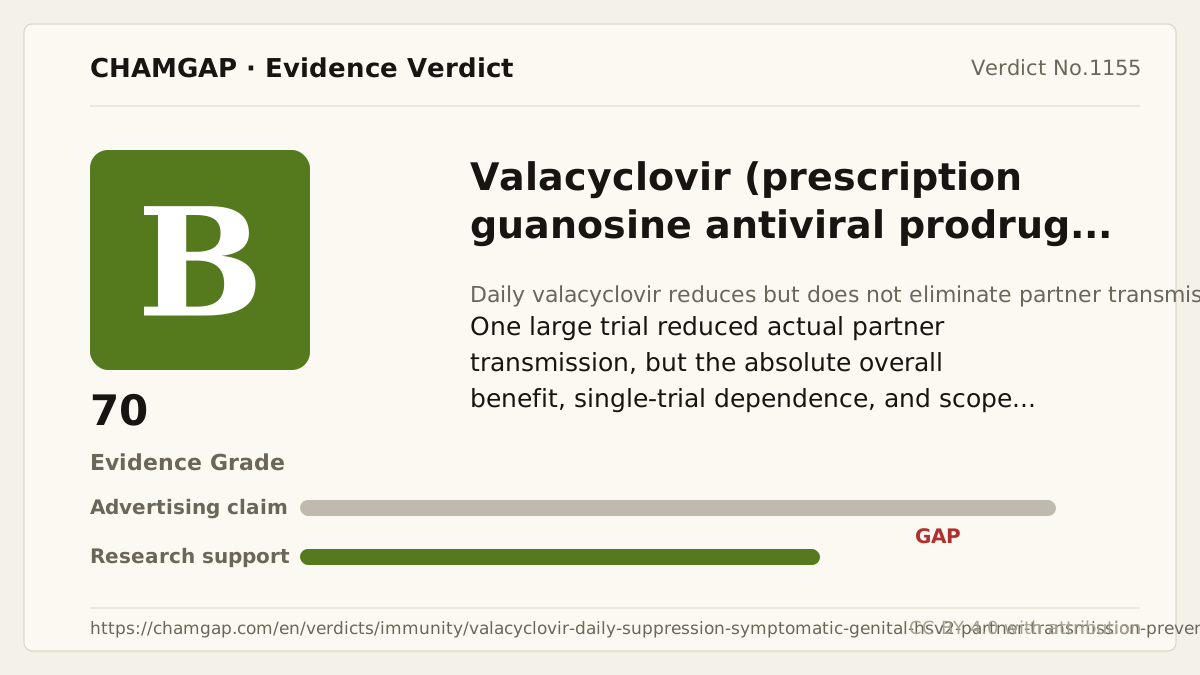
research showsValacyclovir is rated B because a direct randomized trial showed that daily suppressive therapy by a person with symptomatic genital HSV-2 reduced infection in an uninfected partner. In the eight-month Corey trial of 1,484 serodiscordant heterosexual monogamous couples, symptomatic HSV-2 acquisition fell from 16 of 741 to 4 of 743, hazard ratio 0.25, while overall acquisition fell from 3.6% to 1.9%, hazard ratio 0.52. However, direct transmission evidence is concentrated in this single landmark trial funded by the manufacturer and the National Institutes of Health, the absolute difference in overall infection was 1.7 percentage points, and every couple received safer-sex counseling and was offered condoms. Prevention was incomplete and the same effect is not established across other partner types, relationship structures, or asymptomatic seropositive source partners, supporting B with 70 points rather than A. Headache, nausea, and kidney or neurologic toxicity in dehydration or renal impairment are separate safety issues.
ads claimA 75% relative reduction in symptomatic transmission does not mean zero risk. Overall HSV-2 acquisition fell from 3.6% to 1.9%, and the trial combined daily adherence, disclosure, counseling, and offered condoms, so the medicine alone cannot replace other preventive measures.
Useful facts when choosing a product
- The transmission-prevention trial used valacyclovir 500 mg once daily for eight months in source partners with symptomatic genital HSV-2 and evaluated susceptible partners monthly.
- Daily suppression reduces but does not eliminate viral shedding or transmission, so disclosure, avoidance of sex during symptoms or prodrome, and condom use should continue.
- Headache, nausea, and abdominal discomfort can occur, hydration is important, and older adults or people with impaired kidney function require dose adjustment.
- Renal impairment, dehydration, and high doses increase the risk of acute kidney injury and uncommon neurotoxicity such as confusion, hallucinations, or tremor, requiring prompt evaluation if symptoms occur.
Chamgap Semantic Classification Code
Candidate index · review held
M.valacyclovir.UNK.transmission-to-an-uninfected-partner-through-daily-suppressive-therapy-by-a-person-with-symptomatic-genital-hsv-2.prevent.MULTIMedicinal interventions > Valacyclovir > Unknown > transmission to an uninfected partner through daily suppressive therapy by a person with symptomatic genital HSV-2 > Occurrence-prevention claim > Multiple: primary unresolved
An automated migration candidate, not an issued permanent code; exact claim scope remains under review. This machine-generated migration candidate helps retrieval but is not a permanent assignment. The original verdict ID and URL remain authoritative.
What the research actually shows
The 2004 Corey trial evaluated susceptible partners monthly and prespecified transmission of symptomatic genital herpes as the primary endpoint. Both partners received safer-sex counseling and were offered condoms at every visit, so the drug effect was added to these preventive behaviors. In a shedding substudy of 89 source partners, HSV DNA was detected on 2.9% versus 10.8% of days, but shedding was not eliminated. A separate 69-participant crossover trial by Gupta and colleagues found that valacyclovir 500 mg twice daily reduced PCR-detected genital shedding versus placebo, relative risk 0.18, but this was a mechanistic surrogate rather than partner infection. There is no independent second large direct transmission replication, preventing a grade above B.
Why this is classified as B (70)
The large double-blind trial of 1,484 serodiscordant couples provided direct transmission benefits, with a hazard ratio of 0.25 for symptomatic acquisition and 0.52 for overall acquisition. Direct evidence is nevertheless concentrated in one manufacturer- and National-Institutes-of-Health-funded trial, the overall absolute difference was 1.7 percentage points, safer-sex counseling and condoms accompanied treatment, and prevention was incomplete. These limitations give B with 70 points. Reduced shedding is a supporting surrogate, while renal and neurologic harms remain separate safety issues.
Counterpoint. Evidence is most direct for immunocompetent, heterosexual, monogamous, serodiscordant couples in which the source partner has symptomatic genital HSV-2. The same effect size cannot be assumed for asymptomatic HSV-2 seropositivity, immunocompromise, same-sex couples, multiple partners, or pregnancy.
Rejudgment record. New verdict — Accepted the direct symptomatic acquisition result of 16 of 741 versus 4 of 743, hazard ratio 0.25, and overall acquisition of 3.6% versus 1.9%, hazard ratio 0.52, in the double-blind Corey 2004 trial of 1,484 serodiscordant couples; accounted for concentration in one manufacturer- and National-Institutes-of-Health-funded trial, a 1.7-percentage-point absolute difference in overall acquisition, concomitant counseling and offered condoms, incomplete prevention, and limits on generalizability
Sub-claim grades by effect
This ingredient is marketed for several effects. A single overall grade blends strong and weak claims together, so each effect is graded separately here. The overall grade reflects the strongest disconfirming or core claim.
| Effect (sub-claim) | Grade | Basis |
|---|---|---|
| Reduced symptomatic genital HSV-2 acquisition in the uninfected partner | B | The prespecified primary endpoint was 4 of 743 versus 16 of 741, hazard ratio 0.25, but evidence comes from one trial and does not replace condoms or counseling. |
| Reduced overall HSV-2 acquisition in the uninfected partner, with or without symptoms | B | Overall acquisition was 1.9% versus 3.6%, hazard ratio 0.52, and 14 infections still occurred with valacyclovir, so prevention was incomplete. |
| Reduced genital HSV-2 shedding in the source partner | C | Randomized trials substantially reduced shedding days, but shedding is a surrogate rather than partner infection and was not eliminated. |
Cross-check — AI research and Codex final gate
Evidence Table
| Study | Design | Sample | Funding | Endpoint | Result | Weight |
|---|---|---|---|---|---|---|
| Corey L et al.; Valacyclovir HSV Transmission Study Group. 2004 | Multinational randomized double-blind placebo-controlled transmission-prevention trial | 1,484 immunocompetent heterosexual monogamous HSV-2-serodiscordant couples | GlaxoSmithKline Research and Development and United States NIH NIAID grant AI-30731 | Primary symptomatic genital HSV-2 transmission; secondary overall HSV-2 acquisition and viral shedding | Symptomatic acquisition was 4 of 743 versus 16 of 741, hazard ratio 0.25; overall acquisition was 1.9% versus 3.6%, hazard ratio 0.52. | Pivotal large randomized trial with a direct transmission endpoint |
| Gupta R et al. 2004 | Randomized double-blind three-period crossover trial | 69 immunocompetent participants with genital HSV-2 | United States NIH NIAID grant AI-30731 with GlaxoSmithKline-affiliated coauthors | Total and subclinical genital HSV shedding days measured by culture and PCR | Valacyclovir 500 mg twice daily reduced shedding versus placebo, with relative risks of 0.03 by culture and 0.18 by PCR, but did not eliminate it. | Mechanistic randomized support using a surrogate endpoint |
Receipt — 2 References
All 2 cited sources were verified for existence at the original page (as of 2026-07-22).
Final verification and publication gate: Codex · Evidence date: 2026-07-22 · Corrections: none
Cite this verdict
[Chamgap] Valacyclovir x prevention of partner transmission through daily suppression of symptomatic genital HSV-2 — Evidence Grade B·70. 2 cited sources checked. Source: https://chamgap.com/en/verdicts/immunity/valacyclovir-daily-suppression-symptomatic-genital-hsv2-partner-transmission-prevention/ · CC BY 4.0CC BY 4.0 — free to use with attribution; do not distort grades, numbers, or verdict meaning.
What this document does and does not do
Chamgap is an information source. It reports what research has and has not confirmed; it does not tell readers what to take or buy. That decision belongs to readers and, when needed, medical or legal professionals. This verdict reflects literature available up to the search date and may change as new research appears. Nothing here is medical advice.