
Tympanostomy tubes,
does it really help with Prevention of recurrent acute otitis media in children?
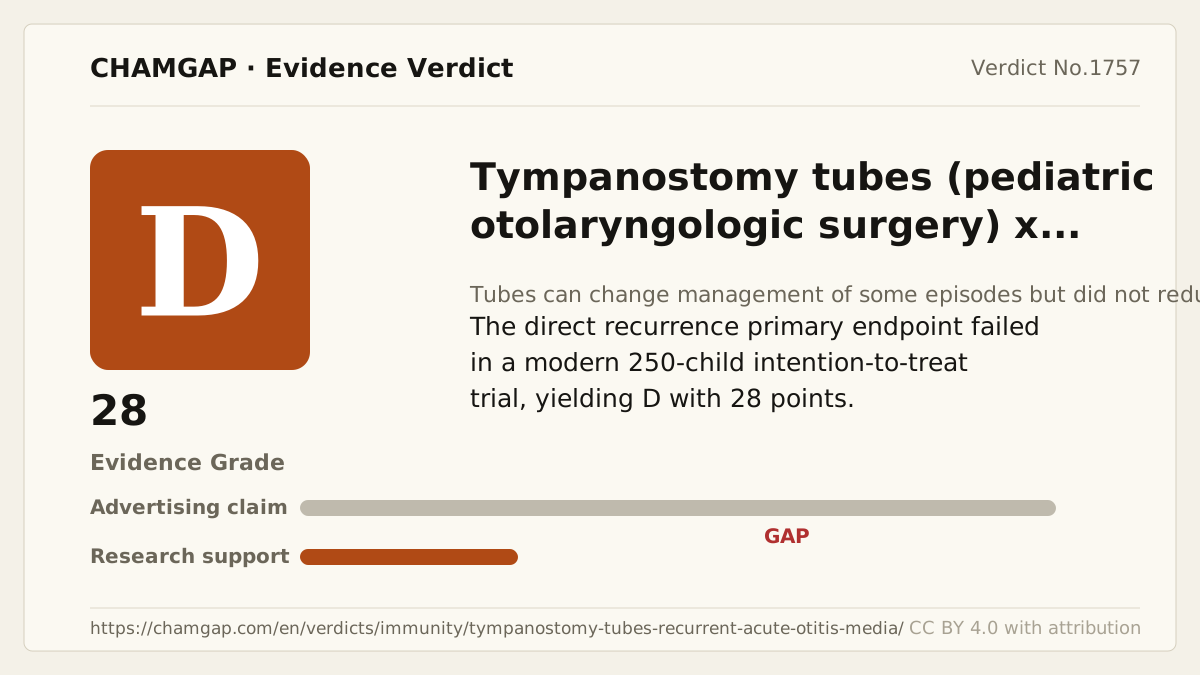
research showsTympanostomy tubes are rated D because a sufficiently sized modern trial did not reduce acute otitis media recurrences over two years. Hoberman 2021, NEJM 384(19):1789-1799, was an open randomized trial of 250 children and found two-year recurrence IRR 0.97 (0.84 to 1.12), P=.66. Older trials in Venekamp 2018, Cochrane 2018(5):CD012017, had a 12-month recurrence-free RR 1.41 (1.00 to 1.99), but the evidence was low quality. Otorrhea increased with tubes. Evidence does not show repeated modern failure in the same indication, so the verdict is D rather than F, with 28 points.
ads claimMarketing simplifies tube placement into a reliable way to stop repeated infections. The modern trial did not reduce total recurrences; benefits are closer to drainage and changing how some episodes are managed.
Useful facts when choosing a product
- Tympanostomy tubes are placed through the eardrum to ventilate and drain the middle ear, usually under general anesthesia in young children.
- Otorrhea can often be treated with ear drops while a tube is present, but blockage, early extrusion, persistent perforation, and tympanic-membrane changes can occur.
- Middle-ear effusion at assessment, age, and anesthesia burden should be considered in recurrent acute otitis media.
Chamgap Semantic Classification Code
Candidate index · review held
P.tympanostomy-tubes.procedural.recurrent-acute-otitis-media.prevent.activeProcedures, devices and tests > Tympanostomy tubes > Procedural > recurrent acute otitis media > Occurrence-prevention claim > Active comparator
An automated migration candidate, not an issued permanent code; exact claim scope remains under review. This machine-generated migration candidate helps retrieval but is not a permanent assignment. The original verdict ID and URL remain authoritative.
What the research actually shows
Hoberman 2021, NEJM 384(19):1789-1799, was an open randomized trial assigning 250 children aged 6 to 35 months to tympanostomy tubes (129) or episodic antimicrobial treatment (121). The actual primary analysis included all 250 by intention to treat across 502.1 child-years. Two-year recurrence was null at IRR 0.97 (95% CI 0.84 to 1.12), P=.66, and otorrhea increased. Venekamp 2018, Cochrane 2018(5):CD012017, found a 12-month recurrence-free RR 1.41 (1.00 to 1.99) in older trials, but this evidence was low quality and predated pneumococcal vaccination.
Why this is classified as D (28)
The direct recurrence primary endpoint failed with P=.66 in 250 randomized and 250 intention-to-treat participants, while older positive evidence was low quality and from a different vaccine era. The result supports D with 28 points, not repeated-failure grade F.
Counterpoint. For children with concurrent effusion or substantial episode-related distress and antibiotic burden, practical benefits separate from total recurrence prevention can be discussed.
Rejudgment record. Cross-check applied — Centered the verdict on failure of the two-year recurrence-count primary endpoint in the modern 250-child intention-to-treat trial and treated older pre-vaccine, low-quality signals only as supporting context
Sub-claim grades by effect
This ingredient is marketed for several effects. A single overall grade blends strong and weak claims together, so each effect is graded separately here. The overall grade reflects the strongest disconfirming or core claim.
| Effect (sub-claim) | Grade | Basis |
|---|---|---|
| Reduction in acute otitis media recurrences over two years | D | The direct primary endpoint failed with P=.66 in the 250-child intention-to-treat analysis, and otorrhea increased. |
| Delay in time to first recurrence | C | A secondary-endpoint signal was present, but the overall recurrence primary endpoint was null. |
| Improvement in disease-specific quality of life | D | Neither the modern trial nor the older synthesis established meaningful comparative benefit. |
Cross-check — AI research and Codex final gate
Evidence Table
| Study | Design | Sample | Funding | Endpoint | Result | Weight |
|---|---|---|---|---|---|---|
| Hoberman A et al. 2021 | Multicenter randomized active-controlled trial | 250 randomized (129/121); actual primary intention-to-treat analysis included 250 across 502.1 child-years | Public funding from the US NIH National Institute on Deafness and Other Communication Disorders (U01 DC013995-01A1) | Primary number of acute otitis media episodes per child-year over two years | The primary endpoint failed: 1.48 versus 1.56, rate ratio 0.97 (95% CI 0.84 to 1.12), P=.66. | Pivotal modern trial with a direct clinical endpoint |
| Venekamp RP et al. 2018 | Cochrane systematic review | Five randomized trials and 805 children | Public infrastructure support from the UK NIHR for Cochrane | Recurrence-free status at 12 months, recurrence count, and disease-specific quality of life | The 12-month recurrence-free RR was 1.41 (1.00 to 1.99), but evidence was low quality and every trial predated pneumococcal vaccination. | Context defining limitations of older evidence |
Receipt — 2 References
All 2 cited sources were verified for existence at the original page (as of 2026-07-24).
Final verification and publication gate: Codex · Evidence date: 2026-07-24 · Corrections: none
Cite this verdict
[Chamgap] Tympanostomy tubes x prevention of recurrent acute otitis media in children — Evidence Grade D·28. 2 cited sources checked. Source: https://chamgap.com/en/verdicts/immunity/tympanostomy-tubes-recurrent-acute-otitis-media/ · CC BY 4.0CC BY 4.0 — free to use with attribution; do not distort grades, numbers, or verdict meaning.
What this document does and does not do
Chamgap is an information source. It reports what research has and has not confirmed; it does not tell readers what to take or buy. That decision belongs to readers and, when needed, medical or legal professionals. This verdict reflects literature available up to the search date and may change as new research appears. Nothing here is medical advice.