
Subcutaneous allergen immunotherapy,
does it really help with Reduction of symptoms and rescue-medication use in seasonal allergic rhinitis?
research showsSubcutaneous allergen immunotherapy is rated B because multiple placebo-controlled trials show less seasonal allergic rhinitis symptoms and medication use. Frew 2006 randomized 410 participants and 347 completed treatment; whole-season symptom and medication scores in the high-dose group were 29% and 32% lower than placebo, meeting the primary efficacy assessment. Cochrane included 51 trials and 2,871 participants overall, while the symptom-score synthesis used 15 trials and 1,063 participants, 597 treatment and 466 placebo, yielding SMD -0.73 (95% CI -0.97 to -0.50). These are patient-reported treatment goals, not surrogate markers.
ads claimMarketing can expand symptom reduction into complete removal of an allergic constitution or a permanent cure for everyone. Evidence concerns symptom and rescue-medication reduction in selected patients sensitized to the relevant allergen.
Useful facts when choosing a product
- SCIT repeatedly injects a confirmed causal allergen under the skin through build-up and maintenance phases in a medical setting.
- Because systemic anaphylaxis can occur, administration and post-injection observation must occur in a medical facility. Safety was not used as grading evidence.
Chamgap Semantic Classification Code
Candidate index · review held
M.allergen-immunotherapy.subcutaneous.symptoms-and-rescue-medication-use-in-seasonal-allergic-rhinitis.reduce.placeboMedicinal interventions > allergen immunotherapy > Subcutaneous > symptoms and rescue-medication use in seasonal allergic rhinitis > Reduction claim > Placebo
An automated migration candidate, not an issued permanent code; exact claim scope remains under review. This machine-generated migration candidate helps retrieval but is not a permanent assignment. The original verdict ID and URL remain authoritative.
What the research actually shows
Frew and colleagues randomized 410 patients with moderate-to-severe seasonal allergic rhinitis under double masking to 100,000 SQ-U, 10,000 SQ-U, or placebo; 347 participants, or 84.6%, completed treatment, for 15.4% attrition. Whole-season symptom and medication scores in the high-dose group were 29% and 32% below placebo, both P<.001, so the efficacy assessment succeeded. The Calderon Cochrane review included 51 trials and 2,871 participants overall; the symptom SMD of -0.73 (95% CI -0.97 to -0.50) came from 15 trials and 1,063 participants, 597 treatment and 466 placebo. Medication SMD was -0.57 (-0.82 to -0.33). The review did not tabulate funding by trial, so the proportion of manufacturer-sponsored studies is unknown; only the Frew trial is confirmed as linked to ALK-Abello. Drug options in the same indication include verdict 790, which is B with 61 points, and verdict 851, which is B with 72 points; acupuncture is verdict 1676, which is C with 48 points. Immunotherapy is a different intervention.
Why this is classified as B (70)
Multiple placebo-controlled trials improve direct patient treatment goals, but 15.4% attrition in the pivotal trial is scored B1, supporting B with 70 points. The review does not establish the proportion of manufacturer-sponsored trials.
Counterpoint. When ordinary medication provides adequate control, the burden of years of injections may not be worthwhile. Selection should consider the causal allergen, severity, cost, and capacity to manage anaphylaxis.
Rejudgment record. Cross-check applied — Replicated placebo-controlled improvement in direct patient treatment goals with a large pooled effect
| Endpoint | P | Symptom or function itself is the target - including patient reports and performance tests |
| Replication | R2 | Independently replicated across trials |
| Independence | I1 | Mixed funding sources |
| Effect size | E+ | Meets the clinically important threshold |
Stored derived and displayed grades match; this is not a current recalculation or validity check (B).
Sub-claim grades by effect
This ingredient is marketed for several effects. A single overall grade blends strong and weak claims together, so each effect is graded separately here. The overall grade reflects the strongest disconfirming or core claim.
| Effect (sub-claim) | Grade | Basis |
|---|---|---|
| Reduction of seasonal rhinitis symptoms | B | Multiple placebo-controlled trials and the pooled SMD of -0.73 support benefit. |
| Reduction of rescue-medication use | B | Use fell consistently in the high-dose trial and meta-analysis. |
| Improvement in rhinitis-related quality of life | B | Quality-of-life outcomes in the confirmatory trial also favored treatment. |
Cross-check — AI research and Codex final gate
Evidence Table
| Study | Design | Sample | Funding | Endpoint | Result | Weight |
|---|---|---|---|---|---|---|
| Frew AJ et al. 2006 | Double-blind randomized placebo-controlled dose trial | 410 randomized; 347 completed treatment and contributed the principal efficacy data | Manufacturer-linked study with trial product and industry support from ALK-Abello | Whole-season symptom and medication scores | The 100,000-SQ-U group had 29% fewer symptoms and 32% less medication use than placebo, both P<.001; the efficacy assessment succeeded. | Pivotal confirmatory randomized trial |
| Calderon MA et al. 2007 Cochrane | Systematic review and meta-analysis of placebo-controlled randomized trials | 51 trials and 2,871 participants overall; symptom synthesis of 15 trials and 1,063 participants (597 treatment and 466 placebo) | Cochrane did not tabulate trial-level funding, so the proportion with manufacturer sponsorship is unknown | Rhinitis symptoms and rescue-medication use | Symptom SMD was -0.73 (95% CI -0.97 to -0.50), and medication SMD was -0.57 (-0.82 to -0.33). | Independent multi-trial replication |
Receipt — 2 References
All 2 cited sources were verified for existence at the original page (as of 2026-07-24).
Final verification and publication gate: Codex · Evidence date: 2026-07-24 · Corrections: none
Cite this verdict
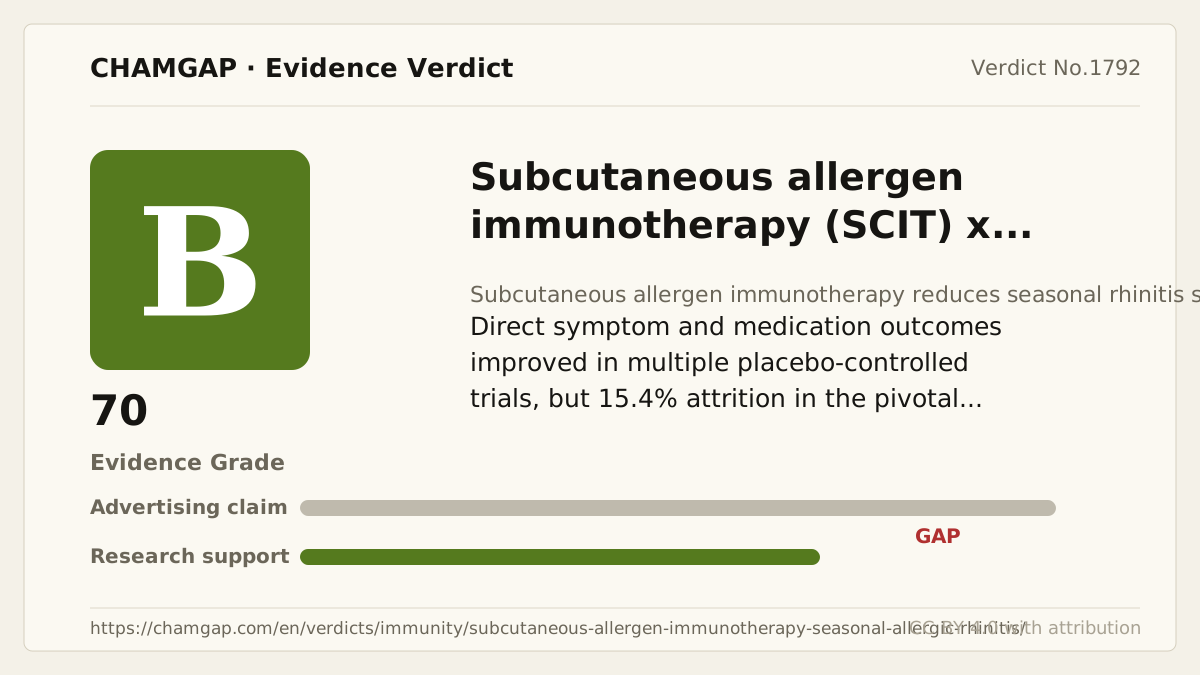
[Chamgap] Subcutaneous allergen immunotherapy x fewer seasonal allergic rhinitis symptoms — Evidence Grade B·70. 2 cited sources checked. Source: https://chamgap.com/en/verdicts/immunity/subcutaneous-allergen-immunotherapy-seasonal-allergic-rhinitis/ · CC BY 4.0CC BY 4.0 — free to use with attribution; do not distort grades, numbers, or verdict meaning.
What this document does and does not do
Chamgap is an information source. It reports what research has and has not confirmed; it does not tell readers what to take or buy. That decision belongs to readers and, when needed, medical or legal professionals. This verdict reflects literature available up to the search date and may change as new research appears. Nothing here is medical advice.