
Spirulina,
does it really help with Relief of rhinorrhea, congestion, sneezing, and nasal itching in allergic rhinitis?
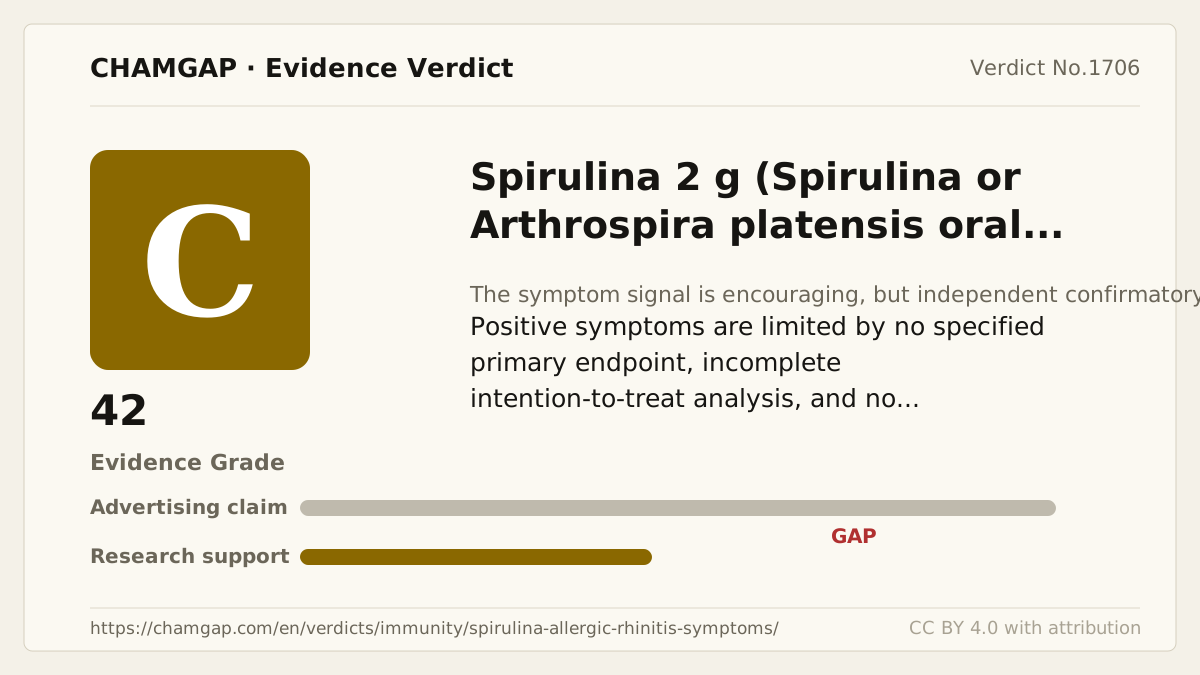
research showsSpirulina receives C with 42 points. Cingi 2008 randomized 150 participants but analyzed only 129 with adequate diaries, so this was not a complete intention-to-treat analysis, and it did not specify one prespecified primary endpoint. All four nasal symptoms had between-group P<0.001, but the article did not report a funding source. Nourollahian 2020 enrolled 65 and analyzed 53 in a cetirizine active-control trial, not a confirmation of absolute benefit versus placebo.
ads claimMarketing presents immune balance or a natural antihistamine as if spirulina could replace standard treatment. The evidence supports only a limited symptom signal from two trials and does not establish equivalence across commercial products or replacement of standard care.
Useful facts when choosing a product
- The pivotal trial used 2 g of spirulina daily, while commercial products vary in species, cultivation, processing, and content.
- Evidence-based allergic rhinitis care includes allergen avoidance, intranasal corticosteroids, and antihistamines; spirulina is not an established substitute.
- Poorly controlled cyanobacterial supplements can be contaminated with microcystins or heavy metals, making credible quality testing important.
Chamgap Semantic Classification Code
Candidate index · review held
S.spirulina.oral.rhinorrhea-congestion-sneezing-and-nasal-itching-in-allergic-rhinitis.relieve.MULTISupplements and nutraceuticals > Spirulina > Oral > rhinorrhea, congestion, sneezing, and nasal itching in allergic rhinitis > Symptom-relief claim > Multiple: primary unresolved
An automated migration candidate, not an issued permanent code; exact claim scope remains under review. This machine-generated migration candidate helps retrieval but is not a permanent assignment. The original verdict ID and URL remain authoritative.
What the research actually shows
Cingi and colleagues randomized 150 patients with allergic rhinitis in an approximately two-to-one ratio to spirulina 2 g or placebo. The actual analysis included only 129 patients with adequate diaries, and no single prespecified primary endpoint was identified. Weekly nasal-symptom diaries showed rhinorrhea falling from 2.66 to 0.69 with spirulina and from 2.77 to 1.80 with placebo, with between-group P<0.001 across all four symptoms. Nourollahian and colleagues enrolled 65 participants but analyzed 53 after exclusions and withdrawal; several symptoms and quality-of-life measures favored spirulina over cetirizine. That active-control result does not independently reproduce an absolute benefit over placebo.
Why this is classified as C (42)
Cingi 2008 found between-group P<0.001 for all four symptoms, but it had no single prespecified primary endpoint, analyzed only 129 of 150 randomized participants, and reported no funding source. Nourollahian 2020 was an active cetirizine comparison rather than independent placebo-controlled replication, giving C with 42 points.
Counterpoint. Anyone trying it as an adjunct should monitor product quality and symptom response rather than replace standard treatment. Persistent symptoms or associated asthma and breathing difficulty warrant clinical evaluation.
Rejudgment record. Cross-check applied — Accepted the positive direct patient-symptom signal but applied rule ①-ⓒ because no single prespecified primary endpoint was identified, only 129 of 150 randomized participants were analyzed, and independent placebo replication is absent
Sub-claim grades by effect
This ingredient is marketed for several effects. A single overall grade blends strong and weak claims together, so each effect is graded separately here. The overall grade reflects the strongest disconfirming or core claim.
| Effect (sub-claim) | Grade | Basis |
|---|---|---|
| Reduction of rhinorrhea in allergic rhinitis | C | The placebo-controlled diary result was positive, but complete intention-to-treat analysis and independent placebo replication are absent. |
| Reduction of congestion, sneezing, and itching in allergic rhinitis | C | Direct symptoms were positive, but endpoint specification and trial quantity are limited. |
| Improvement in allergic-rhinitis-related quality of life | C | An active-control trial provides a positive signal but not confirmatory replication versus placebo. |
Cross-check — AI research and Codex final gate
Evidence Table
| Study | Design | Sample | Funding | Endpoint | Result | Weight |
|---|---|---|---|---|---|---|
| Cingi C et al. 2008 | Randomized double-blind placebo-controlled trial | 150 randomized; 129 with adequate diaries analyzed, including 85 spirulina and 44 placebo | Funding source not reported in the article; manufacturer leadership unclear | No single prespecified primary endpoint; weekly diaries for rhinorrhea, sneezing, congestion, and itching | All four main efficacy symptoms were positive at P<0.001, but the analysis was not a complete intention-to-treat analysis. | Pivotal direct symptom trial with design limitations |
| Nourollahian M et al. 2020 | Randomized active-control trial | 65 enrolled; 53 actually analyzed | No separate funding source stated in the article; conducted by Mashhad University investigators | Rhinitis symptoms, quality of life, and inflammatory cytokines | Some symptoms favored spirulina over cetirizine, but this was not a placebo-controlled confirmatory trial. | Independent active-control supporting evidence |
Receipt — 2 References
All 2 cited sources were verified for existence at the original page (as of 2026-07-24).
Final verification and publication gate: Codex · Evidence date: 2026-07-24 · Corrections: none
Cite this verdict
[Chamgap] Spirulina x relief of allergic rhinitis symptoms — Evidence Grade C·42. 2 cited sources checked. Source: https://chamgap.com/en/verdicts/immunity/spirulina-allergic-rhinitis-symptoms/ · CC BY 4.0CC BY 4.0 — free to use with attribution; do not distort grades, numbers, or verdict meaning.
What this document does and does not do
Chamgap is an information source. It reports what research has and has not confirmed; it does not tell readers what to take or buy. That decision belongs to readers and, when needed, medical or legal professionals. This verdict reflects literature available up to the search date and may change as new research appears. Nothing here is medical advice.