
Remdesivir,
does it really help with Prevention of hospitalization and death in high-risk nonhospitalized patients with COVID-19?
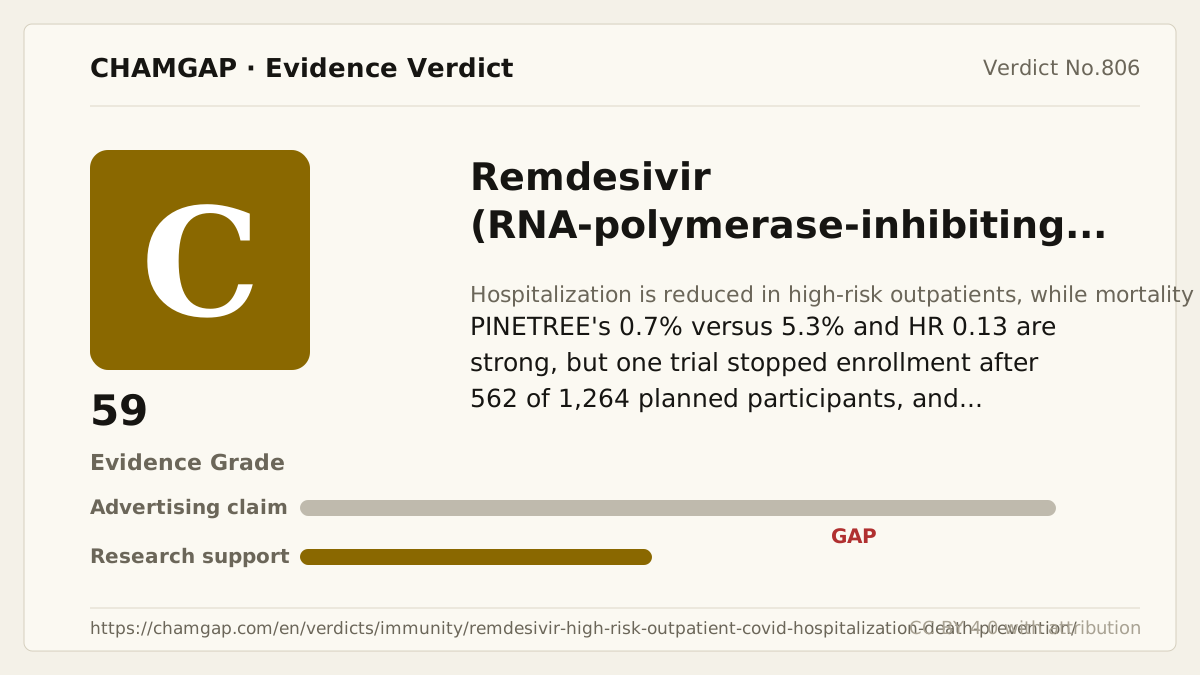
research showsThree-day intravenous remdesivir is rated C despite a strong hospitalization-or-death signal in high-risk nonhospitalized patients with COVID-19. PINETREE reported 0.7% with remdesivir versus 5.3% with placebo by day 28 (HR 0.13). It was one manufacturer-funded trial whose enrollment stopped early after only 562 of the planned 1,264 participants had received treatment, and neither group had a death. The impracticality of three consecutive outpatient infusions and changes in absolute risk after later variants and population immunity further limit applicability. One early-stopped trial supports the upper end of C, with 59 points, rather than B.
ads claimPromotion can say '87% prevention of hospitalization and death.' PINETREE had no deaths, so the figure was driven by hospitalization and applies to patients able to receive three consecutive outpatient intravenous infusions.
Useful facts when choosing a product
- Outpatient treatment for high-risk COVID-19 is a prescription intravenous course on three consecutive days started within seven days of symptom onset.
- Remdesivir inhibits viral RNA-dependent RNA polymerase and is treatment, not a substitute for vaccination.
- Liver tests and infusion-related hypersensitivity should be monitored, while renal function and concomitant medicines require clinical assessment.
- Evidence in hospitalized patients at different oxygen-support stages is separate from this early outpatient verdict.
Chamgap Semantic Classification Code
Candidate index · review held
M.remdesivir.UNK.hospitalization-and-death-in-high-risk-nonhospitalized-patients-with-covid-19.prevent.MULTIMedicinal interventions > Remdesivir > Unknown > hospitalization and death in high-risk nonhospitalized patients with COVID-19 > Occurrence-prevention claim > Multiple: primary unresolved
An automated migration candidate, not an issued permanent code; exact claim scope remains under review. This machine-generated migration candidate helps retrieval but is not a permanent assignment. The original verdict ID and URL remain authoritative.
What the research actually shows
PINETREE planned 1,264 participants but stopped enrollment early after 562 unvaccinated high-risk outpatients had received intravenous remdesivir at 200 mg on day 1 and 100 mg on days 2 and 3 or placebo. COVID-19-related hospitalization or all-cause death by day 28 occurred in 2 of 279 versus 15 of 283, or 0.7% versus 5.3% (HR 0.13), with no deaths in either group. Molina and colleagues matched 1,252 remdesivir recipients to 2,499 untreated patients from 29,270 Omicron-era outpatients and reported 28-day all-cause hospitalization of 1.3% versus 3.3%, adjusted HR 0.39. The cohort complements the trial but cannot eliminate residual confounding.
Why this is classified as C (59)
PINETREE's hospitalization-or-death result of 0.7% versus 5.3% (HR 0.13) is a strong direct clinical-event signal. The only randomized trial stopped enrollment after 562 of 1,264 planned participants had received treatment, was manufacturer-funded, had zero deaths, and preceded Omicron; outpatient infusion impracticality and changed absolute risk limit certainty to the upper end of C with 59 points. Liver-enzyme elevations, infusion reactions, and renal assessment remain separate safety issues.
Counterpoint. Remdesivir can be important for high-risk patients unable to use an oral antiviral because of interactions or contraindications. Choice should integrate symptom onset, progression risk, renal and hepatic status, and access.
Rejudgment record. Reassessment (cross-check reflected) — Accepted PINETREE's direct hospitalization-or-death result of 0.7% versus 5.3% with HR 0.13, but applied the C ceiling because the single manufacturer-funded trial stopped enrollment after 562 of 1,264 planned participants had received treatment, had zero deaths, required three outpatient intravenous infusions, and preceded later shifts in variants, immunity, and absolute risk
Sub-claim grades by effect
This ingredient is marketed for several effects. A single overall grade blends strong and weak claims together, so each effect is graded separately here. The overall grade reflects the strongest disconfirming or core claim.
| Effect (sub-claim) | Grade | Basis |
|---|---|---|
| Prevention of hospitalization and death in high-risk nonhospitalized patients | C | The direct composite-event signal was strong, but it came from one trial that stopped enrollment below its planned sample and recorded no deaths. |
| Limits from a single early-stopped trial and three consecutive outpatient intravenous infusions | ? | These characteristics limit certainty and real-world access rather than constituting a separate efficacy effect. |
| Effect in hospitalized or severe COVID-19 | ? | This is a separate evidence axis from the early outpatient question and is not graded here. |
Cross-check — AI research and Codex final gate
Evidence Table
| Study | Design | Sample | Funding | Endpoint | Result | Weight |
|---|---|---|---|---|---|---|
| Gottlieb RL et al. 2022 PINETREE | Randomized double-blind placebo-controlled phase 3 trial | 584 randomized and 562 treated | Gilead Sciences | COVID-19-related hospitalization or all-cause death by day 28 | 0.7% versus 5.3%, HR 0.13; there were zero deaths in both groups. | Pivotal direct clinical-event randomized evidence |
| Molina KC et al. 2024 | Omicron-era propensity-matched retrospective cohort | 1,252 remdesivir-treated and 2,499 untreated patients | United States NIH and public data-infrastructure support | 28-day all-cause hospitalization and mortality | Hospitalization was 1.3% versus 3.3%, adjusted HR 0.39; the mortality difference was uncertain. | Supportive modern-setting observational evidence |
Receipt — 2 References
All 2 cited sources were verified for existence at the original page (as of 2026-07-20).
Final verification and publication gate: Codex · Evidence date: 2026-07-20 · Corrections: none
Cite this verdict
[Chamgap] Remdesivir x prevention of hospitalization and death in high-risk nonhospitalized COVID-19 — Evidence Grade C·59. 2 cited sources checked. Source: https://chamgap.com/en/verdicts/immunity/remdesivir-high-risk-outpatient-covid-hospitalization-death-prevention/ · CC BY 4.0CC BY 4.0 — free to use with attribution; do not distort grades, numbers, or verdict meaning.
What this document does and does not do
Chamgap is an information source. It reports what research has and has not confirmed; it does not tell readers what to take or buy. That decision belongs to readers and, when needed, medical or legal professionals. This verdict reflects literature available up to the search date and may change as new research appears. Nothing here is medical advice.