
Recombinant hepatitis B vaccine,
does it really help with Prevention of chronic hepatitis B infection and later cirrhosis and liver cancer after infant vaccination?
research showsInfant hepatitis B vaccination is rated A because it markedly reduces chronic HBV carriage and prevents hepatocellular carcinoma over the long term. However, the early cohorts underlying the Gambian estimate of 94% protection against chronic infection and the Taiwanese decline in childhood hepatocellular carcinoma from 0.70 to 0.36 per 100,000 belonged to the plasma-derived vaccine generation, not the current recombinant generation. Current recombinant vaccines are immunobridged through equivalent anti-HBs immunogenicity, so the same prevention is expected, and recombinant-generation cohorts provide confirmatory evidence. This generation bridge supports A with 89 points without overstating the early outcomes as recombinant-only data. The vaccine prevents infection rather than treating established disease, and nonresponse and breakthrough infection remain possible. Local pain and transient fever are separated under safety.
ads claimPromotion can imply that one dose makes infection impossible for life or that vaccination treats established chronic hepatitis B. Protection depends on timely completion of the recommended schedule, and infants born to infected mothers may require hepatitis B immune globulin and postvaccination testing.
Useful facts when choosing a product
- Current infant hepatitis B vaccines use recombinant HBsAg rather than infectious virus. Product-specific licensed ages and doses should be followed.
- Timely completion of the recommended schedule, including the birth dose, is especially important for preventing perinatal infection and chronic carriage. A clinician can arrange catch-up vaccination after delays.
- An infant born to an HBsAg-positive mother may need hepatitis B immune globulin and postvaccination serologic testing in addition to vaccine. National guidance and the birth facility's instructions take priority.
- Common reactions are injection-site pain or redness and transient fever. Severe allergic reactions are very rare, and a prior severe allergy to a dose or component requires assessment before vaccination.
Chamgap Semantic Classification Code
Candidate index · review held
M.recombinant-hepatitis-b-vaccine.UNK.chronic-hepatitis-b-infection-and-later-cirrhosis-and-liver-cancer-after-infant-vaccination.prevent.baselineMedicinal interventions > Recombinant hepatitis B vaccine > Unknown > chronic hepatitis B infection and later cirrhosis and liver cancer after infant vaccination > Occurrence-prevention claim > Within-group baseline comparison
An automated migration candidate, not an issued permanent code; exact claim scope remains under review. This machine-generated migration candidate helps retrieval but is not a permanent assignment. The original verdict ID and URL remain authoritative.
What the research actually shows
The Gambian study allocated about 125,000 infants by area and found current HBsAg positivity of 0.8% after full vaccination versus 12.4% without vaccination among 730 linkable young adults, corresponding to 94% efficacy. A Taiwanese registry analysis found that annual hepatocellular-carcinoma incidence among children aged 6 to 14 years declined from 0.70 to 0.36 per 100,000, and a 20-year analysis found an adjusted relative risk of 0.31. The early cohorts supporting these long-term outcomes used plasma-derived vaccine. Current recombinant vaccines are linked through equivalent anti-HBs immunogenicity, and later recombinant-generation cohorts confirm the same direction of chronic-infection and cancer prevention. The early long-term outcomes therefore support the vaccination strategy through population and generation bridging, not as recombinant-only cohort evidence.
Why this is classified as A (89)
The Gambian estimate of 94% protection against chronic infection and the Taiwanese decline in childhood hepatocellular carcinoma from 0.70 to 0.36 per 100,000 are large long-term effects, but the early cohorts used plasma-derived vaccine. Equivalent anti-HBs immunogenicity bridges current recombinant vaccines to that generation, and recombinant-generation cohorts provide confirmation. The strong causal chain maintains A, while generation indirectness and thinner separate cirrhosis evidence yield 89 points. Local reactions and rare allergy remain independent safety considerations.
Counterpoint. The vaccine does not treat established chronic hepatitis B. Not every recipient responds, so timely vaccination, immune globulin for indicated newborns, series completion, and postvaccination testing remain important in high-risk infants.
Rejudgment record. New verdict — Recognized that the Gambian and early Taiwanese long-term cohorts used plasma-derived vaccine, then bridged those outcomes to current recombinant vaccines through equivalent anti-HBs immunogenicity and confirmation from recombinant-generation cohorts, with deductions for generation indirectness and thinner separate cirrhosis evidence
Sub-claim grades by effect
This ingredient is marketed for several effects. A single overall grade blends strong and weak claims together, so each effect is graded separately here. The overall grade reflects the strongest disconfirming or core claim.
| Effect (sub-claim) | Grade | Basis |
|---|---|---|
| Prevention of chronic hepatitis B infection with recombinant vaccine direct evidence | A | Direct recombinant-generation cohorts and equivalent anti-HBs immunogenicity support prevention of chronic infection. |
| Long-term prevention of cirrhosis and liver cancer through population and generation bridging | B | Large long-term clinical effects began in early plasma-derived cohorts and are linked to recombinant vaccines through immunobridging and later cohort confirmation. |
| Preventive vaccine rather than treatment for established infection | ? | Treatment of established chronic infection is outside this prevention verdict, and vaccination does not replace antiviral therapy. |
| Nonresponse and waning antibodies over time | ? | Some recipients do not respond and antibodies can decline, so individual antibody persistence is not equated with perfect protection. |
Cross-check — AI research and Codex final gate
Evidence Table
| Study | Design | Sample | Funding | Endpoint | Result | Weight |
|---|---|---|---|---|---|---|
| Peto TJ et al. 2014 GHIS follow-up | Long-term follow-up of an area-allocated infant intervention and national effectiveness assessment | About 125,000 in the original intervention, 730 young adults with linkable records, and 4,613 later-born children | Public funding from WHO and the United Kingdom Medical Research Council | Current HBsAg positivity and markers of past infection | In the early plasma-derived vaccine generation, current infection was 0.8% after full vaccination and 12.4% without vaccination, for estimated efficacy of 94%. | Key long-term chronic-infection evidence requiring generation bridging to recombinant vaccines |
| Chang MH et al. 1997 Taiwan | Population study using national cancer registries before and after universal vaccination | Taiwanese children aged 6 to 14 years from 1981 to 1994 | Taiwanese public-health and academic data | Childhood hepatocellular-carcinoma incidence and mortality | Annual incidence declined from 0.70 per 100,000 before vaccination to 0.36 in the later period. | National evidence with a direct cancer endpoint |
| Chang MH et al. 2009 20-year follow-up | Long-term national birth-cohort and cancer-registry analysis | 1,958 HCC cases aged 6 to 29 years and 37.7 million vaccinated-cohort person-years | Taiwanese public and academic research | Incident hepatocellular carcinoma | Birth-vaccinated cohorts had an adjusted hepatocellular-carcinoma relative risk of 0.31 versus unvaccinated birth cohorts. | Large long-term direct clinical endpoint |
Receipt — 3 References
All 3 cited sources were verified for existence at the original page (as of 2026-07-20).
Final verification and publication gate: Codex · Evidence date: 2026-07-20 · Corrections: none
Cite this verdict
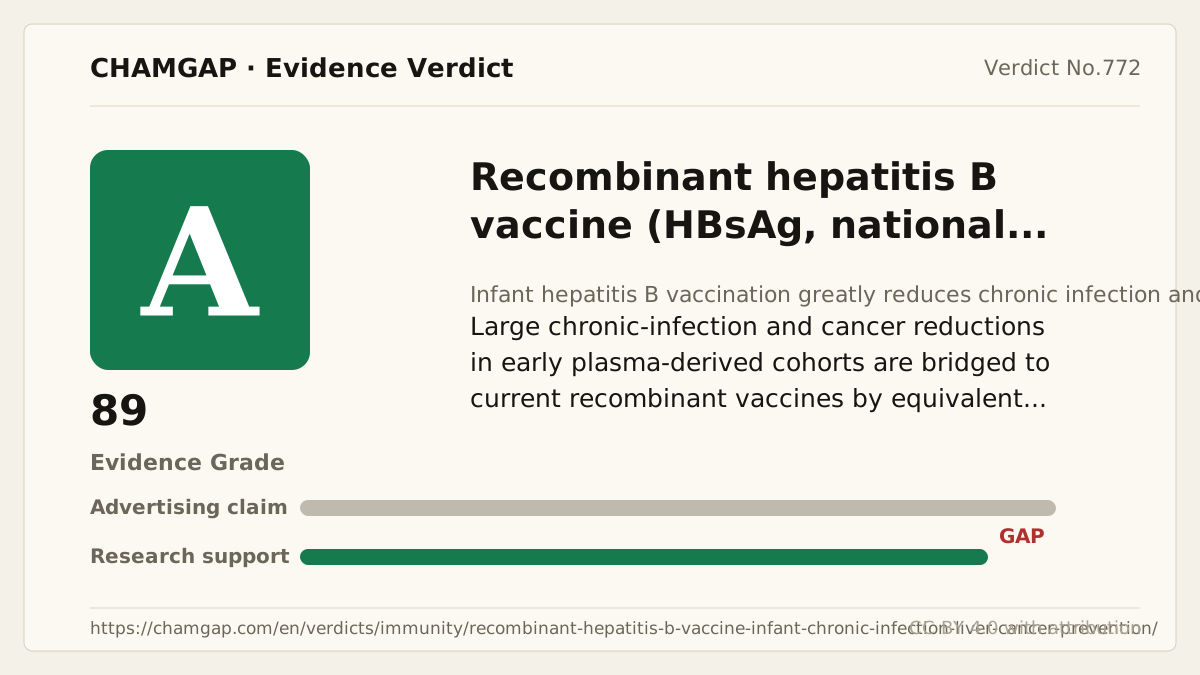
[Chamgap] Recombinant hepatitis B vaccine x prevention of infant chronic infection and later cirrhosis and liver cancer — Evidence Grade A·89. 3 cited sources checked. Source: https://chamgap.com/en/verdicts/immunity/recombinant-hepatitis-b-vaccine-infant-chronic-infection-liver-cancer-prevention/ · CC BY 4.0CC BY 4.0 — free to use with attribution; do not distort grades, numbers, or verdict meaning.
What this document does and does not do
Chamgap is an information source. It reports what research has and has not confirmed; it does not tell readers what to take or buy. That decision belongs to readers and, when needed, medical or legal professionals. This verdict reflects literature available up to the search date and may change as new research appears. Nothing here is medical advice.