
One-percent povidone-iodine laceration irrigation,
does it really help with Reduced wound infection after repair?
research showsThe grade is C with 54 points. In a 2022 review of four randomized trials with 875 participants, conflict in povidone-iodine infection rates came from the 2016 and 1987 trials. The 2016 result was 15/196 versus 14/194, odds ratio 1.07 (95% CI 0.50-2.27); the 1987 result was 11/201 versus 30/194, odds ratio 0.32 (0.15-0.65). Each confidence interval excluded the other trial's point estimate, and the intervention techniques differed: the 1987 trial bundled irrigation and scrubbing, while the 2016 technique was different.
ads claimVerdict 720 is C with 42 points and concerns povidone-iodine gargle or throat spray for cold and COVID prevention. This verdict asks a different question: infection after irrigating an acute skin laceration with a one-percent solution.
Useful facts when choosing a product
- The conflict in infection rates came from the 2016 and 1987 trials.
- The 1990 trial measured bacterial counts, while the 2018 trial tested polyhexanide against Ringer's solution for bacterial load.
- The two infection trials excluded each other's point estimates and used different intervention techniques.
Chamgap Semantic Classification Code
Candidate index · review held
UNK.one-percent-povidone-iodine-irrigation.UNK.wound-infection-after-repair.reduce.noneUnknown > One-percent povidone-iodine irrigation > Unknown > wound infection after repair > Reduction claim > No intervention
An automated migration candidate, not an issued permanent code; exact claim scope remains under review. This machine-generated migration candidate helps retrieval but is not a permanent assignment. The original verdict ID and URL remain authoritative.
What the research actually shows
Soeselo et al. included four randomized trials with 875 participants. Conflict in povidone-iodine infection rates came from the 2016 and 1987 trials. The 1987 intervention bundled povidone-iodine irrigation and scrubbing, while the 2016 application technique differed. The 1990 Lammers trial compared bacterial counts across povidone-iodine, saline, and no treatment in 29 people with 33 wounds, so it was not infection-rate evidence. The 2018 Payne trial compared 0.04% polyhexanide with Ringer's solution in 61 participants and measured bacterial load over 60 minutes; it was excluded from povidone-iodine infection-rate evidence. B. Braun Medical AG sponsored that trial, and some authors were employees or received clinical research funding.
Why this is classified as C (54)
Direct infection RCTs conflict, and attrition and very small samples add major limitations, giving C with 54 points.
Counterpoint. Periwound skin antisepsis is not wound-cavity irrigation; the Ghafouri trial used saline in both wounds and iodine only around the experimental wounds.
Rejudgment record. Cross-check applied — Cross-checked infection denominators, comparators, direct irrigation, attrition, heterogeneity, and the actual grade and score of verdict 720
| Endpoint | H | Hard endpoint - actual events such as death |
| Replication | R0 | Trials conflict in direction |
| Independence | I1 | Mixed funding sources |
| Effect size | E+ | Meets the clinically important threshold |
Stored derived and displayed grades match; this is not a current recalculation or validity check (C).
Sub-claim grades by effect
This ingredient is marketed for several effects. A single overall grade blends strong and weak claims together, so each effect is graded separately here. The overall grade reflects the strongest disconfirming or core claim.
| Effect (sub-claim) | Grade | Basis |
|---|---|---|
| Lower infection than saline | C | The effect estimates from the 2016 and 1987 infection trials were statistically difficult to reconcile. |
| Improved wound healing | ? | Included trials did not report wound-healing outcomes. |
Cross-check — AI research and Codex final gate
Evidence Table
| Study | Design | Sample | Funding | Endpoint | Result | Weight |
|---|---|---|---|---|---|---|
| Soeselo et al. 2022 | Systematic review of four randomized trials | 875 total; povidone-iodine infection-rate conflict came from the 2016 and 1987 trials | The 2018 Payne trial was sponsored by B. Braun Medical AG; manufacturer funding for the other trials could not be consistently confirmed | Wound infection; the 1990 and 2018 trials measured bacterial count or load | 2016 infection OR 1.07 (0.50-2.27), 1987 OR 0.32 (0.15-0.65); each interval excluded the other point estimate | Direct randomized evidence, but intervention differences, conflict, and very low certainty remain |
Receipt — 5 References
All 5 cited sources were verified for existence at the original page (as of 2026-08-05).
Final verification and publication gate: Codex · Evidence date: 2026-08-05 · Corrections: none
Cite this verdict
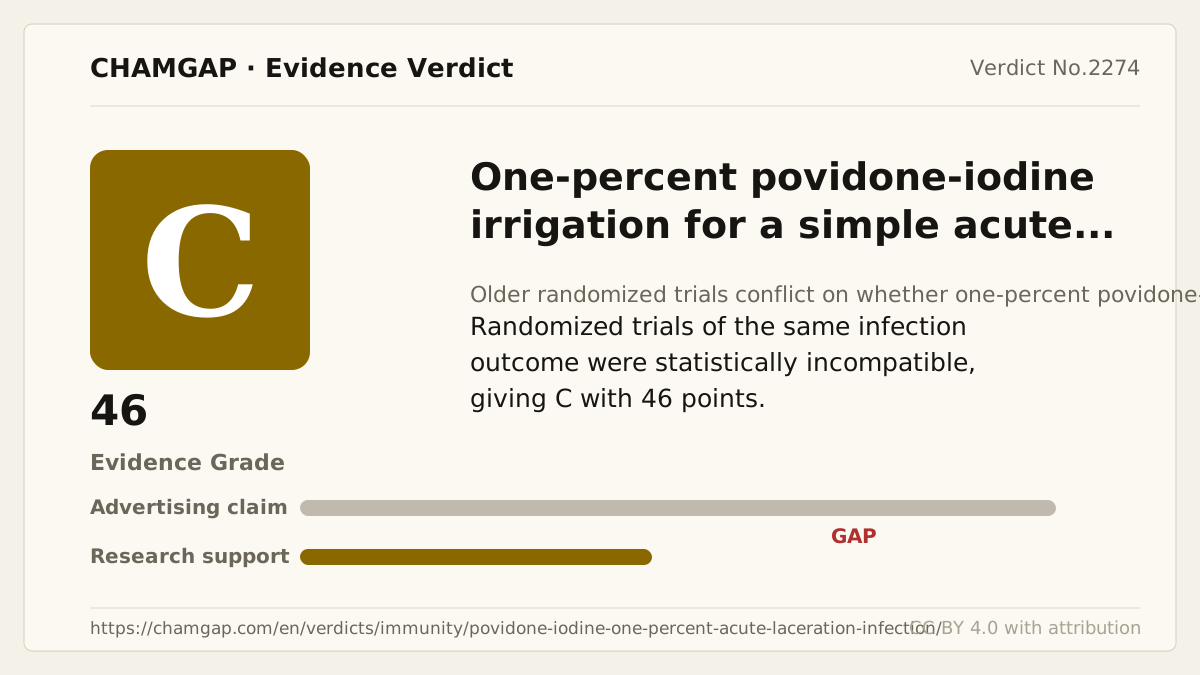
[Chamgap] One-percent povidone-iodine laceration irrigation x wound infection — Evidence Grade C·54. 5 cited sources checked. Source: https://chamgap.com/en/verdicts/immunity/povidone-iodine-one-percent-acute-laceration-infection/ · CC BY 4.0CC BY 4.0 — free to use with attribution; do not distort grades, numbers, or verdict meaning.
What this document does and does not do
Chamgap is an information source. It reports what research has and has not confirmed; it does not tell readers what to take or buy. That decision belongs to readers and, when needed, medical or legal professionals. This verdict reflects literature available up to the search date and may change as new research appears. Nothing here is medical advice.