
Pidotimod,
does it really help with Reduced number of recurrent respiratory infections?
research showsPidotimod is rated C because it may reduce infections in children prone to recurrent respiratory tract infections. A 2019 meta-analysis pooled 29 randomized trials and 4,344 children and reported fewer recurrences plus shorter symptoms and less antibiotic use, but only 15 trials used appropriate randomization, one explicitly concealed allocation, and eight were double-blind and placebo-controlled. A 1994 multicenter placebo-controlled trial in 748 children was also positive but old and incompletely reported. The direct clinical signal is accepted, but dated low-quality pediatric evidence and heterogeneous cointerventions produce C with 52 points; generalization to adults is uncertain.
ads claimMarketing can frame immune strengthening as broad prevention of colds and bronchitis. The most relevant evidence concerns time-limited adjunctive treatment in children meeting recurrent-infection criteria; immune-marker changes or prescription status do not guarantee prevention across all ages.
Useful facts when choosing a product
- Pidotimod is a synthetic prescription immunomodulator in some countries, and national labeling determines the approved indication, age, and dose. It is not a supplement for unsupervised self-treatment.
- Most efficacy research enrolled children with recurrent respiratory infections and mixed add-on-to-usual-care with placebo-controlled designs. It cannot be directly generalized to adults or treatment of a single ordinary cold.
- Reported adverse events were generally uncommon, but gastrointestinal discomfort, diarrhea or nausea, skin rash, and hypersensitivity can occur. Evidence on prolonged repeated use and rare events in children is limited.
- Recurrent infections warrant evaluation for asthma, allergic rhinitis, structural problems, smoke exposure, or immune deficiency; pidotimod should not replace vaccination and standard prevention.
Chamgap Semantic Classification Code
Candidate index · review held
M.pidotimod.UNK.number-of-recurrent-respiratory-infections.reduce.MULTIMedicinal interventions > Pidotimod > Unknown > number of recurrent respiratory infections > Reduction claim > Multiple: primary unresolved
An automated migration candidate, not an issued permanent code; exact claim scope remains under review. This machine-generated migration candidate helps retrieval but is not a permanent assignment. The original verdict ID and URL remain authoritative.
What the research actually shows
Careddu randomized 748 children with recurrent respiratory infections at 69 centers to pidotimod or placebo and reported fewer infections during treatment and follow-up. Niu and colleagues pooled 29 trials through February 2018, but 19 were Chinese studies, only one explicitly concealed allocation, and only eight were double-blind and placebo-controlled. Trials varied in monotherapy versus add-on use, infection definitions, and follow-up. Immunoglobulin and T-cell-subset changes are surrogates that merely supplement the clinical recurrence outcome.
Why this is classified as C (52)
A 29-trial, 4,344-child meta-analysis and a 748-child placebo-controlled study found positive signals on recurrent infections. Appropriate randomization, concealment, and masking were frequently absent, studies were old, and pediatric populations and cointerventions dominated. This gives C with 52 points; safety is separate.
Counterpoint. A signal on actual recurrence counts distinguishes pidotimod from products supported only by immune markers. Causes, age groups, and seasonal exposure vary, so a clinician must weigh benefit against uncertainty.
Rejudgment record. New verdict — Accepted reduced infection recurrence in a pediatric meta-analysis of thousands and a large older placebo-controlled trial, while accounting for weak randomization, allocation concealment and masking, heterogeneous cointerventions and definitions, and concentration in pediatric and dated studies
Sub-claim grades by effect
This ingredient is marketed for several effects. A single overall grade blends strong and weak claims together, so each effect is graded separately here. The overall grade reflects the strongest disconfirming or core claim.
| Effect (sub-claim) | Grade | Basis |
|---|---|---|
| Reduced recurrent respiratory infections in children | C | Direct recurrence-count signals exist, but many studies are old and at high risk of bias. |
| Extension to prevention of recurrent respiratory infections in adults | ? | Core synthesized evidence is concentrated in children, with no confirmatory literature establishing the same effect in adults. |
| Improved immunoglobulin and T-cell markers | C | Several trials reported changes, but these surrogate markers cannot substitute for clinical infection prevention. |
Cross-check — AI research and Codex final gate
Evidence Table
| Study | Design | Sample | Funding | Endpoint | Result | Weight |
|---|---|---|---|---|---|---|
| Niu H et al. 2019 | Systematic review and meta-analysis of pediatric randomized trials | 29 randomized trials and 4,344 children | Inadequately reported | Reduced recurrence, symptom duration, antibiotic use, immune markers, and adverse events | Efficacy favored pidotimod, but quality was low: 15 trials had appropriate randomization, one concealed allocation, and eight were double-blind and placebo-controlled. | Key synthesis with high risk of bias |
| Careddu P. 1994 | Randomized double-blind multicenter placebo-controlled trial | 748 children at 69 centers | Inadequately reported; older product-development-era study | Respiratory infections, symptoms, absenteeism, and medication use during treatment and follow-up | Respiratory infections were significantly less frequent during treatment and follow-up. | Large direct positive evidence, but old and incompletely reported |
Receipt — 2 References
All 2 cited sources were verified for existence at the original page (as of 2026-07-20).
Final verification and publication gate: Codex · Evidence date: 2026-07-20 · Corrections: none
Cite this verdict
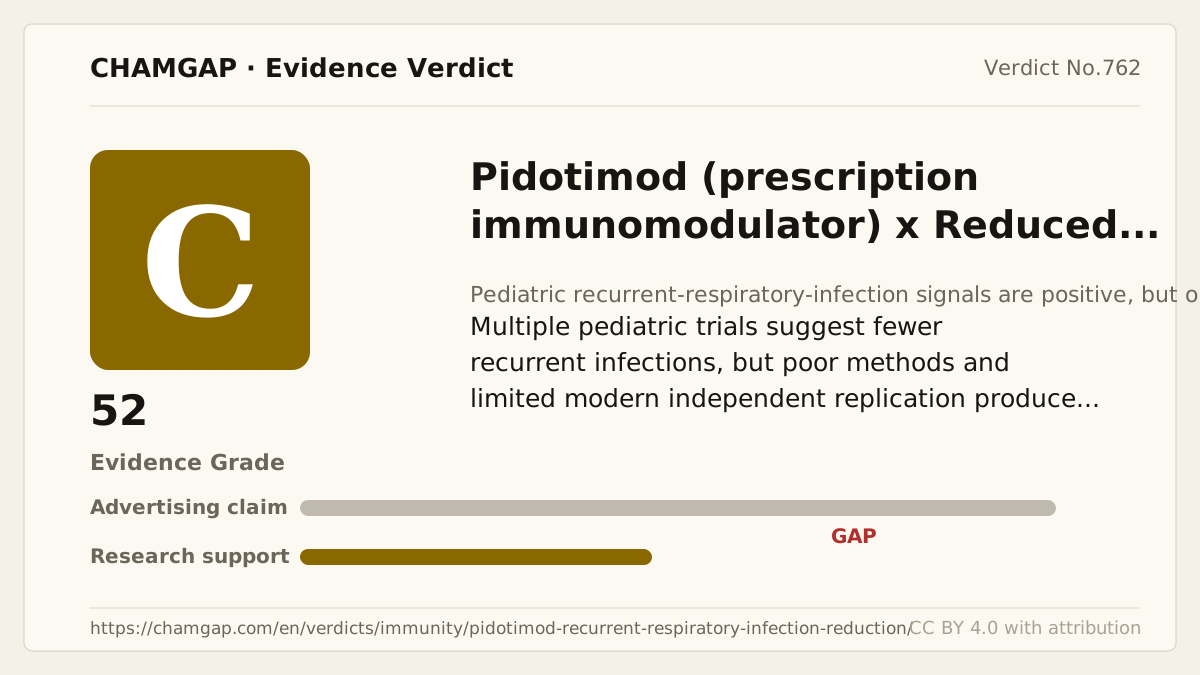
[Chamgap] Pidotimod x reduced number of recurrent respiratory infections — Evidence Grade C·52. 2 cited sources checked. Source: https://chamgap.com/en/verdicts/immunity/pidotimod-recurrent-respiratory-infection-reduction/ · CC BY 4.0CC BY 4.0 — free to use with attribution; do not distort grades, numbers, or verdict meaning.
What this document does and does not do
Chamgap is an information source. It reports what research has and has not confirmed; it does not tell readers what to take or buy. That decision belongs to readers and, when needed, medical or legal professionals. This verdict reflects literature available up to the search date and may change as new research appears. Nothing here is medical advice.