
Persistent gas-stove use,
does it really help with Increased new or persistent asthma in children and adolescents?
research showsThe grade is C with 56 points. In the main analysis of 345 Puerto Rican participants, persistent gas-stove use was associated with 2.45-fold higher odds of current asthma than persistent electric-stove use (95% CI 1.29 to 4.66). The endpoint combined new asthma onset with persistence of existing asthma. Stove type was self-reported, pollutant concentrations were not measured, and ventilation data were unavailable.
ads claimA gas-stove checkbox is not an inhaled dose. Outdoor-venting hoods, windows, cooking duration, home volume, and other combustion sources can change exposure substantially.
Useful facts when choosing a product
- Exposure was self-reported gas or electric stove use at two visits; there was no personal monitor or indoor nitrogen dioxide or fine-particle measurement.
- The article explicitly lacked ventilation-system data, so hood and window ventilation were not adjusted.
- A separate 24-hour nitrogen-dioxide study measured cooking-related concentrations but did not measure long-term asthma onset in this cohort.
- Verdict 1758 is D with 35 points for a HEPA air cleaner and allergic-rhinitis symptoms; this verdict concerns cooking-appliance exposure and current childhood asthma.
Chamgap Semantic Classification Code
Candidate index · review held
UNK.persistent-household-gas-stove-use.UNK.new-or-persistent-asthma-and-adolescents.increase.UNKUnknown > Persistent household gas-stove use > Unknown > new or persistent asthma and adolescents > Increase claim > Unknown
An automated migration candidate, not an issued permanent code; exact claim scope remains under review. This machine-generated migration candidate helps retrieval but is not a permanent assignment. The original verdict ID and URL remain authoritative.
What the research actually shows
The 2009 to 2010 baseline enrolled 678 participants; 543 attended the 2014 to 2017 follow-up and 406 had linked visits, a median 5.2 years apart. The 406 included 278 persistent electric, 43 mixed, and 85 persistent gas users, while complete-case analysis included 345: 244, 32, and 69, respectively. Models adjusted for age, sex, income, parental asthma, early secondhand smoke, BMI change, diet, road proximity, and interval, with separate additions for mold, housing age, and allergens. The study lacked ventilation-system data and did not measure indoor nitrogen dioxide or particles. A separately cited cross-sectional study directly measured 24-hour nitrogen dioxide and cooking behavior, but it did not follow these children for asthma onset. NIH grants funded the cohort.
Why this is classified as C (56)
A publicly funded cohort found an asthma association, but the mixed onset-or-persistence endpoint plus pollutant, ventilation, and selection limitations give C with 56 points.
Counterpoint. C does not mean gas stoves are safe. It grades the evidence for the harm claim and does not quantify an individual's causal risk or the preventive effect of switching appliances.
Rejudgment record. Cross-check applied — The odds ratio was not converted to an arbitrary standardized effect; the mixed onset-or-persistence endpoint, absent pollutant and ventilation measurements, participant selection, and public funding were weighed directly
| Endpoint | H | Hard endpoint - actual events such as death |
| Replication | R1 | Single confirmatory trial |
| Independence | I2 | Decisive evidence is publicly or non-profit funded |
| Effect size | E+ | Meets the clinically important threshold |
Stored derived and displayed grades match; this is not a current recalculation or validity check (C).
Sub-claim grades by effect
This ingredient is marketed for several effects. A single overall grade blends strong and weak claims together, so each effect is graded separately here. The overall grade reflects the strongest disconfirming or core claim.
| Effect (sub-claim) | Grade | Basis |
|---|---|---|
| Association of persistent gas use with current asthma | C | The main OR was 2.45, but actual pollution and ventilation were not measured. |
| A causal effect of gas stoves on new asthma | D | New onset and persistence were pooled, and dose, ventilation, and residual confounding were not separated. |
Cross-check — AI research and Codex final gate
Evidence Table
| Study | Design | Sample | Funding | Endpoint | Result | Weight |
|---|---|---|---|---|---|---|
| Han YY et al. 2023 PROPRA | Two-visit complete-case analysis of a prospective cohort | 678 at baseline, 543 at follow-up, 406 linked, and 345 in the main analysis | U.S. NIH grants HL079966, HL117191, and TR001856 | Current asthma combining new onset with persistence of existing asthma | Persistent gas versus persistent electric use gave OR 2.45 (95% CI 1.29 to 4.66); lung-function change was null. | Principal longitudinal association |
| Paulin LM et al. 2017 indoor NO2 study | Observational 24-hour indoor-concentration study in homes of children with asthma | Homes of children with asthma as reported in the article | Separate study not used to grade funding of this cohort | Cooking behavior, indoor NO2, and rescue-medication use | Reported a dose-response between gas use and indoor NO2 but did not measure new asthma onset. | Supporting exposure-measurement context |
Receipt — 2 References
All 2 cited sources were verified for existence at the original page (as of 2026-08-04).
Final verification and publication gate: Codex · Evidence date: 2026-08-04 · Corrections: none
Cite this verdict
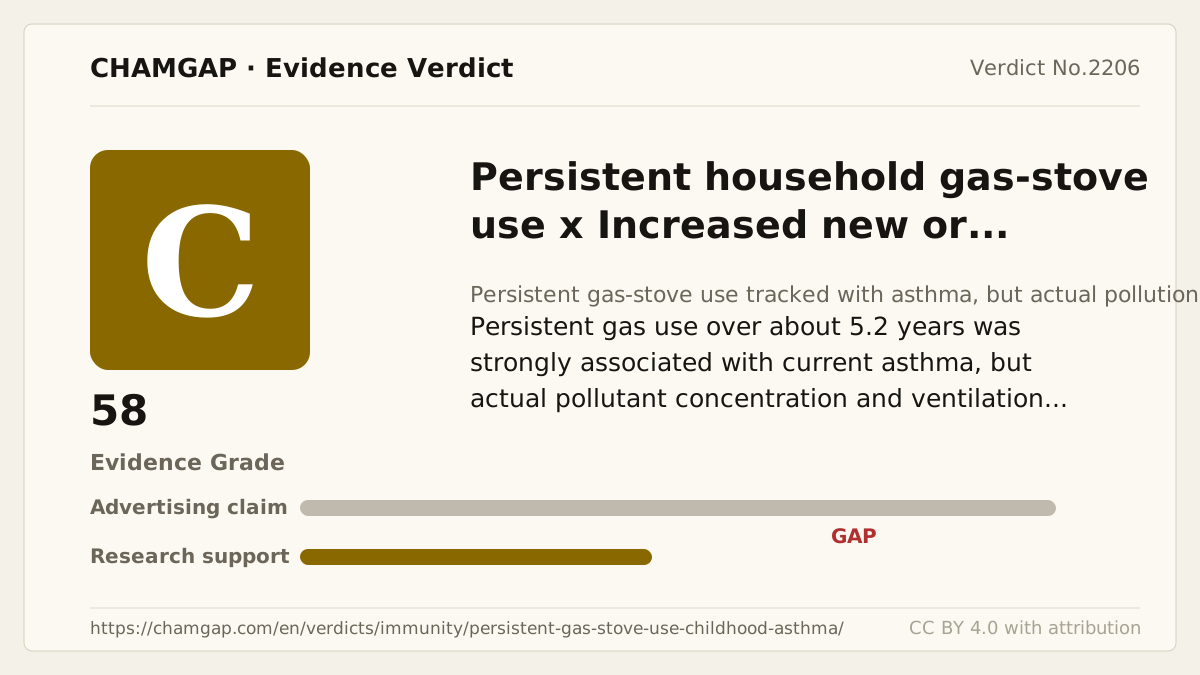
[Chamgap] Persistent gas-stove use x increased childhood asthma — Evidence Grade C·56. 2 cited sources checked. Source: https://chamgap.com/en/verdicts/immunity/persistent-gas-stove-use-childhood-asthma/ · CC BY 4.0CC BY 4.0 — free to use with attribution; do not distort grades, numbers, or verdict meaning.
What this document does and does not do
Chamgap is an information source. It reports what research has and has not confirmed; it does not tell readers what to take or buy. That decision belongs to readers and, when needed, medical or legal professionals. This verdict reflects literature available up to the search date and may change as new research appears. Nothing here is medical advice.