
PCV13,
does it really help with Prevention of vaccine-type community-acquired pneumonia in adults aged 65 years or older?
research showsThe grade is B. CAPiTA randomized 84,496 adults aged at least 65 years and followed them for a mean of 3.97 years. In the prespecified per-protocol analysis, first vaccine-type community-acquired pneumonia occurred in 49 PCV13 recipients versus 90 placebo recipients, for vaccine efficacy of 45.6% (95.2% CI 21.8 to 62.5; P<0.001). This directly reduced clinical pneumonia, but no second independently funded randomized trial replicated the same product-endpoint question, yielding B with 76 points.
ads claimThe 45.6% figure is not a 45.6-point absolute reduction in every pneumonia. It is a relative reduction in uncommon vaccine-type pneumonia, while all-cause pneumonia was not significantly reduced.
Useful facts when choosing a product
- CAPiTA vaccinated 42,240 participants with PCV13 and 42,256 with placebo and followed them for a mean of 3.97 years.
- The 49 versus 90 cases came from the prespecified per-protocol analysis, not a simple denominator of everyone vaccinated.
- Verdict 712 is C with 58 points for PCV20 immunogenicity bridging; this verdict instead examines direct clinical pneumonia events with PCV13.
Chamgap Semantic Classification Code
Candidate index · review held
M.13-valent-pneumococcal-conjugate-vaccine.UNK.vaccine-type-community-acquired-pneumonia-aged-or-older.prevent.placeboMedicinal interventions > 13-valent pneumococcal conjugate vaccine > Unknown > vaccine-type community-acquired pneumonia aged or older > Occurrence-prevention claim > Placebo
An automated migration candidate, not an issued permanent code; exact claim scope remains under review. This machine-generated migration candidate helps retrieval but is not a permanent assignment. The original verdict ID and URL remain authoritative.
What the research actually shows
CAPiTA was a double-blind Dutch trial in 84,496 immunocompetent adults aged at least 65 years; 42,240 received PCV13 and 42,256 received placebo. Mean follow-up was 3.97 years in both groups. The prespecified per-protocol primary efficacy analysis found 49 versus 90 first episodes of vaccine-type pneumonia, efficacy 45.6% (95.2% CI 21.8 to 62.5). Wyeth/Pfizer sponsored the trial, and the confirmed postlicensure studies were observational.
Why this is classified as B (76)
A large double-blind trial significantly reduced its prespecified primary clinical event, but no second trial with independent investigators and funding confirmed the same product and endpoint, giving B with 76 points.
Counterpoint. Changes in circulating serotypes after pediatric vaccination can make current absolute benefit differ from that observed in CAPiTA-era Netherlands.
Rejudgment record. Cross-check applied — Accepted the prespecified vaccine-type pneumonia reduction in a large double-blind trial while recognizing the absence of a second independently funded randomized confirmation
| Endpoint | H | Hard endpoint - actual events such as death |
| Replication | R1 | Single confirmatory trial |
| Independence | I0 | Evidence comes only from manufacturer studies |
| Effect size | E+ | Meets the clinically important threshold |
Stored derived and displayed grades match; this is not a current recalculation or validity check (B).
Sub-claim grades by effect
This ingredient is marketed for several effects. A single overall grade blends strong and weak claims together, so each effect is graded separately here. The overall grade reflects the strongest disconfirming or core claim.
| Effect (sub-claim) | Grade | Basis |
|---|---|---|
| Prevention of vaccine-type community-acquired pneumonia | B | The prespecified CAPiTA primary endpoint succeeded with 49 versus 90 cases. |
| Prevention of all-cause community-acquired pneumonia | D | The 5.1% efficacy confidence interval crossed the null. |
Cross-check — AI research and Codex final gate
Evidence Table
| Study | Design | Sample | Funding | Endpoint | Result | Weight |
|---|---|---|---|---|---|---|
| Bonten et al. 2015 CAPiTA | Multicenter randomized double-blind placebo-controlled trial | 84,496 randomized and vaccinated, 42,240 versus 42,256; primary efficacy used the prespecified per-protocol analysis | Sponsored by Wyeth/Pfizer | First episode of vaccine-type community-acquired pneumonia | 49 versus 90 cases; vaccine efficacy 45.6% (95.2% CI 21.8 to 62.5), P<0.001. | The sole large randomized clinical-event confirmation |
| Additional clinical endpoints within CAPiTA | Prespecified secondary endpoints within the same randomized trial | Same CAPiTA population | Sponsored by Wyeth/Pfizer | Nonbacteremic and noninvasive vaccine-type pneumonia and vaccine-type invasive disease | Efficacy was 45.0% and 75.0%, respectively; all-cause pneumonia efficacy was 5.1% (95% CI -5.1 to 14.2). | Concordant but not independent replication |
Receipt — 2 References
All 2 cited sources were verified for existence at the original page (as of 2026-08-01).
Final verification and publication gate: Codex · Evidence date: 2026-08-01 · Corrections: none
Cite this verdict
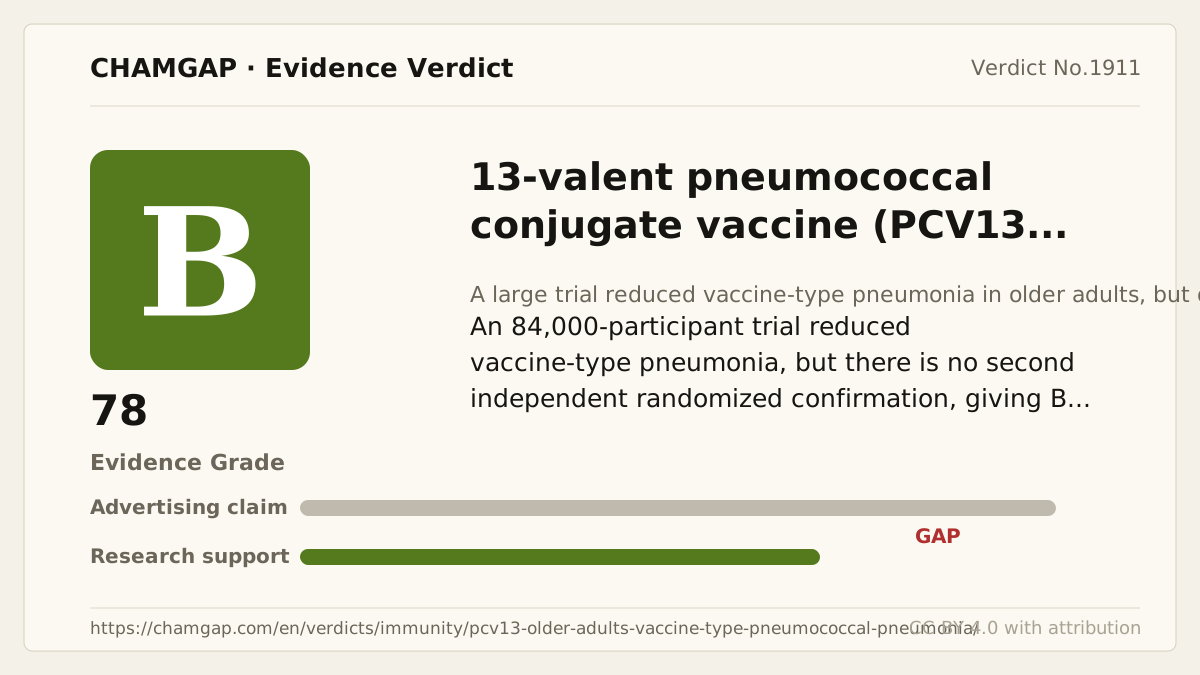
[Chamgap] PCV13 x prevention of vaccine-type pneumonia in older adults — Evidence Grade B·76. 2 cited sources checked. Source: https://chamgap.com/en/verdicts/immunity/pcv13-older-adults-vaccine-type-pneumococcal-pneumonia/ · CC BY 4.0CC BY 4.0 — free to use with attribution; do not distort grades, numbers, or verdict meaning.
What this document does and does not do
Chamgap is an information source. It reports what research has and has not confirmed; it does not tell readers what to take or buy. That decision belongs to readers and, when needed, medical or legal professionals. This verdict reflects literature available up to the search date and may change as new research appears. Nothing here is medical advice.