
Palivizumab,
does it really help with Prevention of RSV-associated hospitalization in high-risk infants, including those born preterm or with bronchopulmonary dysplasia?
research showsPalivizumab is rated B because seasonal prophylaxis reduces RSV-associated hospitalization in high-risk infants such as those born preterm or with bronchopulmonary dysplasia. In the 1,502-participant IMpact-RSV trial, hospitalization fell from 10.6% with placebo to 4.8% with palivizumab, a 55% relative reduction. An independent 2025 Cochrane review confirmed systemic palivizumab reduced RSV hospitalization across five randomized trials and 3,343 children, RR 0.44 (95% CI 0.30 to 0.64), with high-certainty evidence. Mortality was not demonstrably reduced, RR 0.69 (0.42 to 1.15). The direct hospitalization endpoint and consistent synthesis are strong, but the pivotal trials were manufacturer-sponsored, passive protection requires repeated seasonal dosing, and survival and long-term benefits remain unestablished, yielding B with 75 points. Injection reactions and rare severe hypersensitivity are separate safety issues.
ads claimCalling palivizumab an RSV prevention shot can make it sound like a vaccine that permanently blocks infection. It is a passive antibody repeatedly administered during the RSV season to selected high-risk infants; its best-established effect is lower RSV hospitalization, not elimination of all infections, deaths, or long-term wheeze.
Useful facts when choosing a product
- Palivizumab is a monoclonal antibody against the RSV F protein, not a vaccine, and it provides passive protection only while antibody concentrations are maintained.
- The pivotal trial and systematic review evaluated systemic dosing at 15 mg/kg intramuscularly every 30 days for up to five doses during the RSV season.
- Eligibility is not universal for all infants; it is directed to those at high risk of severe RSV, including selected infants born preterm, those with bronchopulmonary dysplasia, and some with hemodynamically significant congenital heart disease, according to current local guidance.
- Palivizumab does not treat established RSV infection; injection-site reactions and fever can occur, and clinicians must be prepared for rare anaphylaxis or other severe hypersensitivity, including after repeat exposure.
Chamgap Semantic Classification Code
Candidate index · review held
M.palivizumab.UNK.rsv-associated-hospitalization-including-those-born-preterm-or-with-bronchopulmonary-dysplasia.prevent.placeboMedicinal interventions > Palivizumab > Unknown > RSV-associated hospitalization , including those born preterm or with bronchopulmonary dysplasia > Occurrence-prevention claim > Placebo
An automated migration candidate, not an issued permanent code; exact claim scope remains under review. This machine-generated migration candidate helps retrieval but is not a permanent assignment. The original verdict ID and URL remain authoritative.
What the research actually shows
The IMpact-RSV Study Group enrolled 1,502 infants born preterm or with bronchopulmonary dysplasia at 139 centers in the United States, United Kingdom, and Canada and assigned palivizumab or placebo in a 2:1 ratio. Over 150 days, confirmed RSV hospitalization was 10.6% versus 4.8%; rates were 8.1% versus 1.8% among preterm infants without bronchopulmonary dysplasia and 12.8% versus 7.9% among those with it. The 2025 Cochrane review by Garegnani and colleagues found RR 0.44 for hospitalization across five systemic trials and 3,343 children, but mortality RR 0.69 (95% CI 0.42 to 1.15), indicating little or no demonstrated difference. Hospital prevention is established, but survival and long-term respiratory benefit should not be inferred.
Why this is classified as B (75)
IMpact-RSV reduced hospitalization from 10.6% to 4.8% in 1,502 infants, and an independent 2025 Cochrane review confirmed RR 0.44 with high certainty across five trials and 3,343 children. Concentration of pivotal trials in manufacturer sponsorship, repeated season-limited dosing, mortality RR 0.69 without demonstrated benefit, and uncertain long-term effects yield B with 75 points. Cost, injection burden, and hypersensitivity remain separate from efficacy.
Counterpoint. Absolute benefit varies with each infant's baseline hospitalization risk and the intensity of the RSV season. Where longer-acting antibodies or maternal vaccination are available, a pediatric clinician should compare eligibility, age, access, and cost under current local prevention guidance.
Rejudgment record. New verdict — Accepted the direct IMpact-RSV hospitalization result of 10.6% versus 4.8% and the independent 2025 Cochrane estimate of RR 0.44 across five trials and 3,343 children with high certainty, but assigned B because pivotal trials were manufacturer-concentrated, protection is passive and season-limited, mortality was not reduced, and long-term benefits remain unestablished
Sub-claim grades by effect
This ingredient is marketed for several effects. A single overall grade blends strong and weak claims together, so each effect is graded separately here. The overall grade reflects the strongest disconfirming or core claim.
| Effect (sub-claim) | Grade | Basis |
|---|---|---|
| Prevention of RSV-associated hospitalization in high-risk infants | B | The pivotal trial reduced hospitalization from 10.6% to 4.8%, and the independent Cochrane RR was 0.44. |
| Reduction in severe RSV burden including intensive care admission | B | Pivotal and pooled evidence favors lower severe burden, but mortality and mechanical ventilation are not consistently significant. |
| Reduction in RSV-related mortality | D | Across five trials and 3,343 participants, mortality RR was 0.69 (95% CI 0.42 to 1.15), with no significant benefit demonstrated. |
Cross-check — AI research and Codex final gate
Evidence Table
| Study | Design | Sample | Funding | Endpoint | Result | Weight |
|---|---|---|---|---|---|---|
| The IMpact-RSV Study Group. 1998 | Multinational randomized double-blind placebo-controlled trial | 1,502 infants born preterm or with bronchopulmonary dysplasia | MedImmune-sponsored development trial | Laboratory-confirmed RSV hospitalization over 150 days | RSV hospitalization fell by 55%, from 10.6% with placebo to 4.8% with palivizumab. | Pivotal randomized trial with a direct hospitalization endpoint |
| Garegnani and colleagues, Cochrane review. 2025 | Systematic review and meta-analysis of randomized trials | Five systemic palivizumab randomized trials and 3,343 participants | Independent Cochrane review with no dedicated funding | RSV hospitalization, all respiratory hospitalization, RSV infection, mortality, and adverse events | RSV hospitalization RR was 0.44 (95% CI 0.30 to 0.64), high certainty; mortality RR was 0.69 (0.42 to 1.15), with no established difference and moderate certainty. | Independent confirmation and boundary on mortality benefit |
Receipt — 2 References
All 2 cited sources were verified for existence at the original page (as of 2026-07-22).
Final verification and publication gate: Codex · Evidence date: 2026-07-22 · Corrections: none
Cite this verdict
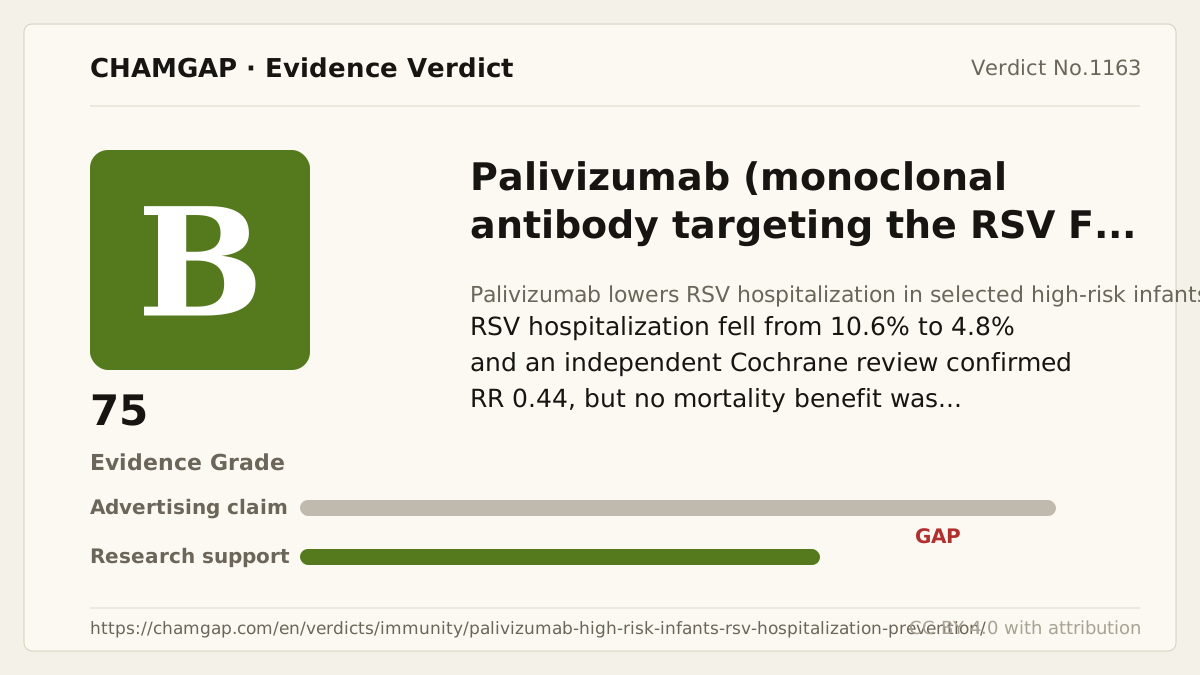
[Chamgap] Palivizumab x prevention of RSV hospitalization in high-risk infants — Evidence Grade B·75. 2 cited sources checked. Source: https://chamgap.com/en/verdicts/immunity/palivizumab-high-risk-infants-rsv-hospitalization-prevention/ · CC BY 4.0CC BY 4.0 — free to use with attribution; do not distort grades, numbers, or verdict meaning.
What this document does and does not do
Chamgap is an information source. It reports what research has and has not confirmed; it does not tell readers what to take or buy. That decision belongs to readers and, when needed, medical or legal professionals. This verdict reflects literature available up to the search date and may change as new research appears. Nothing here is medical advice.