
Oregano oil from Origanum vulgare,
does it really help with Treatment of Candida infection or overgrowth?
research showsOregano oil and carvacrol inhibit Candida in vitro and have shown signals in infected mice, but no credible human efficacy literature was found directly testing an oral supplement for oral, vaginal, systemic, or alleged intestinal Candida overgrowth. Preclinical findings cannot establish human antifungal treatment, so the verdict is unknown.
ads claimMarketing expands culture-dish inhibition into claims of eradicating intestinal Candida, clearing systemic yeast, or acting as a natural antifungal drug. The separate controversy over diagnosing nonspecific symptoms as intestinal Candida overgrowth does not fill the clinical-trial gap.
Useful facts when choosing a product
- Korean consumers may encounter oregano-oil liquids and softgels online or through cross-border purchase, but total oil content and labeled carvacrol percentage vary by product.
- No oral dose or duration has been validated for treating human candidiasis. Preclinical concentrations or mouse doses should not be converted into self-treatment doses.
- Culinary oregano exposure differs greatly from concentrated essential-oil supplements, and products labeled oil of oregano should not automatically be equated with neat essential oil.
- Concentrated oil may irritate oral or gastrointestinal mucosa and cause gastrointestinal upset or allergic reactions. Pregnancy, lactation, and long-term high-dose data are limited; these issues are separate from efficacy.
Chamgap Semantic Classification Code
Candidate index · review held
UNK.oregano-oil-from-origanum-vulgare.UNK.treatment-of-candida-infection-or-overgrowth.treat.UNKUnknown > Oregano oil from Origanum vulgare > Unknown > Treatment of Candida infection or overgrowth > Treatment or remission claim > Unknown
An automated migration candidate, not an issued permanent code; exact claim scope remains under review. This machine-generated migration candidate helps retrieval but is not a permanent assignment. The original verdict ID and URL remain authoritative.
What the research actually shows
Manohar 2001 reported complete inhibition of cultured Candida albicans at 0.25 mg/mL oregano oil and observed survival and renal fungal-burden signals after oral dosing in groups of six infected mice. Rosato 2009 and later studies also reported in vitro inhibition across Candida species or synergy with conventional antifungals. The LactMed oregano review states that no clinical study has confirmed safety or efficacy for the promoted use against nipple Candida. No direct oral-supplement human trial for other infection sites or overgrowth was identified either.
Why this is classified as ?
Laboratory and animal antifungal signals remain documented in citations and evidence, but the absence of a human oral efficacy study for Candida treatment requires an unknown grade and null score rather than forcing a D rating.
Counterpoint. Preclinical activity may justify an early standardized-formulation safety and dose-finding study, but it does not support replacing established infection treatment now.
Rejudgment record. New verdict — Only in vitro Candida inhibition and infected-mouse signals were identified, with no direct human oral-supplement treatment trial
Sub-claim grades by effect
This ingredient is marketed for several effects. A single overall grade blends strong and weak claims together, so each effect is graded separately here. The overall grade reflects the strongest disconfirming or core claim.
| Effect (sub-claim) | Grade | Basis |
|---|---|---|
| Treatment of oral, vaginal, or systemic candidiasis | ? | Laboratory and mouse findings exist, but no direct human treatment trial of oral oregano oil was identified. |
| Treatment of intestinal Candida overgrowth | ? | Separate from controversy over the diagnostic construct, no direct human efficacy trial of oregano oil was found. |
Cross-check — AI research and Codex final gate
Evidence Table
| Study | Design | Sample | Funding | Endpoint | Result | Weight |
|---|---|---|---|---|---|---|
| Manohar V et al. 2001 | In vitro and infected-mouse preclinical study | 6 | Non-U.S. government research support | Growth, germination, mycelia, survival, and renal fungal burden | Reported complete culture inhibition at 0.25 mg/mL and mouse signals, but this was not a human study. | Preclinical |
| Rosato A et al. 2009 | In vitro antifungal synergy study | Unknown | Inhibition by oregano essential oil alone and with nystatin | Reported Candida inhibition and an in vitro combination signal. | Preclinical | |
| LactMed Oregano review. 2024 | Public clinical and safety literature review | U.S. NICHD and NLM | Lactation safety and promoted use for nipple Candida | Concluded that no clinical study confirmed safety or efficacy for that Candida use. | Confirms gap; safety |
Receipt — 3 References
All 3 cited sources were verified for existence at the original page (as of 2026-07-18).
Final verification and publication gate: Codex · Evidence date: 2026-07-18 · Corrections: none
Cite this verdict
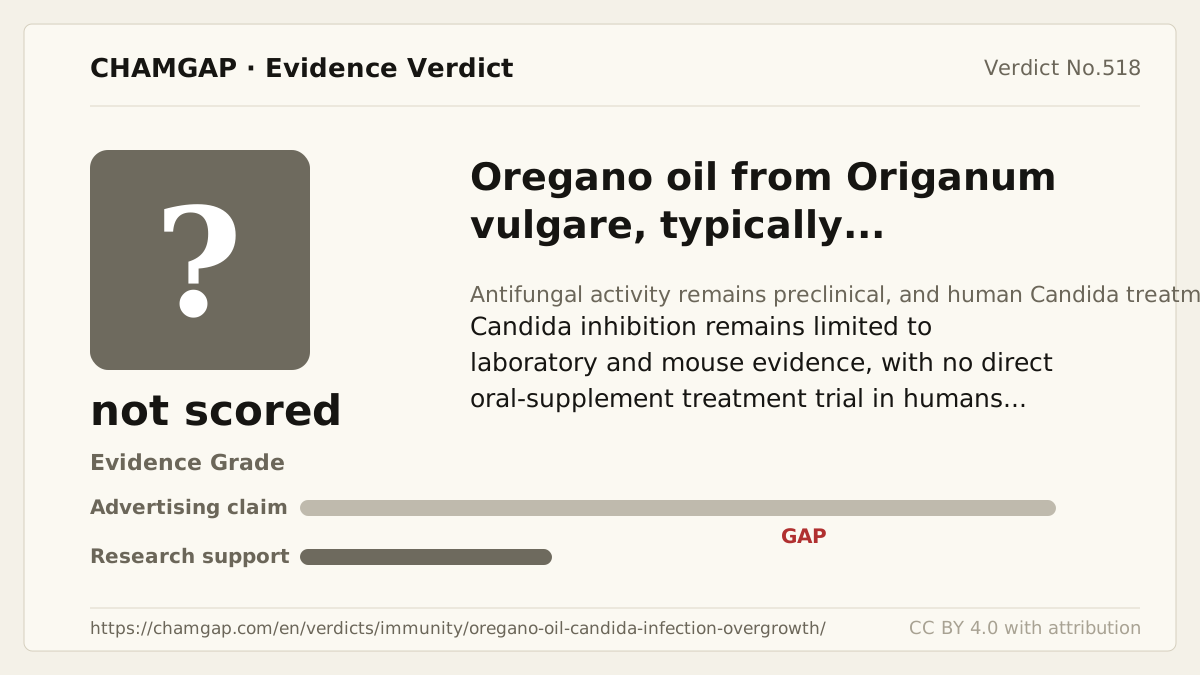
[Chamgap] Oregano oil from Origanum vulgare x Candida infection or overgrowth — Evidence Grade ?. 3 cited sources checked. Source: https://chamgap.com/en/verdicts/immunity/oregano-oil-candida-infection-overgrowth/ · CC BY 4.0CC BY 4.0 — free to use with attribution; do not distort grades, numbers, or verdict meaning.
What this document does and does not do
Chamgap is an information source. It reports what research has and has not confirmed; it does not tell readers what to take or buy. That decision belongs to readers and, when needed, medical or legal professionals. This verdict reflects literature available up to the search date and may change as new research appears. Nothing here is medical advice.