
Oral colostrum- and egg-yolk-derived transfer factor,
does it really help with Transfer of immune memory and prevention of colds?
research showsOral Tri-Factor containing 420 mg of colostrum and 180 mg of egg yolk was tested in a six-week double-blind placebo-controlled trial with 48 randomized participants. Salivary IgA, sick days, illness severity, and symptom severity were all null. Because a human trial exists, the correct grade is D rather than unclassified. Older injected or subcutaneous antigen-specific transfer factor derived from leukocytes is a different material from this commercial oral product.
ads claimImmune-memory copying, maternal immune transfer, and cold or viral prevention borrow immunologic language for product marketing. The presence of immunoglobulins in colostrum or IgY in egg yolk does not establish oral transfer of antigen-specific immune memory.
Useful facts when choosing a product
- In Korea, colostrum and egg-yolk combination capsules are distributed through cross-border shopping and network sales; they are not approved medicines or individually recognized cold-prevention ingredients.
- The identified negative trial used 600 mg/day, comprising 420 mg colostrum and 180 mg egg yolk.
- Ratios and added mushroom or botanical ingredients vary among products, preventing interchangeability.
- Milk and egg allergy and interactions from combination ingredients require separate safety review.
Chamgap Semantic Classification Code
Candidate index · review held
F.transfer-factor-derived-from-colostrum-and-egg-yolk.oral.transfer-of-immune-memory-and-prevention-of-colds.prevent.placeboFoods and beverages > Transfer factor derived from colostrum and egg yolk > Oral > Transfer of immune memory and prevention of colds > Occurrence-prevention claim > Placebo
An automated migration candidate, not an issued permanent code; exact claim scope remains under review. This machine-generated migration candidate helps retrieval but is not a permanent assignment. The original verdict ID and URL remain authoritative.
What the research actually shows
Bahabadi 2012 enrolled 49 healthy adult volunteers and randomized 48 to Tri-Factor at 600 mg/day or placebo for six weeks. The product contained 420 mg of colostrum and 180 mg of egg yolk, and there was no between-group difference in salivary IgA, sick days, illness severity, or symptom severity. Older transfer-factor literature, including Kirkpatrick 1988, concerned dialyzable antigen-specific extracts from sensitized leukocytes administered by injection or subcutaneously and is not the same as an oral colostrum and egg-yolk commercial fraction.
Why this is classified as D (28)
A product-matched double-blind placebo-controlled human trial exists but was null on all immune and infection outcomes, while evidence from older leukocyte preparations was misattributed, supporting D with 28 points.
Counterpoint. Classifying the evidence as absent was factually incorrect. One small thesis trial is still insufficient for the universal null conclusion implied by F.
Rejudgment record. Reassessment (cross-check reflected) — A 48-participant placebo-controlled trial of oral Tri-Factor was null for salivary IgA, sick days, illness severity, and symptom severity; injected or subcutaneous leukocyte-derived preparations are different materials
Cross-check — AI research and Codex final gate
Evidence Table
| Study | Design | Sample | Funding | Endpoint | Result | Weight |
|---|---|---|---|---|---|---|
| Bahabadi 2012 | 6-week double-blind randomized placebo-controlled master's thesis | 49 volunteers; 48 reported as allocated | Related to a 4Life product; details unclear | Salivary IgA, sick days, illness severity, and symptom severity | No difference from placebo on the reported outcomes. | Non-peer-reviewed; only direct evidence |
| Macias and Guaní-Guerra 2020 | Narrative scientific review | Not applicable | Unverified | Definition, sources, and clinical evidence for transfer factor | Different sources, routes, and antigen specificity were mixed across studies, with inconsistent clinical results and unclear identity and dosing. | Conceptual distinction |
Receipt — 3 References
All 3 cited sources were verified for existence at the original page (as of 2026-07-17).
Final verification and publication gate: Codex · Evidence date: 2026-07-17 · Corrections: none
Cite this verdict
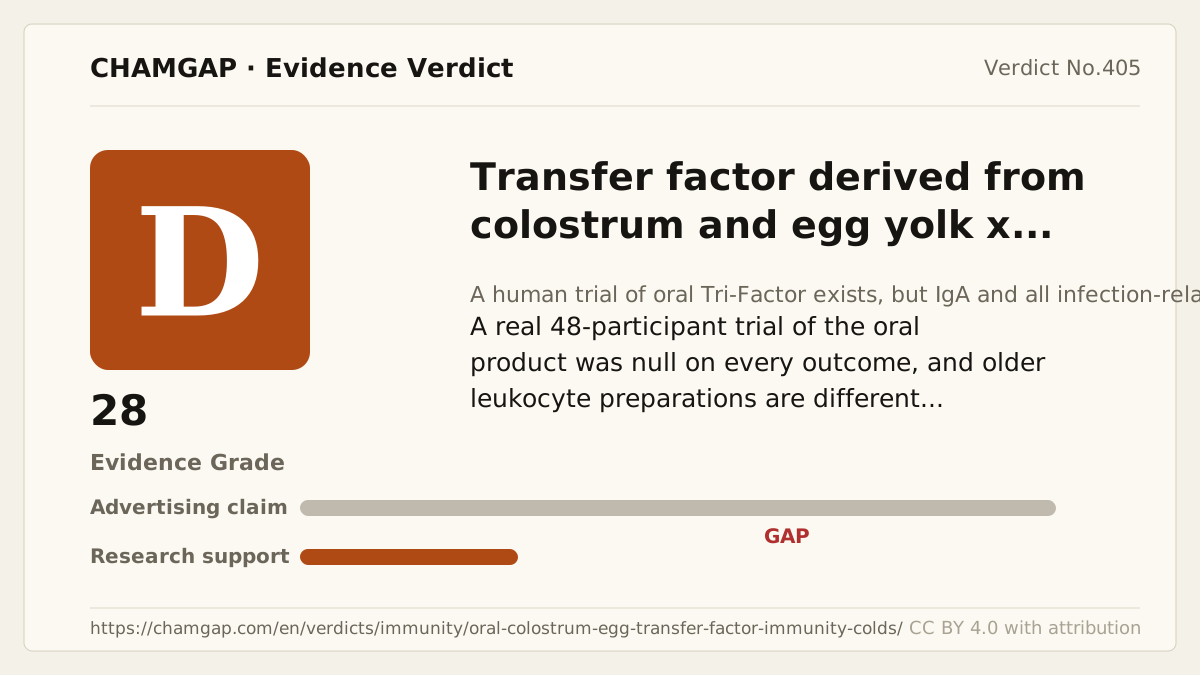
[Chamgap] Oral colostrum- and egg-yolk-derived transfer factor x immune-memory transfer and cold prevention — Evidence Grade D·28. 3 cited sources checked. Source: https://chamgap.com/en/verdicts/immunity/oral-colostrum-egg-transfer-factor-immunity-colds/ · CC BY 4.0CC BY 4.0 — free to use with attribution; do not distort grades, numbers, or verdict meaning.
What this document does and does not do
Chamgap is an information source. It reports what research has and has not confirmed; it does not tell readers what to take or buy. That decision belongs to readers and, when needed, medical or legal professionals. This verdict reflects literature available up to the search date and may change as new research appears. Nothing here is medical advice.