
Omalizumab,
does it really help with Increased food-protein dose tolerated without dose-limiting symptoms in multiple food allergy?
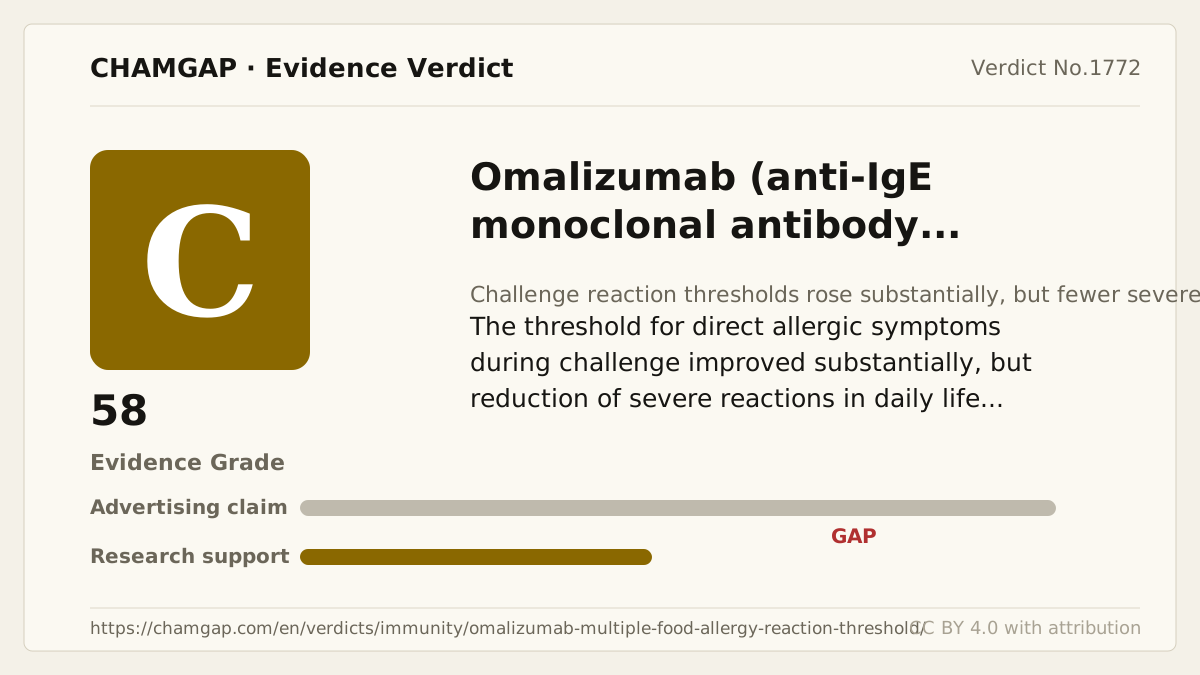
research showsOmalizumab monotherapy substantially raised oral-food-challenge reaction thresholds in children and adolescents with multiple food allergies but is rated C with 58 points. OUtMATCH (Wood 2024, NEJM) was a single 16-week confirmatory trial; in the prespecified 177-participant analysis, 67% versus 7% passed the 600-mg peanut-protein threshold. The effect was large, but the trial was small and short and did not directly test daily-life anaphylaxis in a randomized trial. Rule ①-ⓒ therefore applies.
ads claimMarketing may broaden the finding into a food-allergy cure or unrestricted eating, whereas the demonstrated scope is a higher challenge threshold during treatment and possible protection from accidental exposure.
Useful facts when choosing a product
- This is a prescription subcutaneous biologic dosed by body weight and total IgE.
- Treatment does not replace allergen avoidance or carrying emergency epinephrine.
- Current national labeling should be checked for approved ages, dosing, and the food-allergy indication.
Chamgap Semantic Classification Code
Candidate index · review held
M.omalizumab.UNK.food-protein-dose-tolerated-without-dose-limiting-symptoms-in-multiple-food-allergy.increase.placeboMedicinal interventions > Omalizumab > Unknown > food-protein dose tolerated without dose-limiting symptoms in multiple food allergy > Increase claim > Placebo
An automated migration candidate, not an issued permanent code; exact claim scope remains under review. This machine-generated migration candidate helps retrieval but is not a permanent assignment. The original verdict ID and URL remain authoritative.
What the research actually shows
OUtMATCH (Wood 2024, NEJM) randomized 180 participants 2:1, but three adults were excluded from the prespecified efficacy population, leaving 177 in the primary analysis. At 16 weeks, 67% versus 7% passed the 600-mg peanut-protein threshold, and cashew, milk, and egg thresholds also succeeded. This was a small, short, single confirmatory trial and did not directly test daily-life anaphylaxis in a randomized trial. A single-tertiary-center observational cohort in Arasi et al., Allergy 2025;80(4):1074-1085 reported an 82% reduction in accidental-exposure anaphylaxis among a selected per-protocol group of 65 from 69 intention-to-treat participants. It was neither randomized nor controlled and selected children with comorbid moderate-to-severe asthma, so it cannot be interpreted as a causal 82% preventive effect.
Why this is classified as C (58)
The large challenge-threshold effect came from a single 16-week confirmatory trial that was small and short and did not directly test daily-life anaphylaxis in a randomized trial; rule ①-ⓒ supports C with 58 points.
Counterpoint. It may increase the safety margin for accidental exposure in multiple food allergy but does not guarantee immune tolerance or unrestricted consumption.
Rejudgment record. Cross-check applied — Applied rule ①-ⓒ because OUtMATCH was a small, short, single 16-week confirmatory trial without randomized daily-life anaphylaxis measurement, and did not interpret the uncontrolled selected cohort's 82% reduction as causal
Sub-claim grades by effect
This ingredient is marketed for several effects. A single overall grade blends strong and weak claims together, so each effect is graded separately here. The overall grade reflects the strongest disconfirming or core claim.
| Effect (sub-claim) | Grade | Basis |
|---|---|---|
| Increased peanut challenge threshold | C | The OUtMATCH primary endpoint succeeded, 67% versus 7%. |
| Increased cashew, milk, and egg challenge thresholds | C | Prespecified key secondary endpoints all succeeded with large differences. |
| Reduction of severe allergic reactions in daily life | D | A single-tertiary-center observational cohort in Arasi et al., Allergy 2025;80(4):1074-1085 reported an 82% reduction in accidental-exposure anaphylaxis among a selected per-protocol group of 65 from 69 intention-to-treat participants. It was neither randomized nor controlled and selected children with comorbid moderate-to-severe asthma, so it cannot be interpreted as a causal 82% preventive effect. |
Cross-check — AI research and Codex final gate
Evidence Table
| Study | Design | Sample | Funding | Endpoint | Result | Weight |
|---|---|---|---|---|---|---|
| Wood RA et al. OUtMATCH stage 1 2024 | Phase 3 randomized double-blind placebo-controlled trial | 180 randomized; 177 children and adolescents in the primary analysis | Led by the US NIAID with funding and drug support from Genentech and Novartis | Consumption of at least 600 mg of peanut protein without dose-limiting symptoms | Primary endpoint succeeded: 67% (79/118) versus 7% (4/59), P<0.001. | Key monotherapy confirmation |
| Sampson HA et al. 2011 | Phase 2 randomized double-blind placebo-controlled oral-food-challenge trial | 14 randomized before early termination | Industry funded by Genentech | Peanut oral-food-challenge reaction threshold | Stopped early because of severe reactions during baseline challenges and could not estimate efficacy precisely. | Small prematurely terminated supportive evidence |
Receipt — 2 References
All 2 cited sources were verified for existence at the original page (as of 2026-07-24).
Final verification and publication gate: Codex · Evidence date: 2026-07-24 · Corrections: none
Cite this verdict
[Chamgap] Omalizumab x Increased food-protein dose tolerated without dose-limiting symptoms in multiple food allergy — Evidence Grade C·58. 2 cited sources checked. Source: https://chamgap.com/en/verdicts/immunity/omalizumab-multiple-food-allergy-reaction-threshold/ · CC BY 4.0CC BY 4.0 — free to use with attribution; do not distort grades, numbers, or verdict meaning.
What this document does and does not do
Chamgap is an information source. It reports what research has and has not confirmed; it does not tell readers what to take or buy. That decision belongs to readers and, when needed, medical or legal professionals. This verdict reflects literature available up to the search date and may change as new research appears. Nothing here is medical advice.