
Universal nursing-home decolonization,
does it really help with Reduced transfer to hospital because of infection?
research showsThe grade is B. In the 28-nursing-home cluster-randomized PROTECT trial, the infection-related share of hospital transfers changed from 62.2% to 62.6% in routine-care facilities, period risk ratio 1.00 (95% CI 0.96–1.04), and from 62.9% to 52.2% in decolonization facilities, risk ratio 0.83 (0.79–0.88). The difference between changes was 16.6% (95% CI 11.0–21.8; P<0.001), with NNT 9.7. This is a large clinical-event effect from one confirmatory trial, giving B with 70 points.
ads claimChlorhexidine and povidone-iodine genuinely have antiseptic properties, and this facility-wide program genuinely reduced a hospitalization outcome. That does not mean self-directed use of one product has the same effect or replaces hand hygiene, diagnosis, and antibiotic stewardship.
Useful facts when choosing a product
- The protocol combined chlorhexidine for every routine bath with nasal 10% povidone-iodine twice daily for five days after admission and five days every other week.
- Period risk ratios were 1.00 (0.96–1.04) for routine care and 0.83 (0.79–0.88) for decolonization.
- The registry sponsor was the University of California, Irvine, and the article states AHRQ grant support.
Chamgap Semantic Classification Code
Candidate index · review held
UNK.universal-nursing-home-decolonization-with-chlorhexidine.intranasal.transfer-to-hospital-because-of-infection.reduce.UNKUnknown > Universal nursing-home decolonization with chlorhexidine > Intranasal > transfer to hospital because of infection > Reduction claim > Unknown
An automated migration candidate, not an issued permanent code; exact claim scope remains under review. This machine-generated migration candidate helps retrieval but is not a permanent assignment. The original verdict ID and URL remain authoritative.
What the research actually shows
Miller LG, McKinnell JA, Singh RD, Gussin G et al. pair-matched and cluster-randomized 28 California nursing homes, comparing an 18-month baseline with an 18-month intervention. Four facilities withdrew but remained in the as-assigned primary analysis. Table denominators were 6,993 baseline and 6,564 intervention residents for routine care, and 8,011 and 7,388 for decolonization. The infection-related transfer primary outcome and comparator matched NCT03118232. AHRQ funded the trial, with in-kind product relationships separately disclosed.
Why this is classified as B (70)
A large, mainly publicly funded cluster-randomized trial found a substantial clinical-event benefit, but one confirmatory trial, facility withdrawal, and mixed in-kind support give B with 70 points.
Counterpoint. B applies to a facility-wide combined protocol, not individual self-decolonization or another concentration and schedule.
Rejudgment record. Cross-check applied — We cross-checked facility count, period-specific resident denominators, primary outcome, effect estimates, withdrawal handling, funding, and registered comparator against the NEJM article and NCT03118232.
| Endpoint | H | Hard endpoint - actual events such as death |
| Replication | R1 | Single confirmatory trial |
| Independence | I1 | Mixed funding sources |
| Effect size | E+ | Meets the clinically important threshold |
Stored derived and displayed grades match; this is not a current recalculation or validity check (B).
Sub-claim grades by effect
This ingredient is marketed for several effects. A single overall grade blends strong and weak claims together, so each effect is graded separately here. The overall grade reflects the strongest disconfirming or core claim.
| Effect (sub-claim) | Grade | Basis |
|---|---|---|
| Reduced transfer to hospital because of infection | B | The difference between period risk ratios was 16.6% (95% CI 11.0–21.8). |
| The same hospitalization prevention from individual self-decolonization | ? | The trial tested a facility-wide protocol combining two antiseptic practices. |
Cross-check — AI research and Codex final gate
Evidence Table
| Study | Design | Sample | Funding | Endpoint | Result | Weight |
|---|---|---|---|---|---|---|
| Miller LG, McKinnell JA, Singh RD, Gussin G et al., 2023 PROTECT | Pair-matched cluster randomization of 28 nursing homes with 18-month baseline and intervention periods | Period denominators 6,993 and 6,564 for routine care and 8,011 and 7,388 for decolonization; 28,956 resident records overall | AHRQ funded, with in-kind antiseptic-product relationships separately disclosed | Proportion of hospital transfers due to infection | Routine-care period RR 1.00 (95% CI 0.96–1.04), decolonization 0.83 (0.79–0.88); RR difference 16.6% (11.0–21.8), P<0.001, NNT 9.7 | Pivotal large cluster trial with a clinical-event outcome |
Receipt — 2 References
All 2 cited sources were verified for existence at the original page (as of 2026-08-14).
Final verification and publication gate: Codex · Evidence date: 2026-08-14 · Corrections: none
Cite this verdict
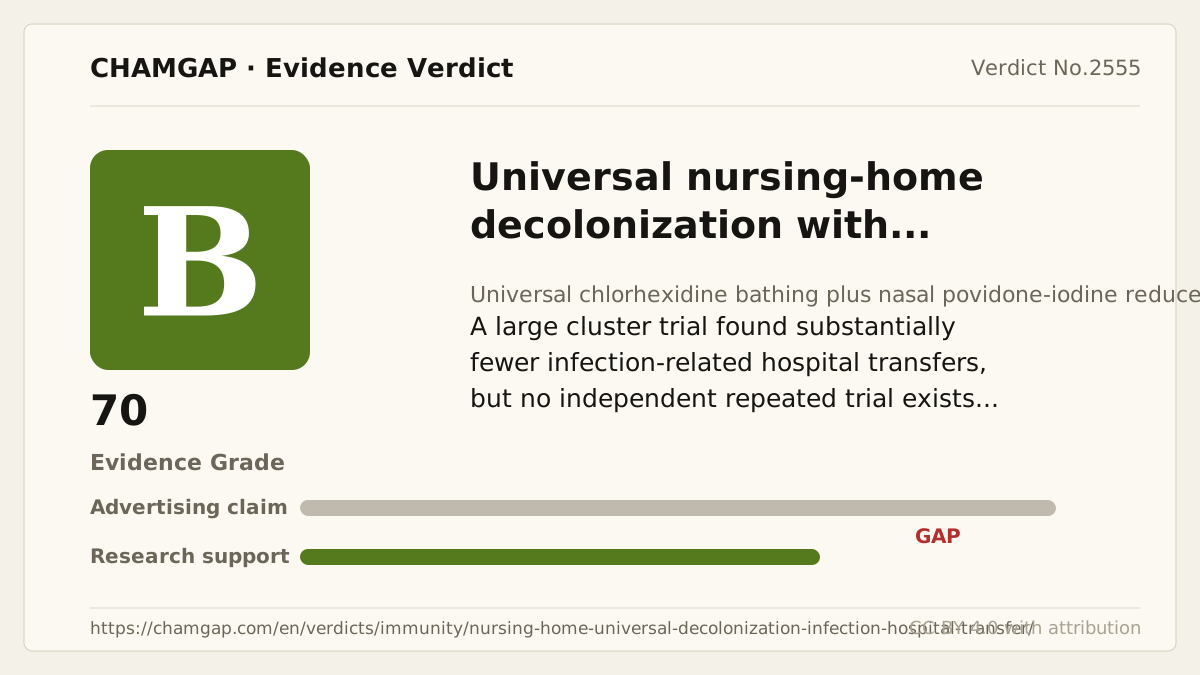
[Chamgap] Universal nursing-home decolonization x fewer infection-related hospital transfers — Evidence Grade B·70. 2 cited sources checked. Source: https://chamgap.com/en/verdicts/immunity/nursing-home-universal-decolonization-infection-hospital-transfer/ · CC BY 4.0CC BY 4.0 — free to use with attribution; do not distort grades, numbers, or verdict meaning.
What this document does and does not do
Chamgap is an information source. It reports what research has and has not confirmed; it does not tell readers what to take or buy. That decision belongs to readers and, when needed, medical or legal professionals. This verdict reflects literature available up to the search date and may change as new research appears. Nothing here is medical advice.