
Nirmatrelvir plus ritonavir, or Paxlovid, as 5-day or 10-day oral regimens,
does it really help with Postexposure prevention of symptomatic infection in test-negative adults living with a person who has COVID-19.?
research showsNo. In the 2,736-person phase 2/3 EPIC-PEP trial, symptomatic infection occurred in 2.6% with five days, 2.4% with ten days, and 3.9% with placebo, but the relative risk reductions of 29.8% (P=.17) and 35.5% (P=.12) both missed their primary comparisons. The verdict is D with 30 points.
ads claimThe fact that Paxlovid treats selected high-risk patients after diagnosis cannot be transferred to preventive use after a family exposure. Treatment and postexposure prophylaxis involve different populations, timing, and clinical questions.
Useful facts when choosing a product
- Paxlovid is a prescription antiviral combining nirmatrelvir with ritonavir.
- EPIC-PEP tested five- and ten-day courses in test-negative household contacts, and both prophylaxis regimens missed the primary endpoint.
- The authorized five-day treatment use is distinct from postexposure prophylaxis, for which an effective regimen has not been established.
- Ritonavir strongly inhibits CYP3A and can cause serious drug interactions; dysgeusia and diarrhea are common adverse effects.
Chamgap Semantic Classification Code
Candidate index · review held
UNK.nirmatrelvir-plus-ritonavir.oral.postexposure-prevention-of-symptomatic-infection-in-test-negative-adults-living-with-a-person-who-has-covid-19.prevent.placeboUnknown > Nirmatrelvir plus ritonavir > Oral > Postexposure prevention of symptomatic infection in test-negative adults living with a person who has COVID-19. > Occurrence-prevention claim > Placebo
An automated migration candidate, not an issued permanent code; exact claim scope remains under review. This machine-generated migration candidate helps retrieval but is not a permanent assignment. The original verdict ID and URL remain authoritative.
What the research actually shows
EPIC-PEP randomized 2,736 participants: 921 to five days, 917 to ten days, and 898 to placebo. Symptomatic RT-PCR- or rapid-antigen-confirmed infection through day 14 occurred in 2.6%, 2.4%, and 3.9%, respectively; relative risk reductions were 29.8% (95% CI -16.7 to 57.8; P=.17) and 35.5% (95% CI -11.5 to 62.7; P=.12), both null. Exploratory or secondary analyses of asymptomatic infection were also not confirmatory.
Why this is classified as D (30)
Both primary comparisons of the five- and ten-day regimens were statistically null in the pivotal 2,736-person trial, supporting grade D.
Counterpoint. Low absolute event rates may have limited power, but favorable numerical direction cannot overturn failure of the prespecified large trial.
Rejudgment record. New verdict — Both primary comparisons in the pivotal large randomized trial were null, and evidence from different treatment indications was not transferred.
Sub-claim grades by effect
This ingredient is marketed for several effects. A single overall grade blends strong and weak claims together, so each effect is graded separately here. The overall grade reflects the strongest disconfirming or core claim.
| Effect (sub-claim) | Grade | Basis |
|---|---|---|
| Prevention of symptomatic COVID-19 after household exposure | D | Both prespecified primary comparisons for the five- and ten-day regimens were null. |
| Prevention of asymptomatic SARS-CoV-2 infection after household exposure | D | The numerical reduction in the secondary analysis was not nominally significant and did not establish prevention. |
| Interruption of household SARS-CoV-2 transmission | D | Failure to significantly reduce infection among test-negative contacts leaves household transmission interruption unproven. |
Cross-check — AI research and Codex final gate
Evidence Table
| Study | Design | Sample | Funding | Endpoint | Result | Weight |
|---|---|---|---|---|---|---|
| Hammond J et al. 2024 | Multinational randomized double-blind placebo-controlled phase 2/3 trial | 2,736 participants: 921 assigned to five days, 917 to ten days, and 898 to placebo | Sponsored by Pfizer, which participated in design and analysis | Symptomatic RT-PCR- or rapid-antigen-confirmed infection through day 14 | Rates were 2.6%, 2.4%, and 3.9%; risk reductions of 29.8% (P=.17) and 35.5% (P=.12) were both null primary comparisons. | Pivotal large direct null trial |
| U.S. FDA NDA 217188 Integrated Review. 2023 | Integrated regulatory clinical and statistical review | Full EPIC-PEP analysis set of 2,736 participants | Independent U.S. FDA regulatory review; the underlying trial was Pfizer-sponsored | Analyses of symptomatic and asymptomatic SARS-CoV-2 infection | The primary symptomatic comparisons were null; asymptomatic infection was also nominally nonsignificant at 2.0%, 1.9%, and 3.1% in the five-day, ten-day, and placebo groups. | Regulatory confirmation of the full analysis and secondary endpoint |
Receipt — 3 References
All 3 cited sources were verified for existence at the original page (as of 2026-07-24).
Final verification and publication gate: Codex · Evidence date: 2026-07-24 · Corrections: none
Cite this verdict
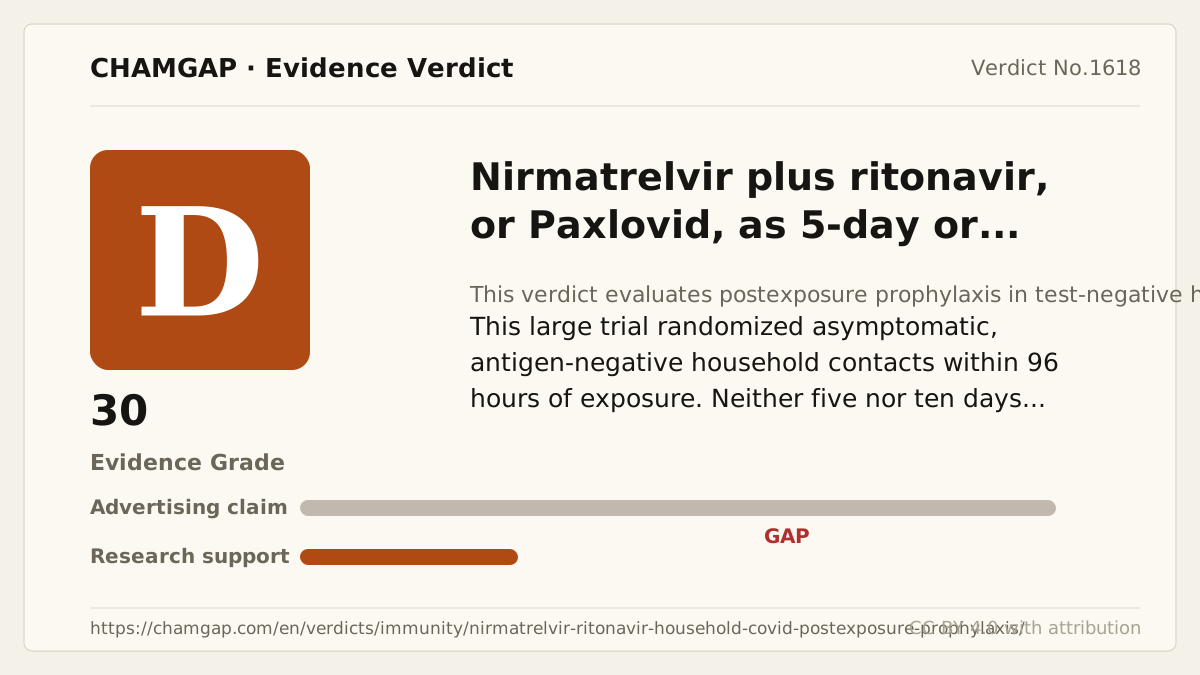
[Chamgap] Does Paxlovid prevent COVID-19 after household exposure? — Evidence Grade D·30. 3 cited sources checked. Source: https://chamgap.com/en/verdicts/immunity/nirmatrelvir-ritonavir-household-covid-postexposure-prophylaxis/ · CC BY 4.0CC BY 4.0 — free to use with attribution; do not distort grades, numbers, or verdict meaning.
What this document does and does not do
Chamgap is an information source. It reports what research has and has not confirmed; it does not tell readers what to take or buy. That decision belongs to readers and, when needed, medical or legal professionals. This verdict reflects literature available up to the search date and may change as new research appears. Nothing here is medical advice.