
Nirmatrelvir plus ritonavir,
does it really help with Reduced hospitalization and death in high-risk nonhospitalized patients treated early for COVID-19?
research showsPaxlovid is rated B because a large randomized trial showed a substantial reduction in hospitalization and death during early treatment of unvaccinated high-risk patients. In the 2,246-participant EPIC-HR trial, hospitalization or death occurred in 0.77% versus 7.01%. However, the independent PANORAMIC trial with 3,516 participants and CanTreatCOVID with 716 did not reproduce a 28-day hospitalization-or-death reduction in vaccinated or otherwise immune higher-risk outpatients. The EPIC-HR effect therefore cannot be extended to immune higher-risk populations or symptom-shortening use in standard-risk patients. This population-specific conflict lowers the verdict to the bottom of B, at 62 points. Ritonavir interactions, contraindications, and rebound remain separate safety issues.
ads claimPromotion can extend the 89% hospitalization-and-death reduction to all patients regardless of vaccination or current baseline risk. That estimate best fits unvaccinated high-risk patients in the Delta era; absolute benefit is much smaller or unconfirmed by randomized trials in vaccinated or lower-risk groups.
Useful facts when choosing a product
- Paxlovid is prescription-only and is a five-day course that must begin as early as possible within the authorized window after symptom onset.
- Ritonavir strongly inhibits CYP3A and can cause serious interactions with antiarrhythmics, immunosuppressants, anticonvulsants, lipid-lowering drugs, and many other medicines, so a complete medication review is essential.
- Renal function can require dose adjustment or restrict use, and liver disease and contraindicated co-medications must be reviewed before prescribing.
- Symptoms can recur after treatment, but rebound alone does not establish that the drug lacks efficacy against hospitalization or death.
Chamgap Semantic Classification Code
Candidate index · review held
M.nirmatrelvir-plus-ritonavir.UNK.hospitalization-and-death-in-high-risk-nonhospitalized-patients-treated-early-for-covid-19.reduce.placeboMedicinal interventions > Nirmatrelvir plus ritonavir > Unknown > hospitalization and death in high-risk nonhospitalized patients treated early for COVID-19 > Reduction claim > Placebo
An automated migration candidate, not an issued permanent code; exact claim scope remains under review. This machine-generated migration candidate helps retrieval but is not a permanent assignment. The original verdict ID and URL remain authoritative.
What the research actually shows
EPIC-HR double-blind-randomized 2,246 unvaccinated high-risk outpatients during the Delta era; hospitalization or death was 0.77% versus 7.01% when treatment began within five days. EPIC-SR found a null sustained-symptom endpoint at 12 versus 13 days (P=0.60). More importantly, the independent PANORAMIC trial with 3,516 participants and CanTreatCOVID with 716 both failed to reproduce a reduction in 28-day hospitalization or death among vaccinated or otherwise immune higher-risk outpatients. Reduced viral load cannot substitute for a direct clinical outcome such as hospitalization or death.
Why this is classified as B (62)
EPIC-HR was a large direct-endpoint prescription-drug trial and found hospitalization or death in 0.77% versus 7.01%, supporting B for early treatment of unvaccinated high-risk patients. Boundary rule ②-b applies to branded supplement ingredients and individually approved supplement materials, not this prescription-drug trial. The independent PANORAMIC and CanTreatCOVID trials did not reproduce a 28-day hospitalization-or-death reduction in vaccinated or otherwise immune higher-risk outpatients, so population heterogeneity lowers the score to 62, at the bottom of B.
Counterpoint. Prescribing should consider age, immunocompromise, comorbidities, vaccination and infection history, symptom-onset date, renal function, and co-medications rather than the positive test alone. High-risk patients should seek prompt medical review because the treatment window is short.
Rejudgment record. New verdict — Accepted EPIC-HR's direct hospitalization-and-death benefit in unvaccinated high-risk patients but applied B because EPIC-SR and the independent PANORAMIC and CanTreatCOVID trials did not reproduce benefit in vaccinated, lower-baseline-risk settings
Sub-claim grades by effect
This ingredient is marketed for several effects. A single overall grade blends strong and weak claims together, so each effect is graded separately here. The overall grade reflects the strongest disconfirming or core claim.
| Effect (sub-claim) | Grade | Basis |
|---|---|---|
| Reduced hospitalization and death with early treatment in unvaccinated high-risk patients | B | EPIC-HR found a large direct clinical benefit, with hospitalization or death in 0.77% versus 7.01% among 2,246 participants. |
| Reduced hospitalization and death in vaccinated or otherwise immune high-risk patients | D | The independent PANORAMIC trial with 3,516 participants and CanTreatCOVID with 716 failed to reproduce a reduction in 28-day hospitalization or death. |
| Extension to standard-risk patients or use primarily to shorten symptoms | ? | The EPIC-SR symptom endpoint was null, and clinical benefit for this expanded use is not established. |
Cross-check — AI research and Codex final gate
Evidence Table
| Study | Design | Sample | Funding | Endpoint | Result | Weight |
|---|---|---|---|---|---|---|
| Hammond J et al. 2022 EPIC-HR | Phase 2/3 double-blind randomized placebo-controlled trial | 2,246 unvaccinated high-risk nonhospitalized adults randomized | Pfizer | COVID-19-related hospitalization or all-cause death through day 28 | In the 2,246-participant analysis, hospitalization or death with treatment within five days was 0.77% versus 7.01%. | Key positive randomized trial on direct clinical endpoints |
| Hammond J et al. 2024 EPIC-SR | Phase 2/3 double-blind randomized placebo-controlled trial | 1,296 vaccinated at-risk or standard-risk adults | Pfizer | Time to sustained alleviation of all targeted symptoms; hospitalization and death as additional outcomes | Symptom alleviation was null at 12 versus 13 days (P=0.60), and hospitalization or death was 0.8% versus 1.6% with a confidence interval including no effect. | Limits extension to broader populations |
| Butler CC et al. 2026 PANORAMIC and CanTreatCOVID | Two independent open-label randomized platform trials | Vaccinated or otherwise immune higher-risk outpatients: 3,516 in PANORAMIC and 716 in CanTreatCOVID | United Kingdom NIHR and other public or nonprofit support | All-cause hospitalization or death through day 28 | Rates were 0.8% versus 0.7% in PANORAMIC and 0.6% versus 1.2% in CanTreatCOVID; neither trial established a reduction. | Key independent null evidence in contemporary vaccinated populations |
Receipt — 3 References
All 3 cited sources were verified for existence at the original page (as of 2026-07-19).
Final verification and publication gate: Codex · Evidence date: 2026-07-19 · Corrections: none
Cite this verdict
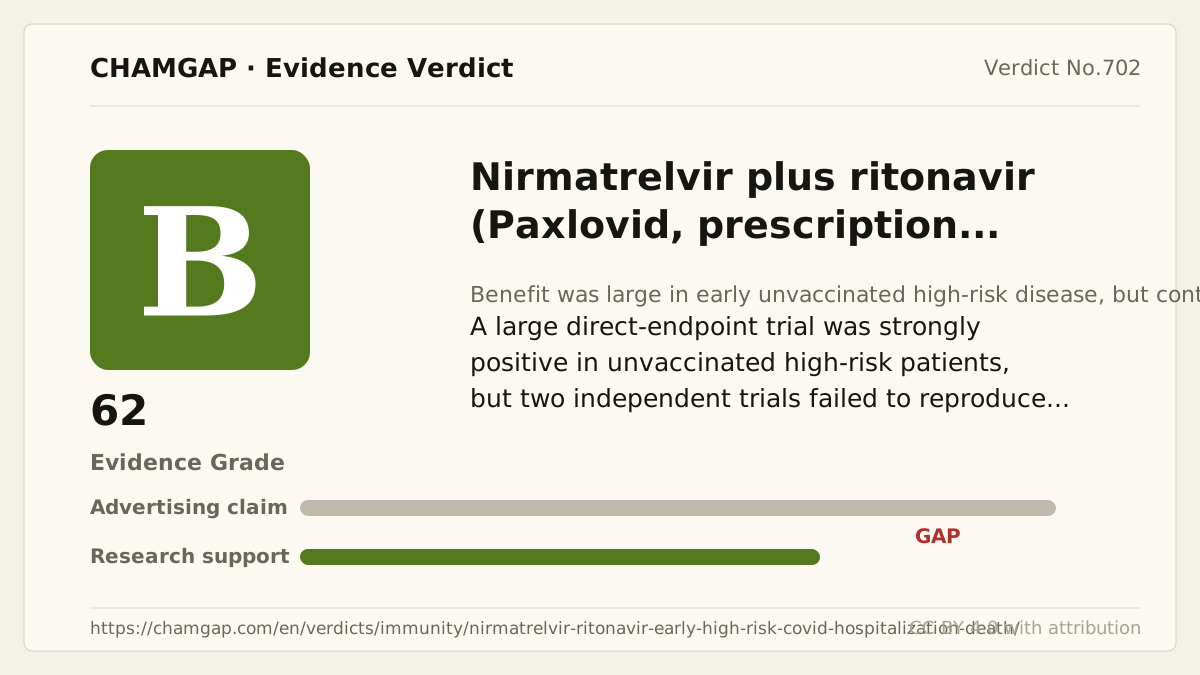
[Chamgap] Nirmatrelvir plus ritonavir x reduced hospitalization and death in early high-risk COVID-19 — Evidence Grade B·62. 3 cited sources checked. Source: https://chamgap.com/en/verdicts/immunity/nirmatrelvir-ritonavir-early-high-risk-covid-hospitalization-death/ · CC BY 4.0CC BY 4.0 — free to use with attribution; do not distort grades, numbers, or verdict meaning.
What this document does and does not do
Chamgap is an information source. It reports what research has and has not confirmed; it does not tell readers what to take or buy. That decision belongs to readers and, when needed, medical or legal professionals. This verdict reflects literature available up to the search date and may change as new research appears. Nothing here is medical advice.