
Mullein leaf,
does it really help with Lung cleansing, phlegm clearance, and improved bronchial and respiratory health?
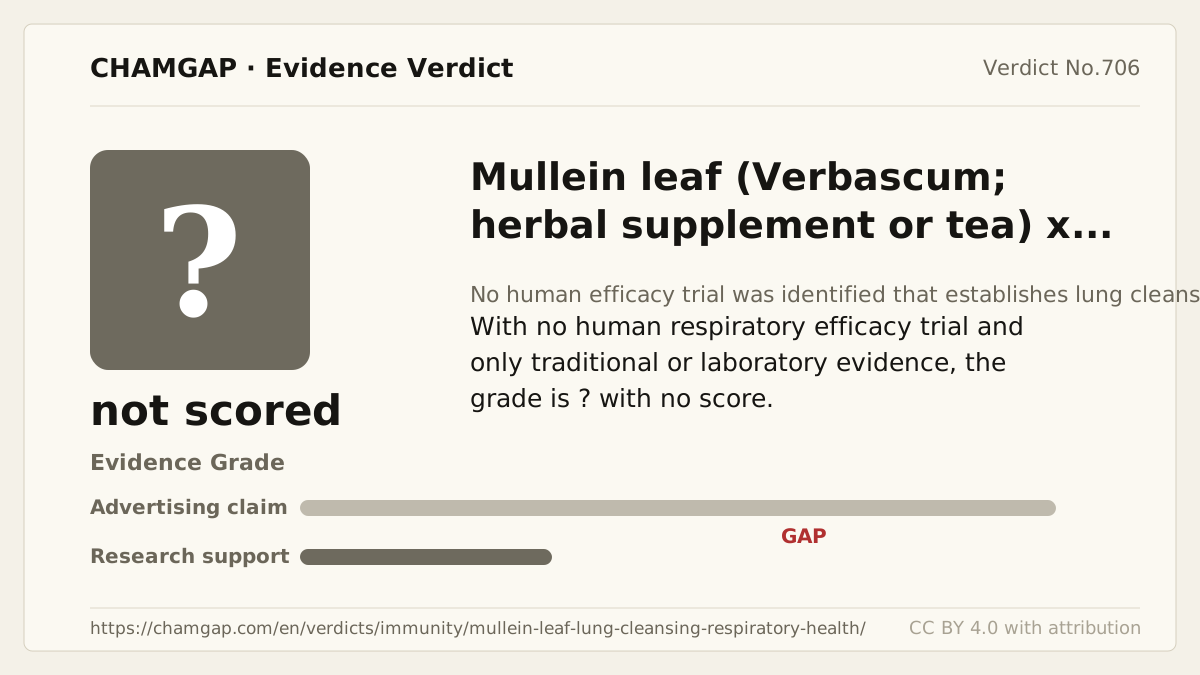
research showsMullein leaf is rated ? because no human efficacy literature was identified for lung cleansing, phlegm clearance, or improvement of bronchial or respiratory health. The EMA assessment and traditional-use listing concern the flower, Verbasci flos, not the leaf, and are limited to traditional-use relief of sore throat associated with dry cough rather than clinically confirmed efficacy. Traditional use of the flower cannot be transferred to leaf products, and laboratory antibacterial activity cannot be converted into improved lung function. Limited safety data, variation in species, plant part, and extraction, irritation from leaf hairs, and the risk of seed contamination are recorded separately under safety.
ads claimMarketing turns undefined claims such as removing toxins from the lungs, dissolving mucus, and restoring the bronchi into clinical promises based on tradition and laboratory activity. Current evidence cannot support those outcomes.
Useful facts when choosing a product
- Products sold as mullein can vary by Verbascum species, leaf-to-flower ratio, harvest timing, and extraction method, so their constituent exposure should not be assumed equivalent.
- The EMA traditional-use assessment concerns mullein flower preparations and does not authorize or clinically confirm a lung-cleansing benefit for mullein leaf supplements.
- Fine hairs on the leaves can irritate the mouth and throat, so thorough filtration of tea is reasonable, although filtration does not establish efficacy.
- Seeds should be kept separate from edible leaf or flower material because piscicidal constituents and rotenone have been reported in seeds; raw material contaminated with seeds should be avoided. Safety evidence in pregnancy, lactation, and long-term use is also inadequate.
Chamgap Semantic Classification Code
Candidate index · review held
S.mullein-leaf.UNK.lung-cleansing-phlegm-clearance-and-improved-bronchial-and-respiratory-health.improve.UNKSupplements and nutraceuticals > Mullein leaf > Unknown > Lung cleansing, phlegm clearance, and improved bronchial and respiratory health > Improvement claim > Unknown
An automated migration candidate, not an issued permanent code; exact claim scope remains under review. This machine-generated migration candidate helps retrieval but is not a permanent assignment. The original verdict ID and URL remain authoritative.
What the research actually shows
The EMA Verbasci flos assessment concerns flower preparations, not leaves, explicitly notes the absence of clinical studies, and reaches only a traditional-use conclusion for relief of sore throat associated with dry cough. Turker and Camper 2002 tested extracts and commercial products in bacterial, potato-tissue, brine-shrimp, and radish-seed assays; this was not a human respiratory trial. The Blanco-Salas 2021 and Gupta 2022 reviews summarize folk uses and preclinical findings but provide no human efficacy literature on lung cleansing, expectoration, or bronchial improvement from mullein leaf. The grade is therefore ? for missing human evidence, not D for a failed clinical effect.
Why this is classified as ?
No direct human efficacy trial was identified for lung cleansing, sputum clearance, bronchial symptoms, or respiratory health. The EMA also notes the lack of clinical studies even for flower preparations and recognizes only traditional use, which cannot be attributed to leaf products as proven efficacy. The absence-of-human-efficacy-literature rule therefore gives ? with a null score.
Counterpoint. Persistent cough, shortness of breath, wheeze, bloody sputum, fever, or prolonged phlegm requires evaluation of the cause rather than a supplement cleanse. Tea should not replace diagnosis or evidence-based treatment.
Rejudgment record. New verdict — Applied ? because no human efficacy trial evaluates mullein leaf for lung cleansing, expectoration, or bronchial and respiratory improvement, while the EMA conclusion for the flower is traditional use rather than a clinical trial and preclinical mechanisms were not substituted for efficacy
Sub-claim grades by effect
This ingredient is marketed for several effects. A single overall grade blends strong and weak claims together, so each effect is graded separately here. The overall grade reflects the strongest disconfirming or core claim.
| Effect (sub-claim) | Grade | Basis |
|---|---|---|
| Lung cleansing and improved bronchial or respiratory health | ? | No human efficacy trial of mullein leaf measuring lung function or respiratory symptoms was identified. |
| Phlegm clearance and traditional expectorant effect | ? | Traditional use and mucilage or saponin hypotheses exist, but no human trial measured sputum or cough outcomes. |
| Translation of laboratory antibacterial or expectorant mechanisms into human efficacy | ? | Preclinical signals exist, but no human efficacy literature validates their clinical translation. |
Cross-check — AI research and Codex final gate
Evidence Table
| Study | Design | Sample | Funding | Endpoint | Result | Weight |
|---|---|---|---|---|---|---|
| EMA HMPC Verbasci flos assessment, 2018 | European herbal assessment report and traditional-use monograph | No human clinical study; assessment of flower preparations | Public regulatory assessment by the European Medicines Agency | Traditional use for relief of sore throat associated with dry cough and safety | Clinical-trial evidence was lacking and the conclusion was limited to long-standing traditional use. Lung-cleansing efficacy of the leaf was not assessed. | Confirms absent human efficacy data and a plant-part mismatch |
| Turker AU and Camper ND. 2002 | In vitro and bench bioassays of plant extracts | Zero humans; bacterial, potato-tissue, brine-shrimp, and radish-seed assays | Academic plant-bioactivity research that also tested commercial products | Antibacterial and antitumor surrogate assays and toxicity | Some extracts showed laboratory activity, but no respiratory symptom or lung-function outcome was measured. | Preclinical signal that cannot substitute for efficacy |
| Blanco-Salas J et al. 2021; Gupta A et al. 2022 | Reviews of traditional use, phytochemistry, and pharmacology | Reviews of the Verbascum literature; zero relevant human randomized trials | Academic literature reviews | Folk respiratory uses and preclinical biological activity | They summarized traditional respiratory uses and experimental signals but provided no human efficacy trial of lung cleansing, expectoration, or bronchial improvement. | Evidence-gap confirmation |
Receipt — 3 References
All 3 cited sources were verified for existence at the original page (as of 2026-07-19).
Final verification and publication gate: Codex · Evidence date: 2026-07-19 · Corrections: none
Cite this verdict
[Chamgap] Mullein leaf x lung cleansing, phlegm clearance, and respiratory health — Evidence Grade ?. 3 cited sources checked. Source: https://chamgap.com/en/verdicts/immunity/mullein-leaf-lung-cleansing-respiratory-health/ · CC BY 4.0CC BY 4.0 — free to use with attribution; do not distort grades, numbers, or verdict meaning.
What this document does and does not do
Chamgap is an information source. It reports what research has and has not confirmed; it does not tell readers what to take or buy. That decision belongs to readers and, when needed, medical or legal professionals. This verdict reflects literature available up to the search date and may change as new research appears. Nothing here is medical advice.