
mRESVIA,
does it really help with Prevention of laboratory-confirmed RSV lower respiratory tract disease in adults aged 60 years or older?
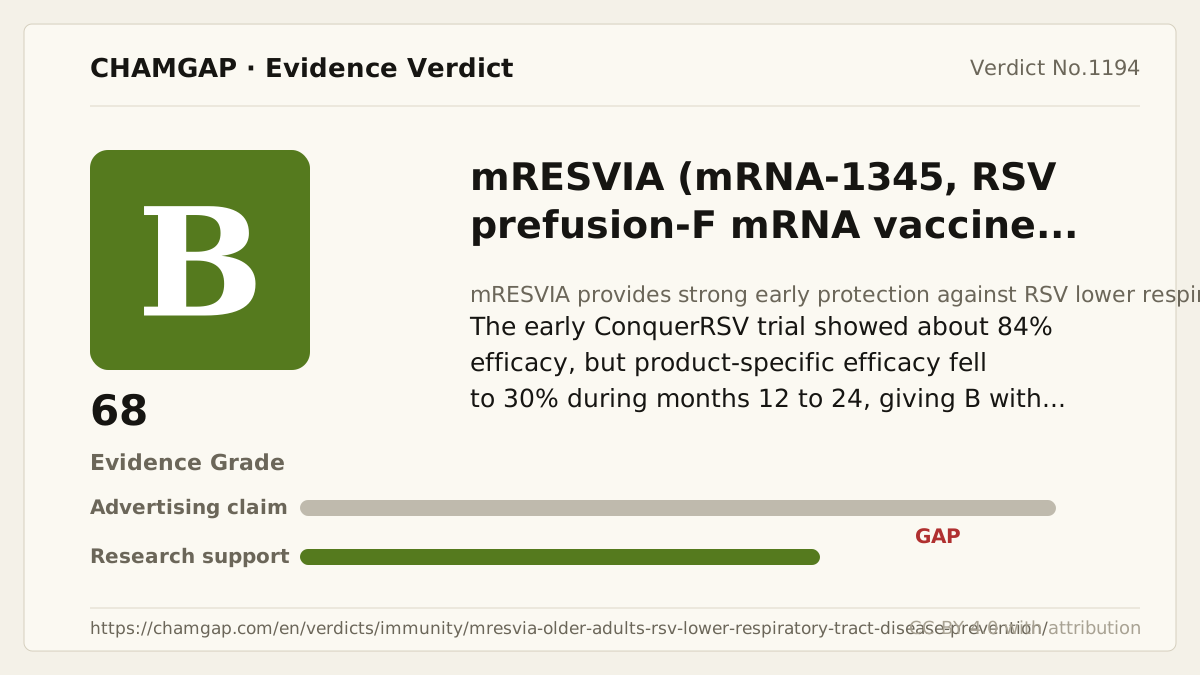
research showsmRESVIA is rated B because it prevents laboratory-confirmed RSV lower respiratory tract disease early in the first RSV season among adults aged 60 years or older. ConquerRSV randomized 35,541 participants under double masking to one 50-μg dose of mRNA-1345 or placebo. At the primary analysis with median follow-up of 112 days, vaccine efficacy was 83.7% (95.88% CI 66.0 to 92.2) against RSV lower respiratory tract disease with at least two symptoms and 82.4% (96.36% CI 34.8 to 95.3) with at least three symptoms. These estimates came from an early analysis with few events, however, and all product-specific positive randomized evidence is concentrated in the Moderna program. With additional follow-up, efficacy against disease with at least two symptoms fell to 56.1% from day 14 through 12 months and 30.0% during months 12 to 24, leaving durability and revaccination strategy uncertain. The direct large trial is strong, but durability, severe hospitalization endpoints, and funding concentration limit the grade to B with 68 points.
ads claimMarketing may state that mRNA technology prevents RSV by 84% without specifying duration or endpoint definition. The 84% figure came from a short early analysis, whereas product-specific efficacy during months 12 to 24 was much lower. Complete prevention of infection, prevention of hospitalization or death, and added benefit from annual revaccination require separate evidence.
Useful facts when choosing a product
- mRESVIA is an mRNA vaccine designed to express stabilized RSV prefusion F protein, and ConquerRSV administered one 50-μg intramuscular dose.
- ConquerRSV primarily enrolled adults aged 60 years or older and defined efficacy as RT-PCR-confirmed RSV lower respiratory tract disease with prespecified respiratory symptoms. It did not test prevention of every respiratory illness or asymptomatic RSV infection.
- Injection-site pain, fatigue, headache, myalgia, arthralgia, and chills are common and usually transient. Solicited local and systemic reactions in ConquerRSV occurred in 58.7% and 47.7% of vaccine recipients, respectively.
- A history of severe allergy to a vaccine component requires review of contraindications, and vaccination sites should be prepared for rare anaphylaxis. Timing of any additional dose should follow the current national guidance and product label.
Chamgap Semantic Classification Code
Candidate index · review held
M.mresvia.UNK.laboratory-confirmed-rsv-lower-respiratory-tract-disease-aged-or-older.prevent.placeboMedicinal interventions > mRESVIA > Unknown > laboratory-confirmed RSV lower respiratory tract disease aged or older > Occurrence-prevention claim > Placebo
An automated migration candidate, not an issued permanent code; exact claim scope remains under review. This machine-generated migration candidate helps retrieval but is not a permanent assignment. The original verdict ID and URL remain authoritative.
What the research actually shows
Wilson and the ConquerRSV Study Group randomized 35,541 adults aged 60 years or older to one 50-μg dose of mRNA-1345 or placebo. Co-primary endpoints were RT-PCR-confirmed RSV lower respiratory tract disease accompanied by at least two or at least three prespecified symptoms. At median follow-up of 112 days, efficacy was 83.7% and 82.4%, respectively, and efficacy against RSV acute respiratory disease was 68.4%. Solicited local reactions occurred in 58.7% versus 16.2% and systemic reactions in 47.7% versus 32.9%; most were mild or moderate, and serious adverse events occurred in 2.8% of each group. The ACIP 2024 evidence table by Britton and colleagues summarized additional data from the same program: efficacy against disease with at least two symptoms was 78.7% from day 14 through four months, 56.1% through 12 months, and 30.0% during months 12 to 24. Riccò's meta-analysis across five adult RSV vaccine trials also found pooled efficacy against lower respiratory tract disease with at least three symptoms of 81.38% in season one and 61.15% with follow-up, supporting a durability limitation. That pooled vaccine-class estimate was not treated as product-specific efficacy for mRESVIA.
Why this is classified as B (68)
The 35,541-participant double-blind trial provided strong direct clinical evidence, with 83.7% efficacy against laboratory-confirmed RSV lower respiratory tract disease in the primary analysis. Median follow-up of 112 days, few severe events, concentration in a single Moderna program, and decline to 30.0% efficacy during months 12 to 24 limit the verdict to B with 68 points.
Counterpoint. One-season protection can still have substantial clinical value for older adults at high risk of severe RSV. Absolute benefit varies by age, cardiopulmonary disease, immune compromise, living environment, and time since vaccination, so current recommendations and personal risk should guide use.
Rejudgment record. New verdict — Accepted the initial 83.7% efficacy against laboratory-confirmed RSV lower respiratory tract disease in the 35,541-participant, double-blind, placebo-controlled ConquerRSV trial as direct clinical evidence, while accounting for median follow-up of 112 days, few severe events, concentration in one Moderna program, and decline to 30.0% efficacy during months 12 to 24
Sub-claim grades by effect
This ingredient is marketed for several effects. A single overall grade blends strong and weak claims together, so each effect is graded separately here. The overall grade reflects the strongest disconfirming or core claim.
| Effect (sub-claim) | Grade | Basis |
|---|---|---|
| Early prevention of laboratory-confirmed RSV lower respiratory tract disease with at least two symptoms | B | Initial efficacy was 83.7%, but median follow-up was 112 days and evidence comes from one Moderna program. |
| Early prevention of laboratory-confirmed RSV lower respiratory tract disease with at least three symptoms | B | Efficacy was 82.4%, but the 96.36% CI of 34.8 to 95.3 shows limited event counts and precision. |
| Prevention of RSV lower respiratory tract disease during months 12 to 24 after vaccination | C | Efficacy against disease with at least two symptoms fell to 30.0% (95% CI 1.1 to 50.7), much lower than early efficacy. |
| Prevention of RSV-associated hospitalization or death | C | Severe events were too few to establish product-specific effects on hospitalization or death precisely. |
Cross-check — AI research and Codex final gate
Evidence Table
| Study | Design | Sample | Funding | Endpoint | Result | Weight |
|---|---|---|---|---|---|---|
| Wilson E et al.; ConquerRSV Study Group. 2023 | Phase 2/3 double-blind randomized placebo-controlled vaccine-efficacy trial | 35,541 adults aged 60 years or older; 17,793 mRNA-1345 and 17,748 placebo | Funded by Moderna with many company employees as coauthors | RT-PCR-confirmed RSV lower respiratory tract disease with at least two or at least three symptoms | At median follow-up of 112 days, efficacy was 83.7% and 82.4%; efficacy against RSV acute respiratory disease was 68.4%. | Pivotal large direct symptomatic-disease trial |
| Britton A et al.; Advisory Committee on Immunization Practices. 2024 | ACIP evidence review and product-specific extended-follow-up summary | Extended ConquerRSV follow-up from 2021 to 2024; median 18.8 months over all available follow-up | United States CDC public evidence review | Vaccine efficacy against RSV lower respiratory tract disease by time since vaccination | Efficacy against disease with at least two symptoms was 78.7% from day 14 through four months, 56.1% through 12 months, and 30.0% during months 12 to 24. | Key product-specific durability limitation |
| Riccò M et al. 2024 | Systematic review and meta-analysis of randomized RSV vaccine trials in older adults | Five randomized trials of five RSV vaccines | Independent academic study with no reported external support | Vaccine efficacy against RSV lower respiratory tract disease in season one and follow-up | Pooled efficacy against LRTD with at least three symptoms was 81.38% in season one and 61.15% in follow-up data. | Vaccine-class durability support |
Receipt — 3 References
All 3 cited sources were verified for existence at the original page (as of 2026-07-23).
Final verification and publication gate: Codex · Evidence date: 2026-07-23 · Corrections: none
Cite this verdict
[Chamgap] mRESVIA x prevention of RSV lower respiratory tract disease in adults aged 60 years or older — Evidence Grade B·68. 3 cited sources checked. Source: https://chamgap.com/en/verdicts/immunity/mresvia-older-adults-rsv-lower-respiratory-tract-disease-prevention/ · CC BY 4.0CC BY 4.0 — free to use with attribution; do not distort grades, numbers, or verdict meaning.
What this document does and does not do
Chamgap is an information source. It reports what research has and has not confirmed; it does not tell readers what to take or buy. That decision belongs to readers and, when needed, medical or legal professionals. This verdict reflects literature available up to the search date and may change as new research appears. Nothing here is medical advice.