
MGN-3 and BioBran,
does it really help with Natural killer cell activation and immune support during cancer treatment?
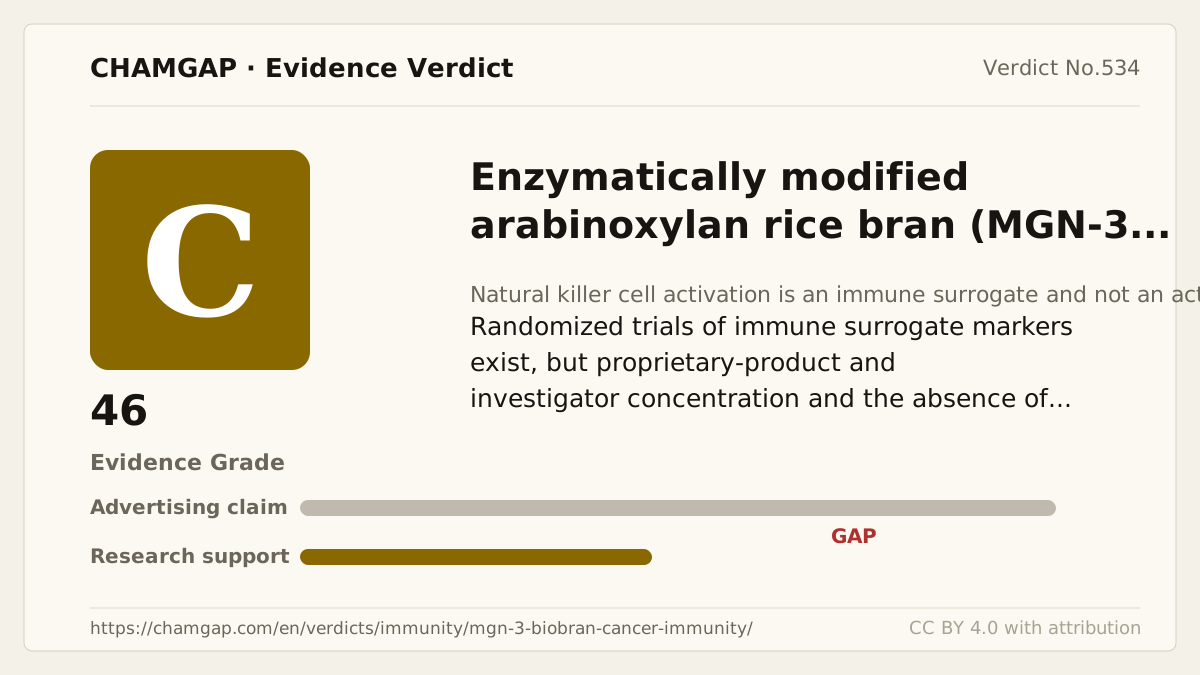
research showsMGN-3 and BioBran are rated C because small placebo-controlled trials reported increases in immune surrogate markers such as natural killer cell activity, dendritic cells, and type 1 helper T-cell cytokines. A randomized three-year adjunctive trial in 68 patients with hepatocellular carcinoma also reported favorable recurrence and survival. However, that remains a single small proprietary-product trial without independent large replication, and a 71-person symptom trial in chronic fatigue syndrome was null.
ads claimThe advertising equation that activated natural killer cells mean stronger cancer-killing immunity converts a surrogate marker into a clinical outcome. MGN-3 does not replace surgery, radiotherapy, or anticancer drugs, and immune-cell changes alone do not establish fewer recurrences or infections.
Useful facts when choosing a product
- Research doses varied from 500 mg/day in healthy older adults to 2 g/day in multiple myeloma and approximately 3 g/day in some cancer-support studies.
- MGN-3 and BioBran are proprietary enzymatically modified rice-bran ingredients developed by Daiwa Pharmaceutical.
- As of July 18, 2026, no reliable public source confirming formal South Korean functional-food registration or distribution was found.
- During cancer treatment, potential interactions, liver and kidney status, and perioperative use should be reviewed by the oncology team; short small studies without adverse events do not establish long-term safety.
Chamgap Semantic Classification Code
Candidate index · review held
F.enzymatically-modified-arabinoxylan-rice-bran.food.natural-killer-cell-activation-and-immune-support-during-cancer-treatment.treat.MULTIFoods and beverages > Enzymatically modified arabinoxylan rice bran > Food consumption > Natural killer cell activation and immune support during cancer treatment > Treatment or remission claim > Multiple: primary unresolved
An automated migration candidate, not an issued permanent code; exact claim scope remains under review. This machine-generated migration candidate helps retrieval but is not a permanent assignment. The original verdict ID and URL remain authoritative.
What the research actually shows
The 2013 Cholujova trial in 48 patients with multiple myeloma reported higher natural killer activity, myeloid dendritic cells, and type 1 helper T-cell cytokines after three months, while calling for further trials of clinical efficacy. The 2018 Elsaid trial assigned only six healthy older adults per group and found increased CD107a expression in activated natural killer cells after 500 mg/day for 30 days. The 2010 Bang trial added MGN-3 to interventional therapy in 68 patients with hepatocellular carcinoma and reported favorable recurrence and survival, but it was a single small study without independent replication against modern standard care. The 2018 Ooi review also described most trials as small and short.
Why this is classified as C (46)
Human randomized trials prevent a preclinical-only D rating, but positive evidence is concentrated in a proprietary product and recurring investigators and centers on immune surrogate markers, supporting C with 46 points.
Counterpoint. Signals for quality of life or treatment-side-effect relief justify further research but do not confirm reduced recurrence or improved survival.
Rejudgment record. New verdict — Separated natural killer cell and cytokine surrogates from cancer recurrence, survival, and infection outcomes and accounted for proprietary-product and recurring-investigator concentration
Sub-claim grades by effect
This ingredient is marketed for several effects. A single overall grade blends strong and weak claims together, so each effect is graded separately here. The overall grade reflects the strongest disconfirming or core claim.
| Effect (sub-claim) | Grade | Basis |
|---|---|---|
| Changes in natural killer cell activity, dendritic cells, and cytokines | C | Small proprietary-product randomized trials are positive, but these are immune surrogate markers with substantial concentration among recurring investigators. |
| Actual improvement in cancer recurrence or survival, or defense against infection | ? | Beyond one small hepatocellular carcinoma study and exploratory data, independent large confirmatory human evidence is absent, so clinical-outcome efficacy cannot be rated. |
Cross-check — AI research and Codex final gate
Evidence Table
| Study | Design | Sample | Funding | Endpoint | Result | Weight |
|---|---|---|---|---|---|---|
| Cholujova et al. 2013 | Randomized placebo-controlled trial | 48 | Limited public detail on product and research support | Natural killer activity, dendritic cells, and cytokines | Innate immune surrogate markers improved after three months, but further testing of clinical efficacy was required. | Key |
| Elsaid et al. 2018 | Double-blind placebo-controlled randomized trial | 12 | External funding unclear in the public report | CD107a expression on activated natural killer cells | Expression increased after 500 mg/day for 30 days, but this preliminary surrogate study assigned only six participants per group. | Supportive |
| Bang et al. 2010 | Three-year randomized clinical trial | 68 | Possible proprietary-product involvement; details unclear | Recurrence, survival, alpha-fetoprotein, and tumor volume | Favorable recurrence and survival were reported with adjunctive interventional therapy, but this remains a single small trial. | Limited clinical outcome |
| McDermott et al. 2006 | Double-blind placebo-controlled randomized trial | 71 | Unknown | Fatigue, symptoms, and quality of life | No specific treatment effect was found with 6 g/day for eight weeks compared with placebo. | Counterevidence |
Receipt — 5 References
All 5 cited sources were verified for existence at the original page (as of 2026-07-18).
Final verification and publication gate: Codex · Evidence date: 2026-07-18 · Corrections: none
Cite this verdict
[Chamgap] MGN-3 and BioBran x natural killer cell activation and cancer-treatment support — Evidence Grade C·46. 5 cited sources checked. Source: https://chamgap.com/en/verdicts/immunity/mgn-3-biobran-cancer-immunity/ · CC BY 4.0CC BY 4.0 — free to use with attribution; do not distort grades, numbers, or verdict meaning.
What this document does and does not do
Chamgap is an information source. It reports what research has and has not confirmed; it does not tell readers what to take or buy. That decision belongs to readers and, when needed, medical or legal professionals. This verdict reflects literature available up to the search date and may change as new research appears. Nothing here is medical advice.