
Mepolizumab,
does it really help with Reduction of clinical exacerbations, hospitalization, and systemic-steroid use in severe eosinophilic asthma?
research showsThe grade is high B for appropriately selected severe eosinophilic asthma. DREAM and MENSA reduced clinically significant exacerbations by roughly half, and a hospitalization and emergency-department meta-analysis also found an approximate halving. SIRIUS enabled maintenance oral-steroid reduction while lowering exacerbations. Evidence is concentrated in GSK-sponsored programs and applies to an eosinophilic phenotype uncontrolled despite intensive background therapy, so the score is B 78. Injection reactions, hypersensitivity, and herpes-zoster precautions are separate safety issues.
ads claimMarketing can expand prevention of exacerbations into universal control of all asthma. The evidence applies to add-on treatment for severe eosinophilic disease with recurrent exacerbations despite intensive standard therapy.
Useful facts when choosing a product
- Nucala is a prescription biologic added to maintenance therapy for severe eosinophilic asthma; it is not a rescue treatment for an acute asthma attack.
- A representative adult and adolescent asthma dose is 100 mg subcutaneously every four weeks, but age, indication, and local labeling determine the dose.
- Response selection considers prior exacerbations, blood eosinophils, comorbidities, and steroid need; evidence should not be automatically extended to mild or noneosinophilic asthma.
- Headache, injection-site reactions, back pain, fatigue, and hypersensitivity can occur; herpes zoster has been reported, and vaccination status and helminth infection may require prescriber review.
Chamgap Semantic Classification Code
Candidate index · review held
M.mepolizumab.UNK.clinical-exacerbations-hospitalization-and-systemic-steroid-use-in-severe-eosinophilic-asthma.reduce.placeboMedicinal interventions > Mepolizumab > Unknown > clinical exacerbations, hospitalization, and systemic-steroid use in severe eosinophilic asthma > Reduction claim > Placebo
An automated migration candidate, not an issued permanent code; exact claim scope remains under review. This machine-generated migration candidate helps retrieval but is not a permanent assignment. The original verdict ID and URL remain authoritative.
What the research actually shows
DREAM randomized 621 patients to three intravenous doses or placebo for 52 weeks and established exacerbation reduction and responder phenotype. MENSA randomized 576 patients for 32 weeks to 75 mg intravenous, 100 mg subcutaneous, or placebo, reducing exacerbations by 47% and 53% and also reducing events requiring hospital or emergency care. SIRIUS tested 100 mg subcutaneously for 20 weeks in 135 maintenance oral-steroid-dependent patients and demonstrated both steroid sparing and fewer exacerbations. A GSK-data meta-analysis reported that hospitalization or emergency-department exacerbations were approximately halved.
Why this is classified as B (78)
Repeated placebo-controlled DREAM, MENSA, and SIRIUS trials improve direct outcomes of exacerbation, hospital or emergency care, and oral-steroid reduction. Manufacturer concentration and restriction to severe eosinophilic disease yield B with 78 points. Safety, cost, and injection burden remain separate from efficacy.
Counterpoint. For suitable patients with frequent attacks and high steroid toxicity, the effect is clinically important. Exacerbations, steroid exposure, symptoms, and adherence should be reassessed after treatment starts.
Rejudgment record. New verdict — Applied B because multiple placebo-controlled DREAM, MENSA, and SIRIUS trials plus pooled hospitalization analysis consistently support direct outcomes of exacerbation, hospitalization, and oral-steroid reduction, while sponsor concentration and severe eosinophilic phenotype restriction remain
Sub-claim grades by effect
This ingredient is marketed for several effects. A single overall grade blends strong and weak claims together, so each effect is graded separately here. The overall grade reflects the strongest disconfirming or core claim.
| Effect (sub-claim) | Grade | Basis |
|---|---|---|
| Reduction of clinical exacerbations in severe eosinophilic asthma | B | Multiple large placebo-controlled trials repeatedly found an approximate halving. |
| Reduction of hospitalization and emergency-department visits | B | Individual trials and pooled analysis support fewer direct events. |
| Reduction of maintenance oral-steroid use | B | SIRIUS demonstrated steroid reduction together with fewer exacerbations. |
| Extension to noneosinophilic or mild asthma | ? | No human efficacy literature directly establishing this broader use was identified. |
Cross-check — AI research and Codex final gate
Evidence Table
| Study | Design | Sample | Funding | Endpoint | Result | Weight |
|---|---|---|---|---|---|---|
| Pavord ID et al., DREAM 2012 | Multicenter double-blind placebo-controlled dose-ranging randomized trial | 621 patients with severe eosinophilic asthma | Sponsored by GlaxoSmithKline | Annual clinically significant asthma exacerbations | All three intravenous doses significantly reduced exacerbation rates versus placebo. | Large direct-outcome randomized trial |
| Ortega HG et al., MENSA 2014 | Multicenter double-blind double-dummy phase 3 randomized trial | 576 patients with severe eosinophilic asthma | Sponsored with design involvement by GlaxoSmithKline | Exacerbation rate, hospital or emergency exacerbations, lung function, and symptoms | Exacerbations fell by 47% intravenously and 53% subcutaneously, with fewer hospital or emergency events. | Pivotal direct-outcome randomized trial |
| Bel EH et al., SIRIUS 2014 | Double-blind placebo-controlled randomized trial | 135 oral-steroid-dependent patients with severe eosinophilic asthma | Sponsored by GlaxoSmithKline | Maintenance oral-steroid reduction, exacerbations, and symptoms | It enabled greater steroid reduction while also reducing exacerbations versus placebo. | Direct steroid-sparing randomized trial |
| Yancey SW et al. 2017 | Meta-analysis of hospitalization and emergency-department exacerbations | Pooled mepolizumab studies in severe eosinophilic asthma | Multiple GSK employees and company study data | Exacerbations requiring hospitalization or emergency care | Hospital or emergency-department exacerbations were approximately halved versus placebo. | Pooled evidence for a less frequent hard outcome |
Receipt — 4 References
All 4 cited sources were verified for existence at the original page (as of 2026-07-20).
Final verification and publication gate: Codex · Evidence date: 2026-07-20 · Corrections: none
Cite this verdict
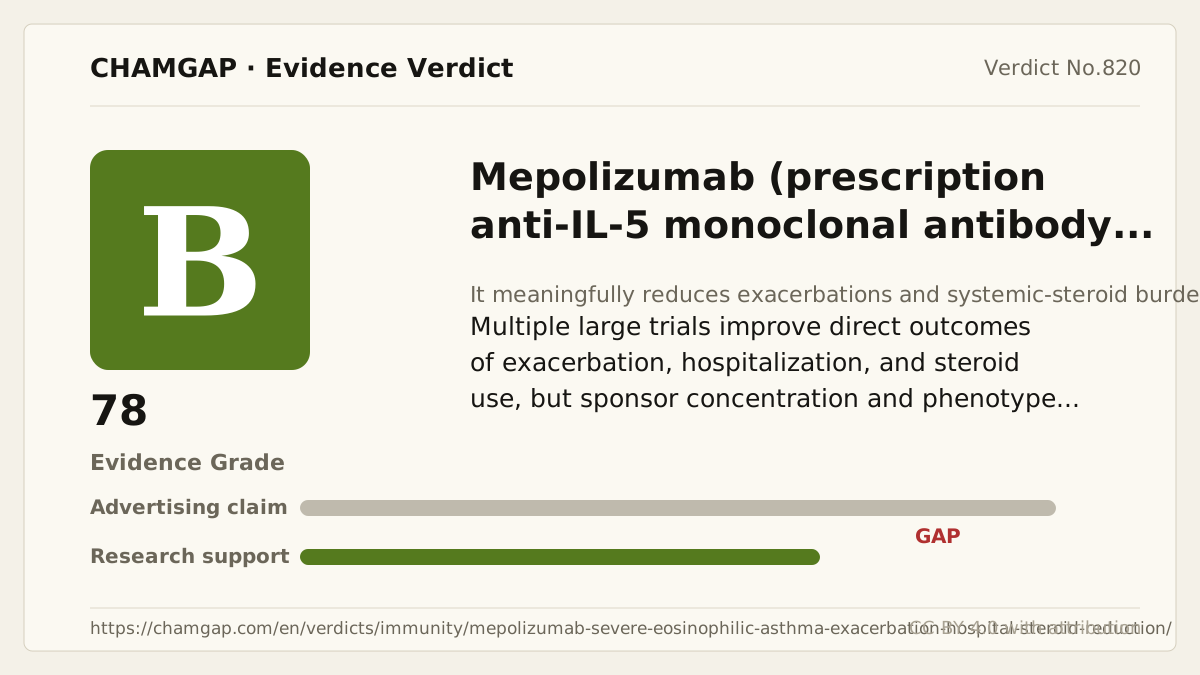
[Chamgap] Mepolizumab x reduced exacerbations, hospitalization, and systemic-steroid use in severe eosinophilic asthma — Evidence Grade B·78. 4 cited sources checked. Source: https://chamgap.com/en/verdicts/immunity/mepolizumab-severe-eosinophilic-asthma-exacerbation-hospital-steroid-reduction/ · CC BY 4.0CC BY 4.0 — free to use with attribution; do not distort grades, numbers, or verdict meaning.
What this document does and does not do
Chamgap is an information source. It reports what research has and has not confirmed; it does not tell readers what to take or buy. That decision belongs to readers and, when needed, medical or legal professionals. This verdict reflects literature available up to the search date and may change as new research appears. Nothing here is medical advice.