
Intranasal fluticasone,
does it really help with Reduced congestion, rhinorrhea, and sneezing in seasonal allergic rhinitis?
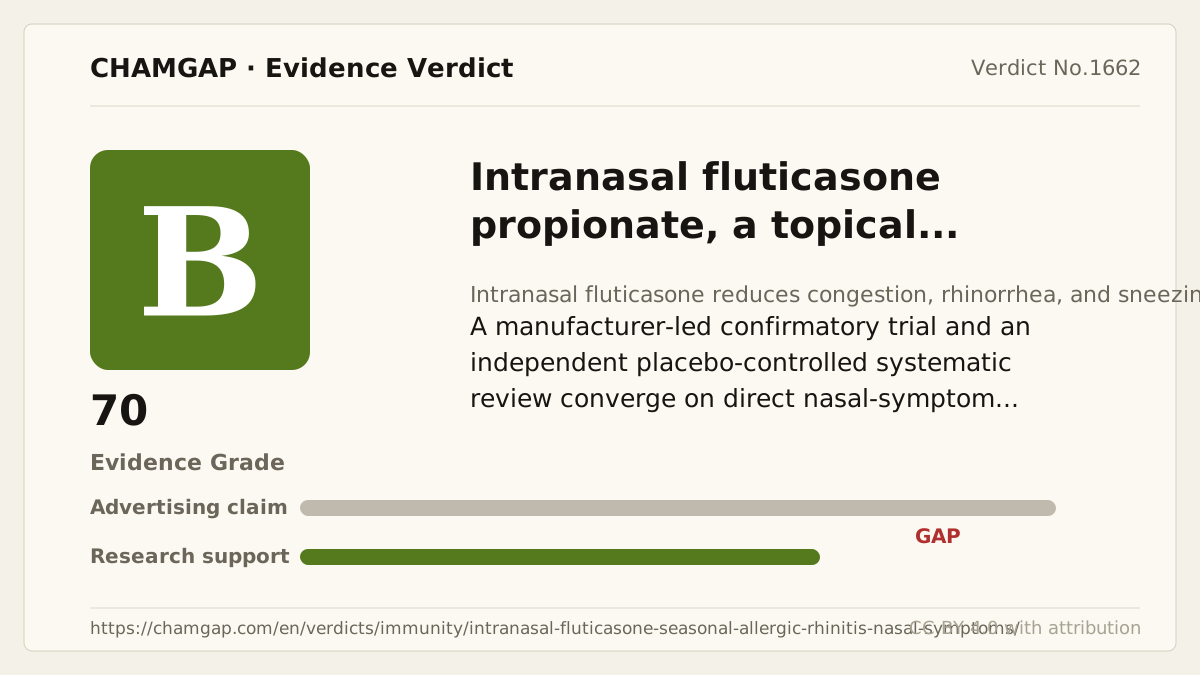
research showsIntranasal fluticasone propionate is rated B for reducing congestion, rhinorrhea, and sneezing in seasonal allergic rhinitis. The Dykewicz 2003 GlaxoSmithKline product-development study analyzed all 241 randomized participants by intention to treat; its four-week primary mean total nasal symptom score change succeeded at −2.02 versus −1.06 points, P<.001. An independent ARIA systematic review included 151 primary studies comparing individual intranasal medications with placebo and placed fluticasone propionate among the treatments most likely to produce moderate or large TNSS improvement in seasonal allergic rhinitis. Direct symptom efficacy was replicated, but the evidence is mainly short term, supporting B with 70 points.
ads claimPromotion may expand symptom control into an instant cure, immune-system correction, or cold prevention. Evidence concerns allergic-rhinitis symptom control, not removal of the allergen or prevention of viral infection.
Useful facts when choosing a product
- Aim the spray away from the nasal septum and toward the outer ear to help reduce irritation and bleeding.
- Full benefit may require regular use for several days; it is not an immediate decongestant.
- Nosebleed, dryness, irritation, and sore throat are common local adverse effects.
- Age limits and doses vary by product; long use, recent nasal surgery, recurrent bleeding, or other steroid use warrants professional advice.
Chamgap Semantic Classification Code
Candidate index · review held
M.intranasal-fluticasone-propionate.MULTI.congestion-rhinorrhea-and-sneezing-in-seasonal-allergic-rhinitis.reduce.placeboMedicinal interventions > Intranasal fluticasone propionate > Multiple: primary unresolved > congestion, rhinorrhea, and sneezing in seasonal allergic rhinitis > Reduction claim > Placebo
An automated migration candidate, not an issued permanent code; exact claim scope remains under review. This machine-generated migration candidate helps retrieval but is not a permanent assignment. The original verdict ID and URL remain authoritative.
What the research actually shows
The Dykewicz GlaxoSmithKline product-development study assigned 241 symptomatic participants aged at least 12 years with a positive skin test to a relevant fall allergen to as-needed fluticasone 200 micrograms or placebo for four weeks. The primary TNSS endpoint succeeded, as did all four component symptoms. Weiner 1998 synthesized 16 randomized trials and 2,267 participants comparing the intranasal corticosteroid class with oral H1 antihistamines; it was not a replication of fluticasone versus placebo. Sousa-Pinto 2024 reviewed 151 primary studies of individual intranasal medications versus placebo and rated certainty as high in 6 of 46 analyses, moderate in 23 of 46, and low or very low in 17 of 46.
Why this is classified as B (70)
The patient-symptom primary endpoint succeeded in a manufacturer-led 241-person intention-to-treat trial, and an independent ARIA systematic review replicated placebo-controlled efficacy for individual intranasal corticosteroids. The rule ②-b ceiling for manufacturer-only evidence therefore does not apply. Direct symptom evidence is consistent, but mostly short trials keep the rating below the top of B, at 70 points.
Counterpoint. Technique and regular use matter; persistent unilateral blockage, recurrent bleeding, or loss of smell warrants assessment for another cause.
Rejudgment record. Cross-check applied — Combined the successful patient-symptom primary endpoint in a manufacturer-led trial of 241 randomized and 241 intention-to-treat participants with independent ARIA replication of individual intranasal corticosteroid efficacy versus placebo; rule ②-b for manufacturer-only evidence therefore does not apply, while mostly short trials keep the rating below the top of B
Sub-claim grades by effect
This ingredient is marketed for several effects. A single overall grade blends strong and weak claims together, so each effect is graded separately here. The overall grade reflects the strongest disconfirming or core claim.
| Effect (sub-claim) | Grade | Basis |
|---|---|---|
| Reduced total nasal symptoms in seasonal allergic rhinitis | B | The primary TNSS endpoint in 241 intention-to-treat participants and an independent ARIA placebo-controlled synthesis were positive. |
| Reduced nasal congestion in allergic rhinitis | B | Congestion improved consistently as a component outcome in the pivotal trial and independent meta-analysis. |
| Reduced rhinorrhea and sneezing in allergic rhinitis | B | These direct patient symptoms improved across randomized evidence, although follow-up was mainly short. |
Cross-check — AI research and Codex final gate
Evidence Table
| Study | Design | Sample | Funding | Endpoint | Result | Weight |
|---|---|---|---|---|---|---|
| Dykewicz MS et al. 2003 | Four-week randomized double-blind placebo-controlled trial | 241 randomized; 241 in the actual primary intention-to-treat analysis | GlaxoSmithKline product-development study | Primary: mean change in total nasal symptom score over four weeks | Primary endpoint succeeded: −2.02±0.18 versus −1.06±0.22 points, P<.001. | Key direct patient-symptom randomized trial |
| Weiner JM et al. 1998 | Systematic review and meta-analysis of intranasal corticosteroid versus oral H1-antihistamine randomized trials | 16 randomized trials and 2,267 participants | Academic systematic review | Nasal blockage, discharge, itch, sneezing, and total nasal symptoms | Intranasal corticosteroids were superior for most nasal symptoms, including total nasal symptoms, SMD −0.42 (95% CI −0.53 to −0.32). | Class comparison against oral antihistamines, not replication of fluticasone versus placebo |
| Sousa-Pinto B et al. 2024 | Systematic review and meta-analysis of individual intranasal antihistamines and corticosteroids versus placebo | 151 primary studies | Independent ARIA systematic review | TNSS, TOSS, and RQLQ in seasonal and perennial allergic rhinitis | For seasonal-allergic-rhinitis TNSS, fluticasone propionate was among the medications with the highest probability of moderate or large improvement. Certainty was high in 6 of 46 analyses, moderate in 23, and low or very low in 17. | Independent placebo-controlled replication for individual intranasal corticosteroids |
Receipt — 3 References
All 3 cited sources were verified for existence at the original page (as of 2026-07-24).
Final verification and publication gate: Codex · Evidence date: 2026-07-24 · Corrections: none
Cite this verdict
[Chamgap] Intranasal fluticasone x reduced nasal symptoms in seasonal allergic rhinitis — Evidence Grade B·70. 3 cited sources checked. Source: https://chamgap.com/en/verdicts/immunity/intranasal-fluticasone-seasonal-allergic-rhinitis-nasal-symptoms/ · CC BY 4.0CC BY 4.0 — free to use with attribution; do not distort grades, numbers, or verdict meaning.
What this document does and does not do
Chamgap is an information source. It reports what research has and has not confirmed; it does not tell readers what to take or buy. That decision belongs to readers and, when needed, medical or legal professionals. This verdict reflects literature available up to the search date and may change as new research appears. Nothing here is medical advice.