
Inhaled indacaterol-glycopyrronium LABA/LAMA combination,
does it really help with Fewer exacerbations than salmeterol-fluticasone in COPD with a prior exacerbation?
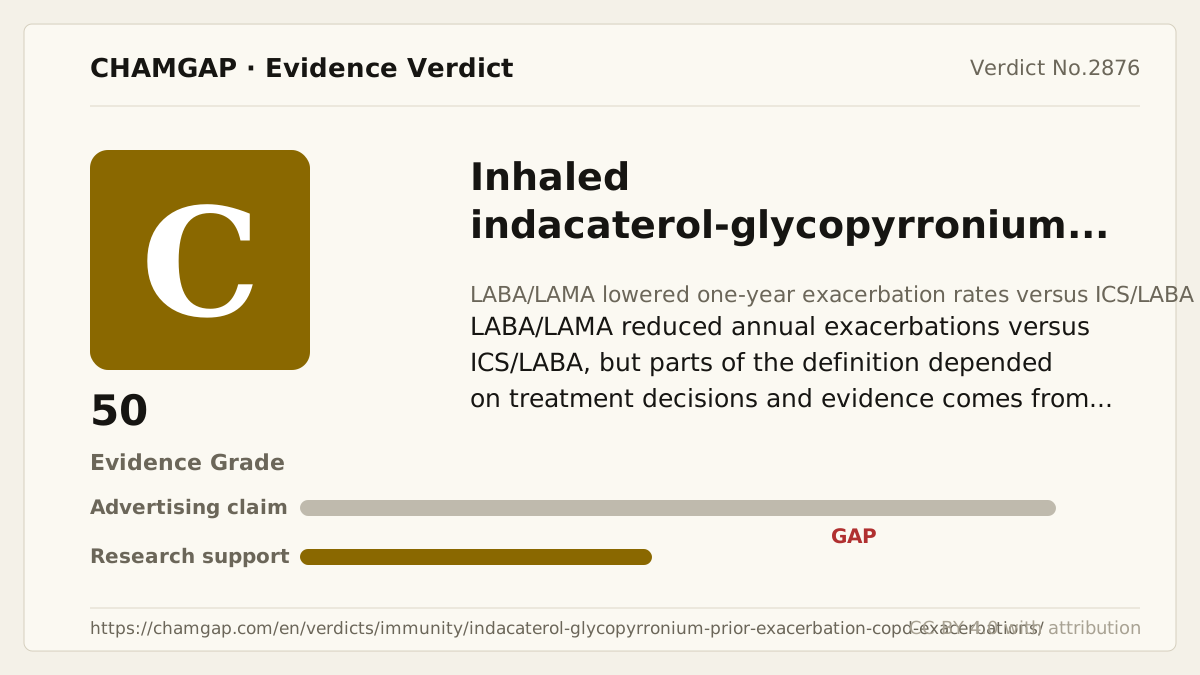
research showsThe grade is C. FLAME's primary endpoint was 'the annual rate of all COPD exacerbations.' Rates were 3.59 versus 4.03 per patient-year, rate ratio 0.89 (95% CI 0.83 to 0.96), an absolute difference of -0.44 per patient-year, with P=0.003 for superiority after noninferiority was established.
ads claimAn 11% rate reduction is not an 11% improvement in each person's symptoms. The absolute difference was 0.44 exacerbations per patient-year versus another active inhaler.
Useful facts when choosing a product
- Indacaterol is a LABA and glycopyrronium a LAMA.
- The comparator combined salmeterol LABA with inhaled fluticasone.
- The 52-week trial was sponsored by Novartis.
Chamgap Semantic Classification Code
Candidate index · review held
UNK.indacaterol-glycopyrronium-laba-lama-combination.inhaled.fewer-exacerbations-than-salmeterol-fluticasone-in-copd-with-a-prior-exacerbation.assess.placeboUnknown > indacaterol-glycopyrronium LABA/LAMA combination > Inhaled > Fewer exacerbations than salmeterol-fluticasone in COPD with a prior exacerbation > Association or change assessment > Placebo
An automated migration candidate, not an issued permanent code; exact claim scope remains under review. This machine-generated migration candidate helps retrieval but is not a permanent assignment. The original verdict ID and URL remain authoritative.
What the research actually shows
The article defined mild events as 'worsening of symptoms for more than 2 consecutive days and not treated with systemic glucocorticoids or antibiotics,' moderate events as 'treated with systemic glucocorticoids, antibiotics, or both,' and severe events as 'requiring hospital admission or an emergency room visit that lasted more than 24 hours.' Thus the all-exacerbation primary endpoint mixed symptoms and treatment decisions rather than hospitalization alone. The declared threshold was: 'The noninferiority margin of 15% ... was based on a previous study.'
Axis 6 defect gates ① Defect name: noninferiority design. ② Listed item: noninferiority design. ③ Original evidence: 'randomized, double-blind, double-dummy, noninferiority trial' with a 1.15 rate-ratio margin. ④ Avoidable: yes; superiority could have been the primary hypothesis.
Why this is classified as C (50)
Superiority on a patient-centered exacerbation rate is accepted, but R1, I0, and one listed design defect - noninferiority design - yield C with 50 points.
Counterpoint. The result applies to patients with an exacerbation in the prior year; eosinophils and individual pneumonia risk still affect ICS selection.
Rejudgment record. Cross-check applied — Accepted superiority for exacerbation reduction while counting one noninferiority-design defect in a single manufacturer-funded trial
| Endpoint | P | Symptom or function itself is the target - including patient reports and performance tests |
| Replication | R1 | Single confirmatory trial |
| Independence | I0 | Evidence comes only from manufacturer studies |
| Effect size | E+ | Meets the clinically important threshold |
Stored derived and displayed grades match; this is not a current recalculation or validity check (C).
Sub-claim grades by effect
This ingredient is marketed for several effects. A single overall grade blends strong and weak claims together, so each effect is graded separately here. The overall grade reflects the strongest disconfirming or core claim.
| Effect (sub-claim) | Grade | Basis |
|---|---|---|
| Reduced annual rate of all COPD exacerbations | C | Superiority was shown: 3.59 versus 4.03, rate ratio 0.89. |
| Reduced moderate or severe exacerbations | C | Rates were 0.98 versus 1.19, rate ratio 0.83 (0.75 to 0.91). |
Cross-check — AI research and Codex final gate
Evidence Table
| Study | Design | Sample | Funding | Endpoint | Result | Weight |
|---|---|---|---|---|---|---|
| Wedzicha JA et al. 2016 FLAME | 52-week multicenter randomized double-blind double-dummy noninferiority and superiority trial | 3,362 randomized (1,680/1,682) | Sponsored by Novartis | Primary endpoint: annual rate of all COPD exacerbations | 3.59 versus 4.03 per year; rate ratio 0.89 (95% CI 0.83 to 0.96), absolute difference -0.44 per year, superiority P=0.003; also met the 1.15 noninferiority margin. | Pivotal manufacturer-funded confirmatory trial |
Receipt — 1 References
All 1 cited sources were verified for existence at the original page (as of 2026-08-18).
Final verification and publication gate: Codex · Evidence date: 2026-08-18 · Corrections: none
Cite this verdict
[Chamgap] Benefit of Indacaterol-Glycopyrronium for Reducing Exacerbations in COPD with Prior Exacerbation — Evidence Grade C·50. 1 cited sources checked. Source: https://chamgap.com/en/verdicts/immunity/indacaterol-glycopyrronium-prior-exacerbation-copd-exacerbations/ · CC BY 4.0CC BY 4.0 — free to use with attribution; do not distort grades, numbers, or verdict meaning.
What this document does and does not do
Chamgap is an information source. It reports what research has and has not confirmed; it does not tell readers what to take or buy. That decision belongs to readers and, when needed, medical or legal professionals. This verdict reflects literature available up to the search date and may change as new research appears. Nothing here is medical advice.