
Incentive spirometry,
does it really help with Prevention of postoperative hypoxemia, atelectasis, pneumonia, and other pulmonary complications?
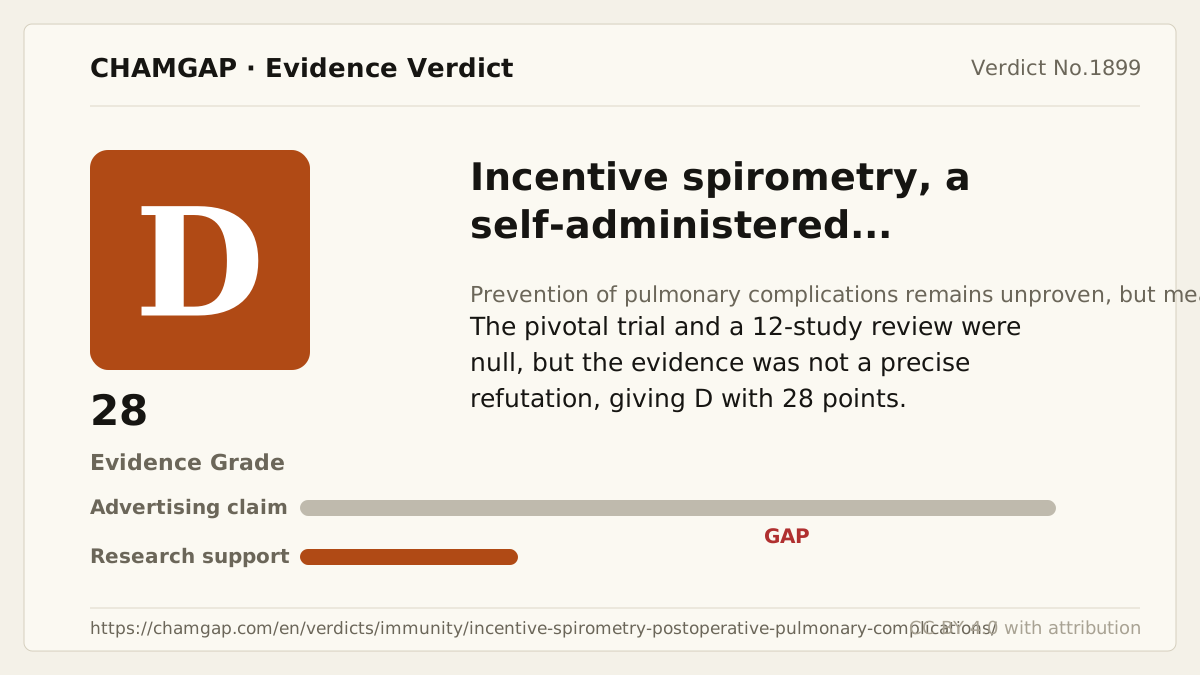
research showsThe grade is D. Pantel 2017 randomized 224 participants, 112 per group, and found 30-day pulmonary complications in 4/112 (3.6%) versus 8/112 (7.1%), P=0.24. Clinical complications versus no treatment in Cochrane had RR 0.59 (95% CI 0.30 to 1.18), while a 2020 BMJ meta-analysis found 132/965 versus 125/975, RR 1.06 (0.85 to 1.34), with 0% heterogeneity. Findings were repeatedly null, but the direct interval still allowed up to a 70% relative reduction, giving D rather than F.
ads claimA rising piston and a larger inspired-volume number are performance feedback, not clinical evidence of pneumonia prevention. Marketing must distinguish the device alone from a broader postoperative package of education, mobilization, coughing, and pain control.
Useful facts when choosing a product
- An incentive spirometer provides visual feedback through a piston or indicator during a slow deep inspiration.
- Pantel randomized 224 participants, but actual hypoxemia analyses included 215 at six hours, 222 at 12 hours, and 216 at 24 hours.
- Use can cause dizziness or discomfort from overbreathing, and postoperative dyspnea or hypoxemia requires clinical assessment rather than delayed care through self-use.
Chamgap Semantic Classification Code
Candidate index · review held
P.incentive-spirometry.device.postoperative-hypoxemia-atelectasis-pneumonia-and-other-pulmonary-complications.prevent.noneProcedures, devices and tests > Incentive spirometry > Device delivered > postoperative hypoxemia, atelectasis, pneumonia, and other pulmonary complications > Occurrence-prevention claim > No intervention
An automated migration candidate, not an issued permanent code; exact claim scope remains under review. This machine-generated migration candidate helps retrieval but is not a permanent assignment. The original verdict ID and URL remain authoritative.
What the research actually shows
Pantel 2017 randomized 224 participants, 112 per group, and found 30-day pulmonary complications in 4/112 versus 8/112, P=0.24. Cochrane included 12 trials and 1,834 participants, pooled 1,160, and found clinical complications versus no treatment at RR 0.59 (95% CI 0.30 to 1.18), not significant. A 2020 BMJ meta-analysis of six trials and 1,940 participants found 132/965 versus 125/975 pulmonary complications, RR 1.06 (95% CI 0.85 to 1.34), with 0% heterogeneity. Hypoxemia and oxygen saturation are surrogate outcomes, not the representative claim here.
Why this is classified as D (34)
Independent evidence was repeatedly null, but the most direct no-treatment interval allowed up to a 70% relative reduction and no clinical threshold was prespecified. Benefit was therefore not excluded, giving D with 34 points rather than F.
Counterpoint. A well-supervised program in a specific high-risk surgical group is a separate question. This verdict concerns the general claim for the device alone after surgery.
Rejudgment record. Cross-check applied — The pivotal trial and 12-study review were repeatedly null, but poor adherence, low study quality, and wide confidence intervals did not exclude clinically meaningful benefit
| Endpoint | H | Hard endpoint - actual events such as death |
| Replication | RX | Repeatedly refuted in the same indication |
| Independence | I2 | Decisive evidence is publicly or non-profit funded |
| Effect size | E0 | Null |
| Precision | C0 | The confidence interval leaves room for benefit |
Stored derived and displayed grades match; this is not a current recalculation or validity check (D).
Sub-claim grades by effect
This ingredient is marketed for several effects. A single overall grade blends strong and weak claims together, so each effect is graded separately here. The overall grade reflects the strongest disconfirming or core claim.
| Effect (sub-claim) | Grade | Basis |
|---|---|---|
| Prevention of early postoperative hypoxemia | D | All primary comparisons at six, 12, and 24 hours were null. |
| Prevention of postoperative pneumonia or atelectasis | D | The Cochrane synthesis found no difference, but precision and study quality were low. |
| Reduction of postoperative respiratory failure | D | The pooled estimate was null with a very wide interval that did not exclude benefit. |
Cross-check — AI research and Codex final gate
Evidence Table
| Study | Design | Sample | Funding | Endpoint | Result | Weight |
|---|---|---|---|---|---|---|
| Pantel H et al. 2017 | Single-center randomized controlled clinical trial | 224 randomized, 112 per arm; actual hypoxemia analyses included 215 at six hours, 222 at 12 hours, and 216 at 24 hours | Internal Department of Surgery funds from Lahey Hospital and Medical Center; not manufacturer led | Hypoxemia at six, 12, and 24 hours and 30-day pulmonary complications | Thirty-day pulmonary complications were 4/112 (3.6%) versus 8/112 (7.1%), P=0.24; atelectasis 4 versus 7, pneumonia 0 versus 1, and reintubation 0 versus 0. | Pivotal contemporary randomized trial |
| do Nascimento Junior P et al. 2014 Cochrane review | Systematic review and meta-analysis of randomized trials after upper abdominal surgery | 12 studies with 1,834 participants; 1,160 could be meta-analyzed | Academic Cochrane review; no manufacturer funding reported | Pulmonary complications, respiratory failure, and mortality | Clinical complications versus no treatment had RR 0.59, 95% CI 0.30 to 1.18, with no significant differences and low-quality evidence. | Repeatedly null but imprecise synthesis |
| Odor PM et al. 2020 BMJ meta-analysis | Systematic review and meta-analysis of randomized trials in noncardiac surgery | Six incentive-spirometry trials with 1,940 participants | Funding source not confirmed | Postoperative pulmonary complications | 132/965 versus 125/975, RR 1.06 (95% CI 0.85 to 1.34), heterogeneity 0%. | Larger synthesis with another null result |
Receipt — 3 References
All 3 cited sources were verified for existence at the original page (as of 2026-07-24).
Final verification and publication gate: Codex · Evidence date: 2026-07-24 · Corrections: none
Cite this verdict
[Chamgap] Incentive spirometry x prevention of postoperative pulmonary complications — Evidence Grade D·34. 3 cited sources checked. Source: https://chamgap.com/en/verdicts/immunity/incentive-spirometry-postoperative-pulmonary-complications/ · CC BY 4.0CC BY 4.0 — free to use with attribution; do not distort grades, numbers, or verdict meaning.
What this document does and does not do
Chamgap is an information source. It reports what research has and has not confirmed; it does not tell readers what to take or buy. That decision belongs to readers and, when needed, medical or legal professionals. This verdict reflects literature available up to the search date and may change as new research appears. Nothing here is medical advice.