
Inactivated poliovirus vaccine,
does it really help with Prevention of paralytic poliomyelitis in children?
research showsIPV clearly prevents paralytic poliomyelitis in children, but it is rated B because the decisive direct evidence is concentrated in one historic confirmatory trial rather than multiple independent large randomized trials. In the peer-reviewed 1954 Francis Field Trial report, the actual placebo-controlled primary analysis included 401,974 children: 200,745 vaccine recipients and 201,229 placebo recipients. The primary endpoint succeeded, with 33 versus 115 cases of paralytic poliomyelitis. Subsequent national surveillance and the global eradication program strongly support external validity. IPV nevertheless induces less intestinal mucosal immunity and does not completely block infection or transmission.
ads claimSimplified promotion may imply that IPV blocks all poliovirus infection and transmission with perfect effectiveness. The strongest demonstrated claim is prevention of paralytic disease in the vaccinated child; asymptomatic intestinal infection, shedding, and community transmission are separate outcomes.
Useful facts when choosing a product
- IPV injects killed antigens from all three poliovirus types to induce serum neutralizing antibodies, and several doses are required according to the national schedule.
- IPV contains no live virus, so a correctly manufactured vaccine cannot cause vaccine-associated paralytic poliomyelitis.
- The 1955 Cutter incident was a separate manufacturing failure involving inadequately inactivated product and should not be confused with the mechanism of properly manufactured IPV.
- Injection-site pain, redness, and transient fever can occur, while severe allergic reactions are rare and require immediate care.
Chamgap Semantic Classification Code
Candidate index · review held
M.inactivated-poliovirus-vaccine.MULTI.paralytic-poliomyelitis.prevent.placeboMedicinal interventions > Inactivated poliovirus vaccine > Multiple: primary unresolved > paralytic poliomyelitis > Occurrence-prevention claim > Placebo
An automated migration candidate, not an issued permanent code; exact claim scope remains under review. This machine-generated migration candidate helps retrieval but is not a permanent assignment. The original verdict ID and URL remain authoritative.
What the research actually shows
The publication form was a 63-page peer-reviewed original report by Francis, Korns, and colleagues in the American Journal of Public Health in 1955, with a peer-reviewed JAMA follow-up the same year. The actual placebo-controlled primary analysis included 401,974 children, with 200,745 vaccine and 201,229 placebo recipients. The primary paralytic poliomyelitis endpoint succeeded at 33 versus 115 cases, roughly a 72% relative risk reduction. Later worldwide surveillance and WHO assessments confirm strong protection from paralytic disease after a complete IPV series. Direct evidence that IPV alone consistently blocks intestinal infection and transmission is inadequate.
Why this is classified as B (79)
The peer-reviewed original succeeded on its primary paralytic poliomyelitis endpoint, with 33 versus 115 cases in an actual primary analysis of 401,974 children. This is a very large hard-endpoint randomized trial, but the absence of multiple independent large randomized confirmations and reliance on later immunogenicity and surveillance evidence yields B with 79 points.
Counterpoint. Vaccine-derived poliovirus and VAPP are problems of live oral vaccine, not IPV. IPV does not generate them, but an IPV recipient may still shed virus after intestinal infection, so low-coverage communities are not automatically protected from transmission.
Rejudgment record. New verdict — B recognizes the successful primary paralytic-polio hard endpoint in 401,974 actual placebo-controlled participants in the peer-reviewed Francis original and strong later surveillance, while withholding A because multiple independent large randomized confirmations are absent
Sub-claim grades by effect
This ingredient is marketed for several effects. A single overall grade blends strong and weak claims together, so each effect is graded separately here. The overall grade reflects the strongest disconfirming or core claim.
| Effect (sub-claim) | Grade | Basis |
|---|---|---|
| Prevention of paralytic poliomyelitis in children with IPV | B | The primary endpoint succeeded in 401,974 placebo-controlled participants and later surveillance supports it, but multiple independent large randomized trials are absent. |
| Prevention of intestinal poliovirus infection with IPV alone | D | When examined, intestinal mucosal protection is weaker than systemic protection and does not reliably prevent infection or shedding. |
| Interruption of community poliovirus transmission with IPV alone | D | Vaccinated people can remain protected from paralysis yet support intestinal replication and shedding, so IPV alone does not establish reliable transmission interruption. |
Cross-check — AI research and Codex final gate
Evidence Table
| Study | Design | Sample | Funding | Endpoint | Result | Weight |
|---|---|---|---|---|---|---|
| Francis T Jr et al. 1955 Francis Field Trial | Peer-reviewed original large randomized double-blind placebo-controlled field trial | 401,974 in the actual placebo-controlled primary analysis; 200,745 vaccine and 201,229 placebo | Public-interest research led by the National Foundation for Infantile Paralysis | Primary endpoint of paralytic poliomyelitis | The primary endpoint succeeded; 33 vaccine cases versus 115 placebo cases, an approximate 72% relative risk reduction. | Decisive exceptionally large hard-endpoint randomized trial |
| WHO polio vaccines position paper 2022 | Global evidence assessment and policy position using trials, immunogenicity, and surveillance | National immunization and worldwide poliovirus surveillance data | World Health Organization | Prevention of paralytic polio, immunogenicity, transmission, and safety | A complete IPV series strongly protects against paralytic disease but suppresses intestinal replication and transmission less effectively than OPV. | Later external-validity support and scope limitation |
Receipt — 3 References
All 3 cited sources were verified for existence at the original page (as of 2026-07-24).
Final verification and publication gate: Codex · Evidence date: 2026-07-24 · Corrections: none
Cite this verdict
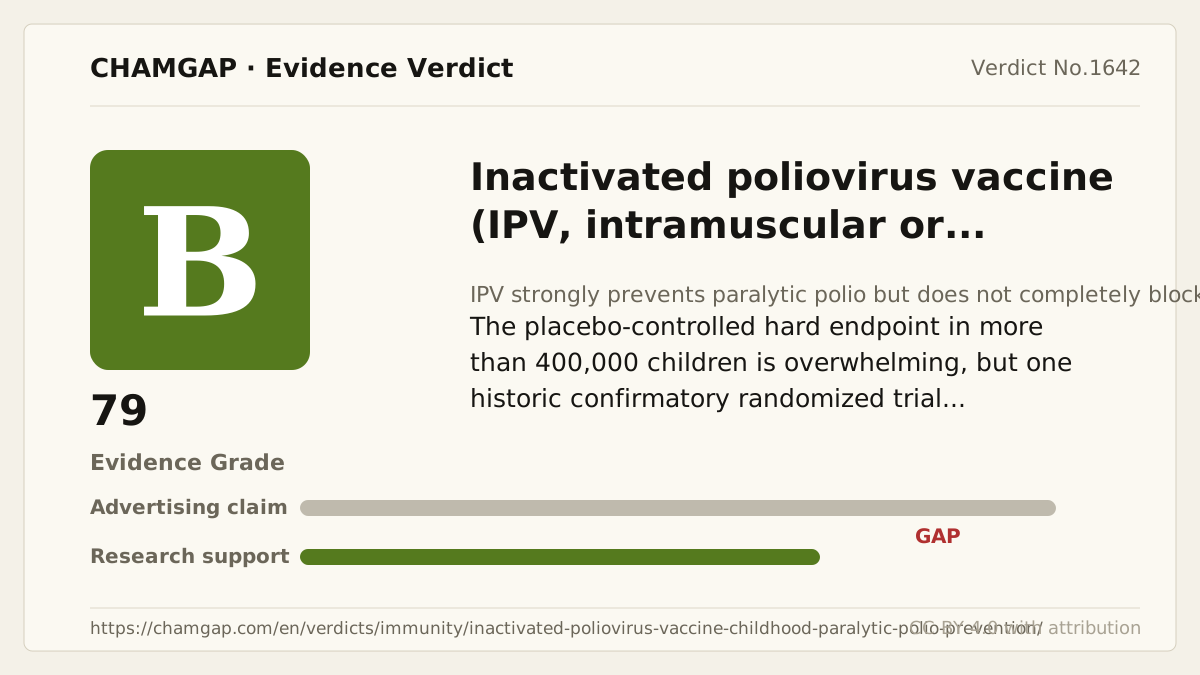
[Chamgap] Inactivated poliovirus vaccine x prevention of paralytic poliomyelitis in children — Evidence Grade B·79. 3 cited sources checked. Source: https://chamgap.com/en/verdicts/immunity/inactivated-poliovirus-vaccine-childhood-paralytic-polio-prevention/ · CC BY 4.0CC BY 4.0 — free to use with attribution; do not distort grades, numbers, or verdict meaning.
What this document does and does not do
Chamgap is an information source. It reports what research has and has not confirmed; it does not tell readers what to take or buy. That decision belongs to readers and, when needed, medical or legal professionals. This verdict reflects literature available up to the search date and may change as new research appears. Nothing here is medical advice.