
Inactivated Japanese encephalitis vaccine,
does it really help with Prevention of clinical Japanese encephalitis in children?
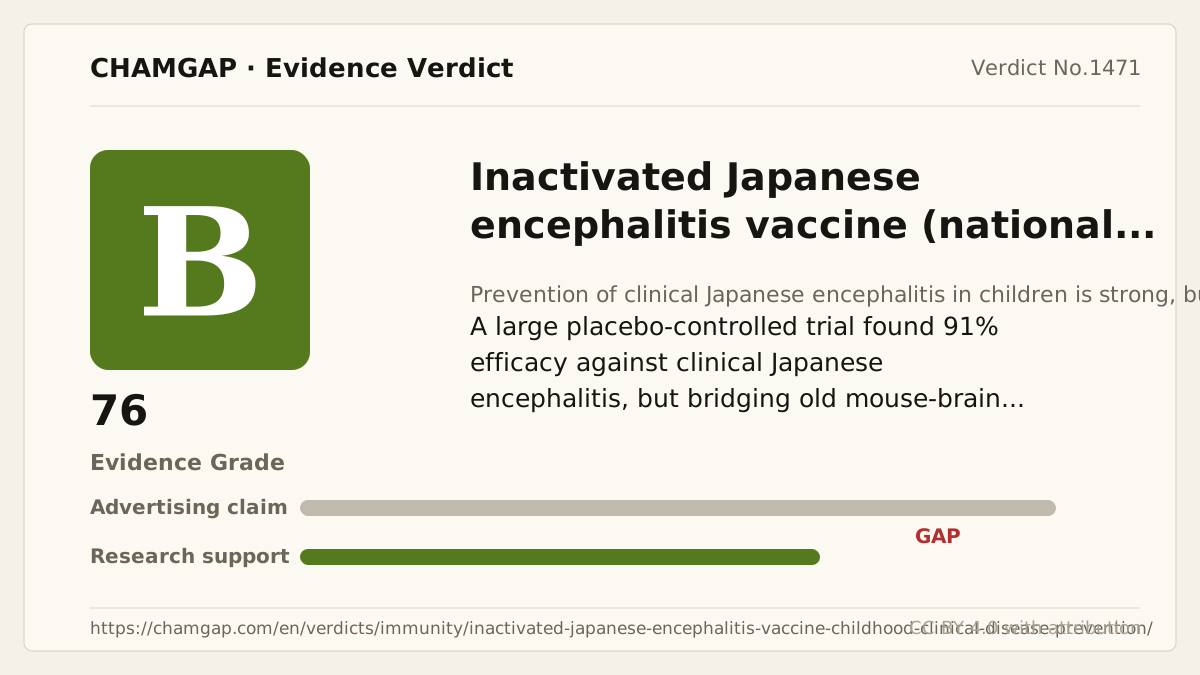
research showsInactivated Japanese encephalitis vaccine is rated B because it prevents clinical disease in children. A placebo-controlled randomized field trial of about 65,000 Thai children found 91% efficacy after two doses of mouse-brain-derived inactivated vaccine, and WHO recommends vaccination in endemic settings. Direct clinical-endpoint evidence, however, is concentrated in 1980s Nakayama- and Beijing-strain products, whereas current Vero-cell-derived inactivated vaccines rely largely on immunogenicity and bridging to older vaccines. The efficacy signal is strong, but the change in vaccine generation and manufacturing substrate limits the rating to B with 76 points.
ads claimPromotion may imply that every inactivated Japanese encephalitis vaccine demonstrated 91% efficacy in the same trial. The 91% figure comes from a two-dose field trial of specific old mouse-brain-derived vaccines; evidence for newer products is primarily immunogenicity bridging.
Useful facts when choosing a product
- The age and number of doses in national immunization vary by the inactivated product used and the current national schedule; the registered schedule and product information should be followed.
- Vaccination should be understood as greatly reducing the risk of clinical Japanese encephalitis rather than guaranteeing complete prevention of infection.
- Injection-site pain or redness, fever, and irritability can occur. Severe allergic reactions are rare, but vaccination should occur where prompt treatment is available.
- Older mouse-brain-derived vaccines raised concerns about rare neurologic adverse events; their manufacturing substrate and safety evidence should be distinguished from current cell-culture products.
Chamgap Semantic Classification Code
Candidate index · review held
M.inactivated-japanese-encephalitis-vaccine.UNK.clinical-japanese-encephalitis.prevent.placeboMedicinal interventions > Inactivated Japanese encephalitis vaccine > Unknown > clinical Japanese encephalitis > Occurrence-prevention claim > Placebo
An automated migration candidate, not an issued permanent code; exact claim scope remains under review. This machine-generated migration candidate helps retrieval but is not a permanent assignment. The original verdict ID and URL remain authoritative.
What the research actually shows
Hoke and colleagues randomized 65,224 children in northern Thailand during 1984 to 1985 to monovalent Nakayama vaccine, bivalent Nakayama-Beijing vaccine, or tetanus-toxoid control. Combined efficacy against clinical Japanese encephalitis was 91%. The 2015 WHO position recommends including Japanese encephalitis vaccination in national programs where the disease is a public-health problem while recognizing product-specific schedules and evidence for mouse-brain-derived, Vero-cell inactivated, and live vaccines. Authorization of newer inactivated cell-culture products rests mainly on neutralizing-antibody responses and noninferiority bridging rather than clinical-disease trials.
Why this is classified as B (76)
The 91% effect in a placebo-controlled randomized trial of about 65,000 children with clinical Japanese encephalitis as the endpoint is strong. Because this evidence centers on old mouse-brain-derived vaccines and newer cell-culture vaccines rely mainly on immunogenicity bridging, the rating is B with 76 points.
Counterpoint. Remaining unvaccinated forfeits protection against an uncommon but potentially severe disease. A B efficacy grade does not argue against vaccination; it reflects differences in direct clinical evidence across vaccine generations.
Rejudgment record. New verdict — Weighted the large placebo-controlled randomized trial with clinical Japanese encephalitis as the direct endpoint, while accounting for the product-generation and immunogenicity-bridging gap between old mouse-brain-derived and current cell-culture inactivated vaccines
Sub-claim grades by effect
This ingredient is marketed for several effects. A single overall grade blends strong and weak claims together, so each effect is graded separately here. The overall grade reflects the strongest disconfirming or core claim.
| Effect (sub-claim) | Grade | Basis |
|---|---|---|
| Prevention of clinical Japanese encephalitis in children | B | A large placebo-controlled trial found 91% efficacy after two doses of old inactivated vaccine, but a generation gap remains for current products. |
| Prevention of severe Japanese encephalitis and disease-specific death | B | The large reduction in clinical disease should reduce severe and fatal cases, but precise estimates for separate severe-disease and mortality endpoints are limited. |
| Prevention of clinical disease by current cell-culture inactivated vaccines | B | Evidence rests mainly on neutralizing-antibody immunogenicity and bridging to older vaccines, without a large placebo-controlled clinical-disease trial. |
Cross-check — AI research and Codex final gate
Evidence Table
| Study | Design | Sample | Funding | Endpoint | Result | Weight |
|---|---|---|---|---|---|---|
| Hoke CH et al. 1988 | Blinded randomized placebo-controlled field trial | 65,224 Thai children | United States military medical research and Thai public-health collaboration | Clinically suspected and serologically confirmed Japanese encephalitis | Combined efficacy of two-dose monovalent and bivalent inactivated vaccines was 91% (95% CI 70% to 97%). | Key large direct clinical evidence |
| WHO position paper. 2015/2016 | International evidence review and vaccine-policy recommendation | Synthesis of efficacy, immunogenicity, and safety across product classes | World Health Organization | Vaccination policy in endemic areas and product-specific evidence | Recommended including Japanese encephalitis vaccination in national programs where the disease is a public-health problem. | Policy and product-generation context |
Receipt — 2 References
All 2 cited sources were verified for existence at the original page (as of 2026-07-23).
Final verification and publication gate: Codex · Evidence date: 2026-07-23 · Corrections: none
Cite this verdict
[Chamgap] Inactivated Japanese encephalitis vaccine x Prevention of clinical Japanese encephalitis in children — Evidence Grade B·76. 2 cited sources checked. Source: https://chamgap.com/en/verdicts/immunity/inactivated-japanese-encephalitis-vaccine-childhood-clinical-disease-prevention/ · CC BY 4.0CC BY 4.0 — free to use with attribution; do not distort grades, numbers, or verdict meaning.
What this document does and does not do
Chamgap is an information source. It reports what research has and has not confirmed; it does not tell readers what to take or buy. That decision belongs to readers and, when needed, medical or legal professionals. This verdict reflects literature available up to the search date and may change as new research appears. Nothing here is medical advice.