
Hinoki phytoncide inhalation or spray,
does it really help with Prevention of infections and infection-related hospitalization?
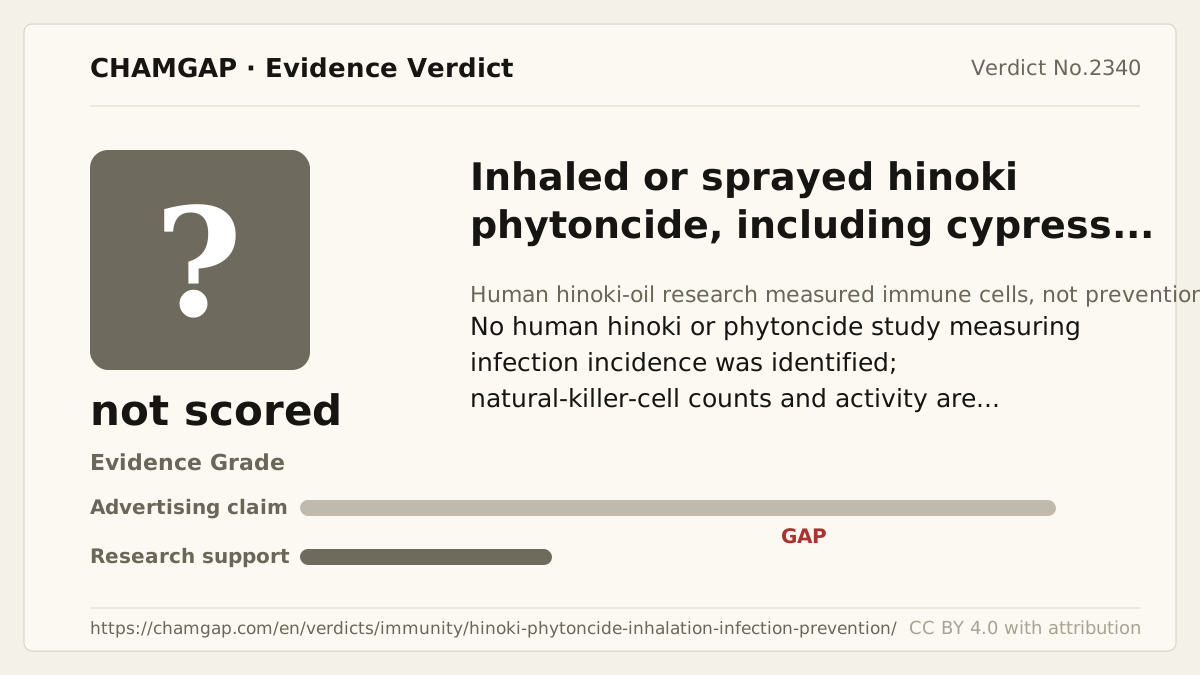
research showsThe verdict is unassessed. The claimed endpoint is infection incidence or hospitalization, and no human hinoki or phytoncide study measuring that endpoint was identified. Li studied natural-killer-cell counts and activity, cytotoxic proteins, and urinary stress hormones in 12 healthy men, but those are different endpoints from infections.
ads claimKorean marketplaces sell hinoki phytoncide sprays with antibacterial wording, and some marketing extends this to immunity. The study used vaporized hinoki stem oil in hotel rooms; formulation, constituent concentration, and inhaled dose do not match retail cypress-water or deodorizing sprays.
Useful facts when choosing a product
- Li vaporized hinoki stem oil with a hotel-room humidifier for three nights; it did not test a retail cypress-water spray.
- Alpha-pinene, beta-pinene, and other volatiles were detected in room air, but equivalence to retail concentrations was not established.
- In-vitro antibacterial activity does not measure infection incidence in people.
- Reproducible search record: PubMed query `(phytoncide OR hinoki OR "Chamaecyparis obtusa") AND (infection OR "respiratory infection" OR hospitalization) AND human`, run 2026-08-06, 0 eligible hinoki or phytoncide infection-incidence studies. ClinicalTrials.gov query `(phytoncide OR hinoki OR "Chamaecyparis obtusa") AND (infection OR hospitalization)`, run 2026-08-06, 0 eligible studies. Expanded web queries `phytoncide infection incidence human trial` and `"Chamaecyparis obtusa" respiratory infection trial human`, run 2026-08-06, 0 eligible studies. Exclusions: Li 2009 measured natural-killer-cell surrogates; the hinoki-mask trial measured dry eye; a 2024 essential-oil complex measured nasal colonization; other plant or mixed-oil trials used different interventions; in-vitro and animal studies did not measure human infection events.
Chamgap Semantic Classification Code
Candidate index · review held
UNK.or-sprayed-hinoki-phytoncide.inhaled.infections-and-infection-related-hospitalization.prevent.UNKUnknown > or sprayed hinoki phytoncide > Inhaled > infections and infection-related hospitalization > Occurrence-prevention claim > Unknown
An automated migration candidate, not an issued permanent code; exact claim scope remains under review. This machine-generated migration candidate helps retrieval but is not a permanent assignment. The original verdict ID and URL remain authoritative.
What the research actually shows
Li and colleagues enrolled 12 healthy men aged 37 to 60 for three hotel nights with vaporized Chamaecyparis obtusa stem oil. They measured natural-killer-cell activity, CD16-positive cells, cytotoxic proteins, and urinary stress hormones, not infection incidence or hospitalization. Searches performed on 2026-08-06 found no infection-incidence study of hinoki or phytoncide itself. Essential oils as a broader category do have a 100-person randomized trial of 5% nebulized eucalyptus versus distilled water measuring ventilator-associated pneumonia, so the broader claim that no inhaled-essential-oil infection study exists would be false.
Why this is classified as ?
No human hinoki or phytoncide study measuring the claimed infection-incidence or hospitalization endpoint was identified. Natural-killer-cell counts and activity are different endpoints, so the grade and score remain unassessed.
Counterpoint. Scent, deodorization, and in-vitro antibacterial properties may be separate product features. They should not replace vaccination, hand hygiene, ventilation, or context-appropriate masking for infection prevention.
Rejudgment record. Cross-check applied — Cross-check of the 2009 endpoints and a reproducible 2026-08-06 search yielding zero eligible hinoki or phytoncide infection-incidence studies
Sub-claim grades by effect
This ingredient is marketed for several effects. A single overall grade blends strong and weak claims together, so each effect is graded separately here. The overall grade reflects the strongest disconfirming or core claim.
| Effect (sub-claim) | Grade | Basis |
|---|---|---|
| Prevention of infection incidence and hospitalization | ? | No human hinoki or phytoncide infection-incidence study was identified. |
| Change in natural-killer-cell activity | C | It increased in a 12-person single-group pre-post study but is a different endpoint from infection prevention. |
Cross-check — AI research and Codex final gate
Evidence Table
| Study | Design | Sample | Funding | Endpoint | Result | Weight |
|---|---|---|---|---|---|---|
| Li Q et al. 2009 | Single-group pre-post repeated-measures exploratory study | 12 healthy men aged 37 to 60; three hotel nights | The funding source could not be confirmed. | Natural-killer-cell activity and proportions, cytotoxic proteins, and urinary stress hormones; infections not measured | Several natural-killer-cell measures increased and adrenaline and noradrenaline decreased, but no infection or hospitalization data were collected. | Human hinoki-oil exposure study measuring a different endpoint |
Receipt — 5 References
All 5 cited sources were verified for existence at the original page (as of 2026-08-06).
Final verification and publication gate: Codex · Evidence date: 2026-08-06 · Corrections: none
Cite this verdict
[Chamgap] Hinoki phytoncide inhalation or spray x infection prevention — Evidence Grade ?. 5 cited sources checked. Source: https://chamgap.com/en/verdicts/immunity/hinoki-phytoncide-inhalation-infection-prevention/ · CC BY 4.0CC BY 4.0 — free to use with attribution; do not distort grades, numbers, or verdict meaning.
What this document does and does not do
Chamgap is an information source. It reports what research has and has not confirmed; it does not tell readers what to take or buy. That decision belongs to readers and, when needed, medical or legal professionals. This verdict reflects literature available up to the search date and may change as new research appears. Nothing here is medical advice.