
High-dose zinc,
does it really help with Shortened symptom duration in early COVID-19?
research showsHigh-dose zinc is rated D because it did not reliably shorten early outpatient COVID-19 symptoms. COVID A to Z randomized 214 participants; among 191 reaching 50% symptom reduction, the primary endpoint failed and the trial stopped early for futility. A positive outpatient secondary endpoint in the manufacturer-funded VIZIR trial prevents an F rating but leaves conflicting evidence.
ads claimMarketing can present a conflicting subgroup signal as independent confirmation that zinc reliably shortens COVID-19.
Useful facts when choosing a product
- COVID A to Z used 50 mg of elemental zinc daily.
- VIZIR used 25 mg of elemental zinc twice daily for 15 days.
Chamgap Semantic Classification Code
Candidate index · review held
S.zinc-gluconate-oral-supplement.oral.shortened-symptom-duration-in-early-covid-19.reduce.MULTISupplements and nutraceuticals > zinc gluconate oral supplement > Oral > Shortened symptom duration in early COVID-19 > Reduction claim > Multiple: primary unresolved
An automated migration candidate, not an issued permanent code; exact claim scope remains under review. This machine-generated migration candidate helps retrieval but is not a permanent assignment. The original verdict ID and URL remain authoritative.
What the research actually shows
Thomas 2021 COVID A to Z randomized 214 participants and analyzed 191. The prespecified primary endpoint, time to 50% symptom reduction, failed at 6.7 days with usual care versus 5.9 days with zinc, P=.45. VIZIR randomized 482 and analyzed 470; its outpatient symptom-duration result of 9.6 versus 12.8 days was a prespecified secondary endpoint.
Why this is classified as D (35)
The claim-matched primary endpoint failed, while a manufacturer-funded secondary subgroup was positive; this conflict yields D with 35 points.
Counterpoint. Correcting zinc deficiency is distinct from treating COVID-19 in people without documented deficiency.
Rejudgment record. Cross-check applied — Did not upgrade a failed confirmatory outpatient symptom-duration primary endpoint based on a positive outpatient secondary subgroup from a manufacturer-funded mixed-population trial
Sub-claim grades by effect
This ingredient is marketed for several effects. A single overall grade blends strong and weak claims together, so each effect is graded separately here. The overall grade reflects the strongest disconfirming or core claim.
| Effect (sub-claim) | Grade | Basis |
|---|---|---|
| Shorter time to 50% symptom reduction in outpatient COVID-19 | D | The primary endpoint directly matching the claim failed. |
| Shorter total symptom duration in outpatient COVID-19 | C | A positive result came from a 190-person secondary subgroup in a manufacturer-funded trial. |
| Reduced death or ICU progression in COVID-19 | C | The mixed inpatient-outpatient primary composite was positive in one manufacturer-funded trial. |
Cross-check — AI research and Codex final gate
Evidence Table
| Study | Design | Sample | Funding | Endpoint | Result | Weight |
|---|---|---|---|---|---|---|
| Thomas S et al. 2021 | Multicenter open-label four-arm randomized clinical trial | 214 randomized; 191 contributed an event to the time-to-50%-symptom-reduction analysis | No separate Funding/Support statement in the published article; Cleveland Clinic health-system study with no manufacturer sponsorship reported | Primary endpoint of time to 50% reduction in four core symptoms | Primary endpoint failed: 6.7 days with usual care and 5.9 with zinc, P=.45; 214 randomized and 191 analyzed. | Pivotal negative trial directly matching the claim |
| Ben Abdallah S et al. 2023 | Multicenter double-blind placebo-controlled randomized trial | 482 randomized; final intention-to-treat analysis 470; outpatient subgroup 190 | Funded by study-product manufacturer Opalia Recordati, with a company-affiliated coauthor | Primary 30-day death-or-ICU composite; outpatient symptom duration was secondary | The primary composite succeeded, OR 0.58 (95% CI 0.33 to 0.99); outpatient symptom duration of 9.6 versus 12.8 days was a prespecified secondary endpoint. | Conflicting positive evidence with manufacturer funding and indirectness to the claim |
Receipt — 2 References
All 2 cited sources were verified for existence at the original page (as of 2026-07-24).
Final verification and publication gate: Codex · Evidence date: 2026-07-24 · Corrections: none
Cite this verdict
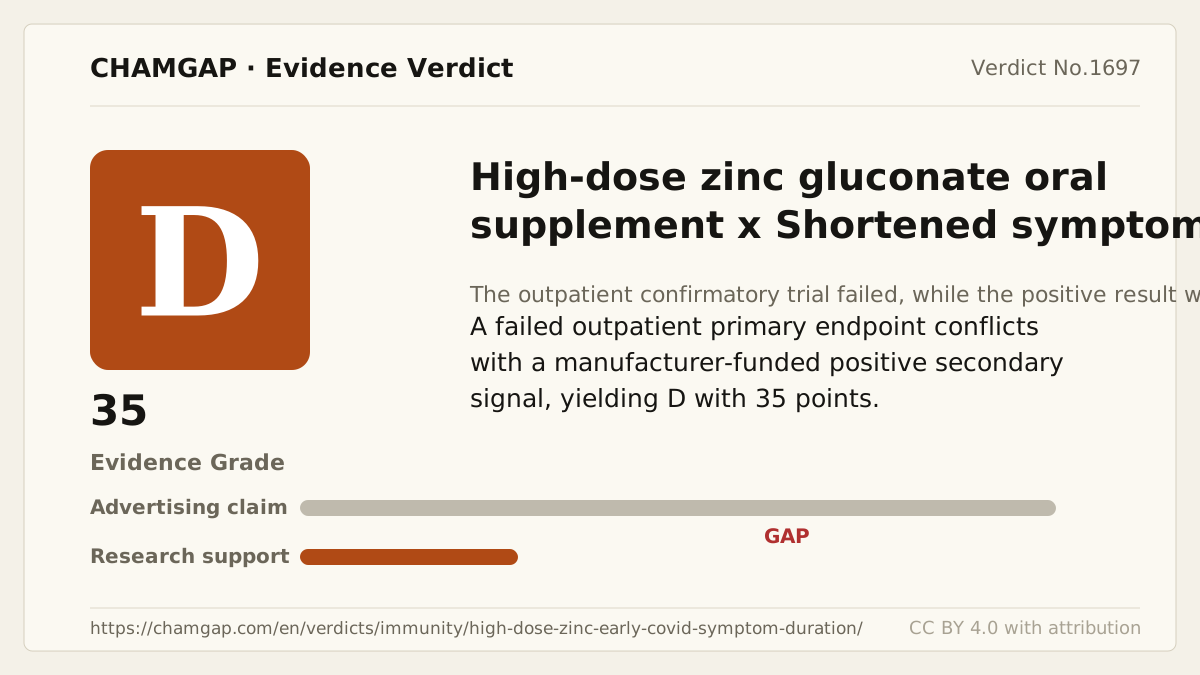
[Chamgap] High-dose zinc x shorter early COVID-19 symptom duration — Evidence Grade D·35. 2 cited sources checked. Source: https://chamgap.com/en/verdicts/immunity/high-dose-zinc-early-covid-symptom-duration/ · CC BY 4.0CC BY 4.0 — free to use with attribution; do not distort grades, numbers, or verdict meaning.
What this document does and does not do
Chamgap is an information source. It reports what research has and has not confirmed; it does not tell readers what to take or buy. That decision belongs to readers and, when needed, medical or legal professionals. This verdict reflects literature available up to the search date and may change as new research appears. Nothing here is medical advice.