
High-dose inactivated influenza vaccine,
does it really help with Additional prevention of laboratory-confirmed symptomatic influenza versus standard-dose vaccine in adults aged 65 years or older?
research showsHigh-dose inactivated influenza vaccine is rated B because it prevents additional laboratory-confirmed symptomatic influenza compared with standard-dose vaccine in adults aged 65 years or older. In the DiazGranados 2014 trial of 31,989 randomized participants, incidence was 1.4% with high dose and 1.9% with standard dose, for a relative efficacy of 24.2% (95% CI 9.7 to 36.5). A 2025 pooled analysis of two very large pragmatic randomized trials also reinforced reductions in influenza- or pneumonia-related hospitalization. This remains an incremental comparison against an already effective vaccine, the absolute difference is small, and pivotal evidence is concentrated in manufacturer-supported research, so the grade is B rather than A, with 77 points. Greater local and systemic reactogenicity is recorded separately from efficacy.
ads claimMarketing can make four times the antigen sound like four times the prevention or complete infection blocking. Fourfold refers to hemagglutinin content per strain; the pivotal clinical result was 24.2% relative efficacy and an approximately 0.5-percentage-point absolute difference within the trial.
Useful facts when choosing a product
- Efluelda is a prescription split-virus inactivated influenza vaccine, and Korean product information indicates it for prevention of disease caused by included strains in adults aged 65 years or older.
- The high-dose formulation contains 60 micrograms of hemagglutinin per strain versus 15 micrograms in a standard-dose formulation, but this does not mean four times the prevention rate.
- Influenza vaccines are seasonal products given each year to match circulating strains, so current official recommendations and clinical assessment should guide use.
- Injection-site pain, redness, swelling, myalgia, headache, malaise, and fever can occur, and local or systemic reactions may be somewhat more frequent than with standard dose but are usually transient. Severe allergy history and prior vaccine reactions should be discussed before vaccination.
Chamgap Semantic Classification Code
Candidate index · review held
M.inactivated-influenza-vaccine.UNK.laboratory-confirmed-symptomatic-influenza.prevent.activeMedicinal interventions > inactivated influenza vaccine > Unknown > laboratory-confirmed symptomatic influenza > Occurrence-prevention claim > Active comparator
An automated migration candidate, not an issued permanent code; exact claim scope remains under review. This machine-generated migration candidate helps retrieval but is not a permanent assignment. The original verdict ID and URL remain authoritative.
What the research actually shows
DiazGranados and colleagues randomized 31,989 adults aged 65 years or older at 126 centers in the United States and Canada during the 2011-2012 and 2012-2013 seasons to high-dose or standard-dose trivalent inactivated vaccine under double masking. The primary endpoint occurred in 228 participants (1.4%) versus 301 participants (1.9%), giving 24.2% relative efficacy. A serious-event analysis in the same population also favored high dose for events possibly related to influenza. FLUNITY-HD in 2025 pooled individually randomized, registry-based DANFLU-2 and GALFLU data and found additional reductions in influenza- or pneumonia-related hospitalization and several severe respiratory outcomes. Manufacturer support was prominent, and the absolute incremental effect depends on seasonal baseline risk.
Why this is classified as B (77)
A 31,989-participant double-blind trial with a direct clinical endpoint showed 24.2% relative efficacy, and very large 2025 individually randomized hospitalization data reinforce the signal. The incremental comparison, approximately 0.5-percentage-point original absolute difference, seasonal variation, and manufacturer funding concentration yield B with 77 points. Reactogenicity remains a separate safety issue.
Counterpoint. Standard-dose vaccine remains an effective option for adults aged 65 years or older, and lack of access to high dose is not a reason to defer seasonal vaccination. The current national schedule, availability, contraindications, and individual risk should guide the choice.
Rejudgment record. New verdict — Gave strong weight to the direct laboratory-confirmed symptomatic-influenza endpoint in the 31,989-participant double-blind trial and to large 2025 individually randomized hospitalization data, while retaining B for incremental benefit over standard dose, small absolute differences, seasonal variation, and manufacturer funding concentration
Sub-claim grades by effect
This ingredient is marketed for several effects. A single overall grade blends strong and weak claims together, so each effect is graded separately here. The overall grade reflects the strongest disconfirming or core claim.
| Effect (sub-claim) | Grade | Basis |
|---|---|---|
| Additional prevention of laboratory-confirmed symptomatic influenza versus standard dose | B | A 31,989-participant double-blind trial found 24.2% relative efficacy, with an absolute difference of about 0.5 percentage points. |
| Additional prevention of influenza- or pneumonia-related hospitalization versus standard dose | B | A large 2025 pooled analysis of individually randomized trials found additional reduction, although effect sizes varied by trial. |
| Consistent additional prevention across all influenza seasons | C | Relative and absolute incremental benefit varies with strain match and seasonal baseline risk. |
Cross-check — AI research and Codex final gate
Evidence Table
| Study | Design | Sample | Funding | Endpoint | Result | Weight |
|---|---|---|---|---|---|---|
| DiazGranados CA et al. 2014 | Phase 3b-4 multicenter randomized double-blind active-controlled trial | 31,989 adults aged 65 years or older | Supported by Sanofi Pasteur; multiple authors were company employees | Protocol-defined influenza-like illness with laboratory-confirmed influenza | High dose 1.4% versus standard dose 1.9%; relative efficacy 24.2% (95% CI 9.7 to 36.5). | Pivotal large direct clinical endpoint |
| DiazGranados CA et al. 2015 | Blinded serious-event analysis of the same randomized trial | 31,989 participants over two influenza seasons | Sanofi Pasteur; most authors were company employees | Serious adverse events possibly related to influenza and hospitalization | Relative efficacy against serious events possibly related to influenza was 17.7% (95% CI 6.6 to 27.4); the all-cause hospitalization difference was borderline. | Supportive severe-outcome post hoc analysis |
| Johansen ND et al.; DANFLU-2 Study Group; GALFLU Trial Team. 2025 | Prespecified pooled analysis of two individually randomized registry-based pragmatic trials | 466,320 participant-seasons | Supported by Sanofi and included company authors | Influenza- or pneumonia-related hospitalization and hierarchical severe secondary endpoints | High dose further reduced influenza- or pneumonia-related and several severe respiratory hospitalizations, although effect sizes differed between trials. | Very large randomized severe-outcome reinforcement |
Receipt — 4 References
All 4 cited sources were verified for existence at the original page (as of 2026-07-22).
Final verification and publication gate: Codex · Evidence date: 2026-07-22 · Corrections: none
Cite this verdict
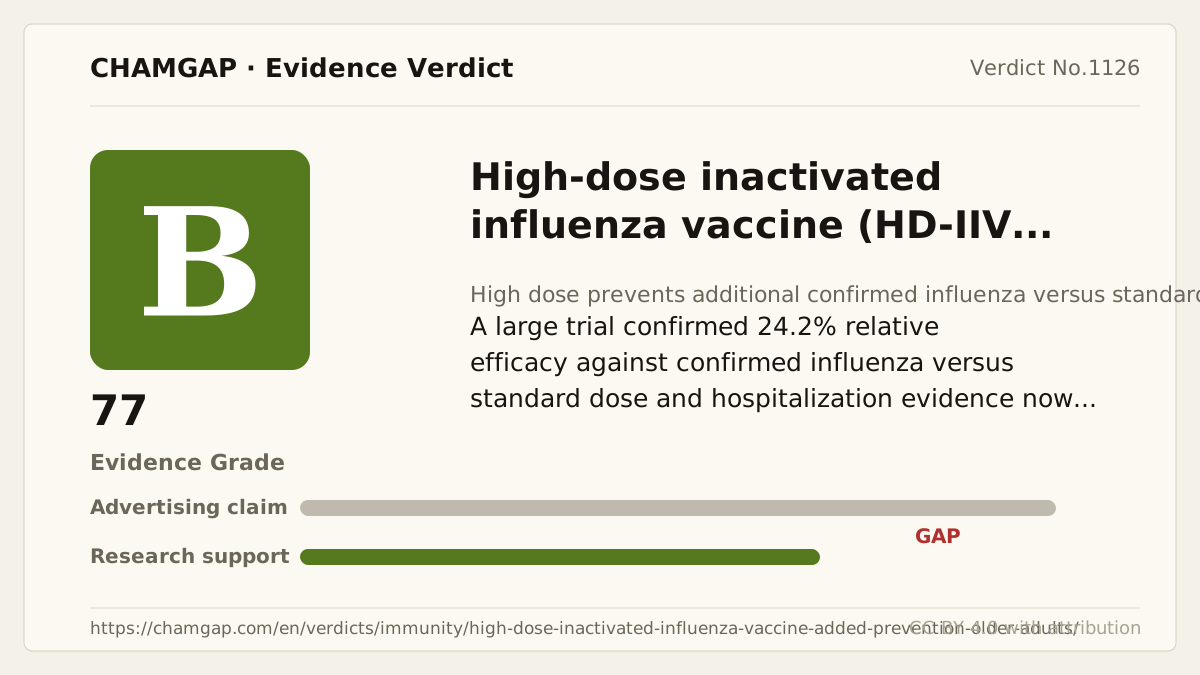
[Chamgap] High-dose inactivated influenza vaccine x additional prevention of confirmed influenza in older adults — Evidence Grade B·77. 4 cited sources checked. Source: https://chamgap.com/en/verdicts/immunity/high-dose-inactivated-influenza-vaccine-added-prevention-older-adults/ · CC BY 4.0CC BY 4.0 — free to use with attribution; do not distort grades, numbers, or verdict meaning.
What this document does and does not do
Chamgap is an information source. It reports what research has and has not confirmed; it does not tell readers what to take or buy. That decision belongs to readers and, when needed, medical or legal professionals. This verdict reflects literature available up to the search date and may change as new research appears. Nothing here is medical advice.