
HEPA air purifier,
does it really help with Relief of house-dust-mite allergic rhinitis symptoms?
research showsHEPA air purifiers are rated D because the symptom component of the co-primary endpoint failed. Park 2020, Yonsei Med J 61(8):689-697, was a 44-person double-blind mock-filter trial with LG Electronics involvement. Shih 2024 in Indoor Air pooled eight air-filter trials, each with 9 to 90 participants. Nighttime SMD -0.21 (-0.35 to -0.08) and daytime SMD -0.16 (-0.30 to -0.03) were statistically significant but very small. Primary symptom failure and the very small clinical difference prevent upgrading to C.
ads claimMarketing links lower particulate concentrations to removal of the allergic cause and clear treatment of rhinitis. Indoor particles can fall without a clinically meaningful improvement in symptoms or quality of life.
Useful facts when choosing a product
- HEPA filtration captures airborne particles but does not remove the dust-mite allergen reservoir inside bedding.
- Clean-air delivery rate relative to room size, open doors, operating time, and filter replacement determine real performance.
- Ozone-generating features can irritate airways, so devices intentionally producing ozone are best avoided.
Chamgap Semantic Classification Code
Candidate index · review held
X.hepa-air-purifier.environmental.house-dust-mite-allergic-rhinitis-symptoms.relieve.UNKBehaviors, exposures and policies > HEPA air purifier > Environmental exposure > house-dust-mite allergic rhinitis symptoms > Symptom-relief claim > Unknown
An automated migration candidate, not an issued permanent code; exact claim scope remains under review. This machine-generated migration candidate helps retrieval but is not a permanent assignment. The original verdict ID and URL remain authoritative.
What the research actually shows
Park 2020, Yonsei Med J 61(8):689-697, was a double-blind mock-filter trial randomizing 44 adults with house-dust-mite allergic rhinitis to active HEPA filtration (22) or control (22). LG Electronics was involved through funding and company coauthors. The symptom component of the co-primary endpoint failed; only medication score was positive. Shih 2024 in Indoor Air pooled eight air-filter randomized trials, each with 9 to 90 participants. Nighttime SMD was -0.21 (95% CI -0.35 to -0.08) and daytime SMD was -0.16 (-0.30 to -0.03); both were statistically significant but very small.
Why this is classified as D (35)
The co-primary symptom endpoint failed in a 44-person manufacturer-funded intention-to-treat trial, and an eight-trial synthesis showed only small symptom effects without established clinical importance, alongside null medication-use and quality-of-life outcomes. This supports D with 35 points.
Counterpoint. It can be considered an adjunct environmental measure, not a replacement for allergen management or standard rhinitis treatment.
Rejudgment record. Cross-check applied — Centered the verdict on failure of the symptom component of the co-primary endpoint and did not upgrade for a positive medication score or small pooled signals without established clinical importance, applying rules ①-ⓑ and ①-ⓒ
Sub-claim grades by effect
This ingredient is marketed for several effects. A single overall grade blends strong and weak claims together, so each effect is graded separately here. The overall grade reflects the strongest disconfirming or core claim.
| Effect (sub-claim) | Grade | Basis |
|---|---|---|
| Relief of allergic rhinitis symptoms | D | The pivotal co-primary symptom endpoint failed and the pooled effect was small. |
| Reduction in rhinitis medication use | C | The pivotal trial was positive, but the eight-trial synthesis was not significant. |
| Improvement in rhinitis-related quality of life | D | Neither the pivotal trial nor the meta-analysis showed comparative benefit. |
Cross-check — AI research and Codex final gate
Evidence Table
| Study | Design | Sample | Funding | Endpoint | Result | Weight |
|---|---|---|---|---|---|---|
| Park KH et al. 2020 | Multicenter randomized double-blind mock-device-controlled trial | 44 randomized (22/22); 44 in intention-to-treat and 43 in per-protocol analyses | Funded by manufacturer LG Electronics; three company researchers were coauthors | Co-primary rhinitis symptom and medication scores | Symptoms were null between groups and failed; only medication score decreased by 26.3% (P=.033). | Manufacturer-led pivotal trial with a direct symptom endpoint |
| Shih MY et al. 2024 | Systematic review and meta-analysis of randomized trials | Eight air-filter randomized trials, each with 9 to 90 participants | No specific funding source reported in the article; authors declared no conflicts of interest | Daytime and nighttime symptoms, medication use, and quality of life | Nighttime SMD -0.21 (-0.35 to -0.08) and daytime SMD -0.16 (-0.30 to -0.03) were statistically significant but very small. | Independent synthesis with uncertain clinical importance |
Receipt — 2 References
All 2 cited sources were verified for existence at the original page (as of 2026-07-24).
Final verification and publication gate: Codex · Evidence date: 2026-07-24 · Corrections: none
Cite this verdict
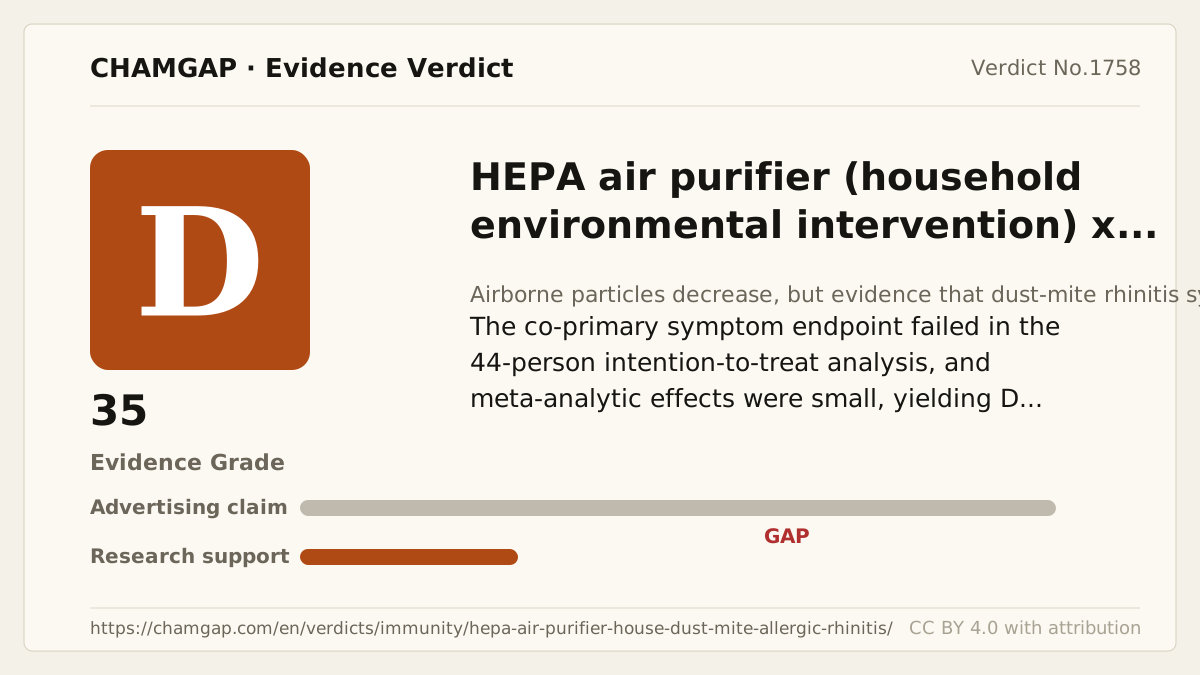
[Chamgap] HEPA air purifier x relief of house-dust-mite allergic rhinitis symptoms — Evidence Grade D·35. 2 cited sources checked. Source: https://chamgap.com/en/verdicts/immunity/hepa-air-purifier-house-dust-mite-allergic-rhinitis/ · CC BY 4.0CC BY 4.0 — free to use with attribution; do not distort grades, numbers, or verdict meaning.
What this document does and does not do
Chamgap is an information source. It reports what research has and has not confirmed; it does not tell readers what to take or buy. That decision belongs to readers and, when needed, medical or legal professionals. This verdict reflects literature available up to the search date and may change as new research appears. Nothing here is medical advice.