
Heated humidified air,
does it really help with Reduction in common-cold symptoms and duration?
research showsHeated humidified air is rated D because the primary endpoint failed in a modern sham-controlled trial. Bird 2021 randomized 170 participants, 85 per group, and included all 170 in the intention-to-treat analysis. The day-4 Modified Jackson Score was 6.33 versus 5.80, with an adjusted difference of +0.37 points (95% CI -0.69 to 1.42; P=0.49). An earlier Cochrane review of six trials and 387 participants was also uncertain, with a random-effects odds ratio of 0.22 (95% CI 0.03 to 1.95) for overall symptom improvement and conflicting study results. The lack of a replicated clear benefit yields D with 28 points.
ads claimAn in-vitro hypothesis that heat affects viruses is expanded into viral clearance, faster recovery, and treatment of human colds. Clinical trials did not confirm that bridge.
Useful facts when choosing a product
- Active treatment in the pivotal trial used fully humidified air at 41 degrees Celsius and 35 liters per minute for two hours daily over five days.
- Household steam inhalation is not the same as the research device and hot water or steam can cause burns.
- Colds usually resolve spontaneously; breathing difficulty, persistent high fever, dehydration, or worsening warrants medical assessment.
Chamgap Semantic Classification Code
Candidate index · review held
UNK.heated-humidified-air-inhalation.MULTI.common-cold-symptoms-and-duration.reduce.shamUnknown > Heated humidified air inhalation > Multiple: primary unresolved > common-cold symptoms and duration > Reduction claim > Sham procedure or device
An automated migration candidate, not an issued permanent code; exact claim scope remains under review. This machine-generated migration candidate helps retrieval but is not a permanent assignment. The original verdict ID and URL remain authoritative.
What the research actually shows
The single-center, single-blind trial by Bird and colleagues assigned 170 adults within 48 hours of symptom onset to high-temperature high-flow treatment or low-temperature low-flow sham, 85 per group. All 170 were included in the primary intention-to-treat analysis, and the day-4 Modified Jackson Score failed with P=0.49. The Cochrane review by Singh and colleagues included six trials and 387 participants; the random-effects result accounting for heterogeneity was not significant.
Why this is classified as D (28)
A peer-reviewed trial randomized 170 participants and analyzed all 170 by intention to treat, but its primary endpoint failed with P=0.49. The Cochrane review of six trials and 387 participants was also uncertain. Conflicting older positive trials keep the grade at D rather than F, with 28 points.
Counterpoint. For temporary comfort, safe humidity control and hydration are more practical than exposure to burn-producing steam.
Rejudgment record. Cross-check applied — Used the direct efficacy evidence that the day-4 symptom primary endpoint failed in the intention-to-treat analysis of all 170 randomized participants and that the six-trial synthesis remained uncertain
Sub-claim grades by effect
This ingredient is marketed for several effects. A single overall grade blends strong and weak claims together, so each effect is graded separately here. The overall grade reflects the strongest disconfirming or core claim.
| Effect (sub-claim) | Grade | Basis |
|---|---|---|
| Reduction in symptom severity on day four of a cold | D | The primary endpoint failed with P=0.49 in the sham-controlled intention-to-treat analysis of 170 participants. |
| Shortening the duration of common-cold symptoms | D | Neither the modern trial nor the Cochrane synthesis established consistent shortening of symptom duration. |
| Suppression of common-cold viral shedding in humans | D | Human trials did not consistently demonstrate reduced viral shedding. |
Cross-check — AI research and Codex final gate
Evidence Table
| Study | Design | Sample | Funding | Endpoint | Result | Weight |
|---|---|---|---|---|---|---|
| Bird G et al. 2021 | Single-center randomized single-blind sham-controlled trial | 170 randomized (85:85); 170 in the actual primary intention-to-treat analysis | Sponsored and supplied by Fisher & Paykel Healthcare | Primary endpoint: day-4 Modified Jackson Score | 6.33 versus 5.80, adjusted difference +0.37 (95% CI -0.69 to 1.42), P=0.49; failed. | Pivotal modern confirmatory trial |
| Singh M et al. 2017 | Cochrane systematic review and meta-analysis | Six randomized trials and 387 participants | Cochrane academic review | Overall symptom improvement, viral shedding, and nasal resistance | The random-effects symptom-improvement estimate was nonsignificant, OR 0.22 (95% CI 0.03 to 1.95), with conflicting results. | Uncertain synthesis |
Receipt — 2 References
All 2 cited sources were verified for existence at the original page (as of 2026-07-24).
Final verification and publication gate: Codex · Evidence date: 2026-07-24 · Corrections: none
Cite this verdict
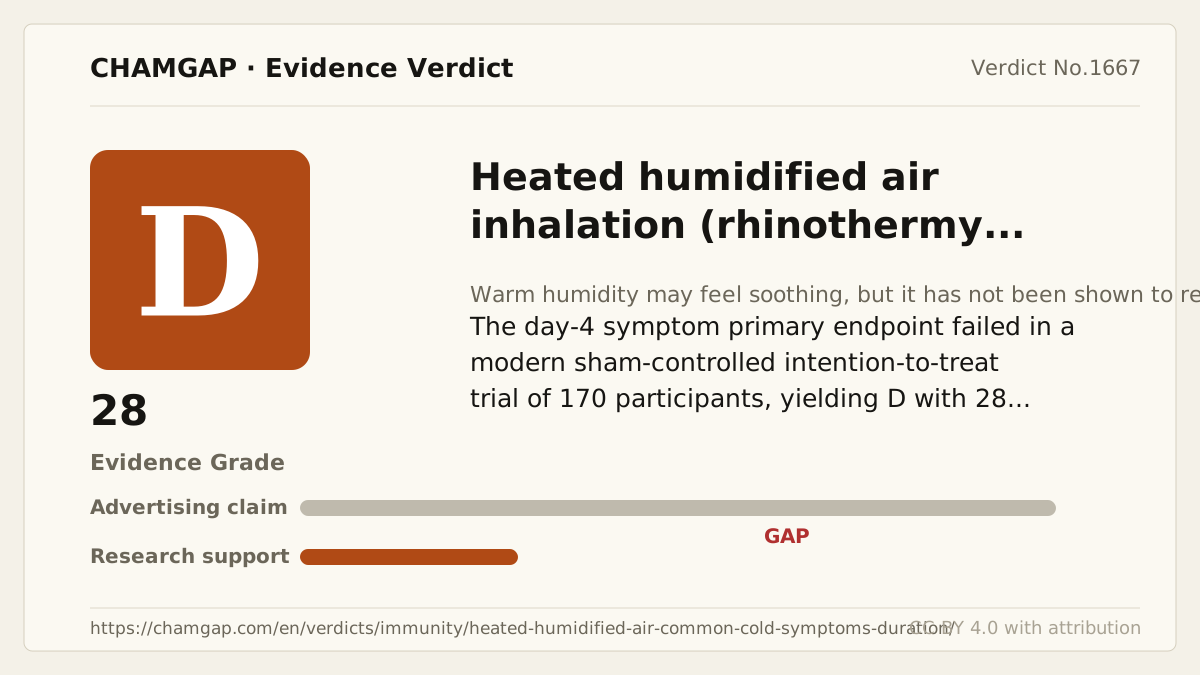
[Chamgap] Heated humidified air x reduction in common-cold symptoms and duration — Evidence Grade D·28. 2 cited sources checked. Source: https://chamgap.com/en/verdicts/immunity/heated-humidified-air-common-cold-symptoms-duration/ · CC BY 4.0CC BY 4.0 — free to use with attribution; do not distort grades, numbers, or verdict meaning.
What this document does and does not do
Chamgap is an information source. It reports what research has and has not confirmed; it does not tell readers what to take or buy. That decision belongs to readers and, when needed, medical or legal professionals. This verdict reflects literature available up to the search date and may change as new research appears. Nothing here is medical advice.