
Grass-pollen sublingual immunotherapy tablets,
does it really help with Reduced in-season allergic rhinoconjunctivitis symptoms and rescue-medication use?
research showsThe grade is C. Two large placebo-controlled trials of different standardized tablets reduced combined symptom-medication scores by 28.2% and 23%. Both exceeded the World Allergy Organization's proposed 20% minimum relevance threshold versus placebo, but the pivotal trials with the same primary endpoint came from manufacturer development programs with overlapping investigators, so they were not counted as independent replication, giving C with 50 points.
ads claimThis is not evidence that every product sold as sublingual immunotherapy works equally. The trials tested specified standardized products and doses taken daily before and through the relevant pollen season.
Useful facts when choosing a product
- Cox tested a 300 IR five-grass tablet, whereas Maloney tested a 2,800 BAU Timothy-grass tablet.
- The pivotal PMIDs and DOIs were absent from existing verdicts. Verdict 2464 concerns house-dust-mite tablets, a different allergen and exposure setting.
- Korean professional guidance discusses grass-pollen tablet evidence, but current Korean availability of Oralair or Grastek was not verified.
Chamgap Semantic Classification Code
Candidate index · review held
S.standardized-grass-pollen-sublingual-immunotherapy-tablets.sublingual.in-season-allergic-rhinoconjunctivitis-symptoms-and-rescue-medication-use.reduce.placeboSupplements and nutraceuticals > Standardized grass-pollen sublingual immunotherapy tablets > Sublingual > in-season allergic rhinoconjunctivitis symptoms and rescue-medication use > Reduction claim > Placebo
An automated migration candidate, not an issued permanent code; exact claim scope remains under review. This machine-generated migration candidate helps retrieval but is not a permanent assignment. The original verdict ID and URL remain authoritative.
What the research actually shows
Cox randomized 473 adults and analyzed the 436 who supplied pollen-season diary data, 208 tablet and 228 placebo. Maloney randomized 1,501 participants aged 5-65; the reported combined-score analysis included 1,301, 629 and 672. Both were double-blind placebo-controlled trials, and the registered primary endpoint was the pollen-season combined symptom-medication score. The independently funded GRASS trial collected no seasonal diary and used year-three nasal-challenge TNSS AUC as its primary estimand, so it did not repeat the same question; that primary result was null. We cross-checked NCT00955825, NCT01385371, and NCT01335139.
Why this is classified as C (50)
Patient-experienced symptoms and medication use improved beyond the proposed 20% threshold in two large placebo-controlled trials. GRASS was independent but tested a different primary endpoint and estimand and was null; the same-endpoint trials remained manufacturer-funded with overlapping investigators. Incomplete confirmation of maintained masking gives C with 50 points.
Counterpoint. This verdict concerns average in-season combined scores, not symptom elimination for every patient, asthma prevention, or persistence after treatment stops.
Rejudgment record. Cross-check applied — We cross-checked primary combined scores, analyzed populations, relative effects, investigators, and manufacturer support against both papers and registry records.
| Endpoint | P | Symptom or function itself is the target - including patient reports and performance tests |
| Replication | R1 | Single confirmatory trial |
| Independence | I0 | Evidence comes only from manufacturer studies |
| Effect size | E+ | Meets the clinically important threshold |
Stored derived and displayed grades match; this is not a current recalculation or validity check (C).
Sub-claim grades by effect
This ingredient is marketed for several effects. A single overall grade blends strong and weak claims together, so each effect is graded separately here. The overall grade reflects the strongest disconfirming or core claim.
| Effect (sub-claim) | Grade | Basis |
|---|---|---|
| Standardized grass-pollen sublingual tablets reduce in-season symptoms and rescue-medication use. | C | Two large placebo-controlled trials exceeded the 20% threshold, but the evidence is manufacturer-dependent. |
Cross-check — AI research and Codex final gate
Evidence Table
| Study | Design | Sample | Funding | Endpoint | Result | Weight |
|---|---|---|---|---|---|---|
| Cox et al., J Allergy Clin Immunol 2012 | Multicenter double-blind randomized placebo-controlled trial | 473 randomized; 436 in efficacy analysis (208/228) | Supported by Stallergenes SA | Average daily combined symptom-medication score during pollen season | 0.32 versus 0.45; absolute difference -0.13 and relative difference -28.2% (95% CI -43.4% to -13.0%) | Direct five-grass tablet trial |
| Maloney et al., Ann Allergy Asthma Immunol 2014 | Multicenter double-blind randomized placebo-controlled trial | 1,501 randomized; 1,301 in combined-score analysis (629/672) | ALK-Abelló/Merck development program; multiple authors were Merck employees | Total combined score over the entire grass-pollen season | 3.24 versus 4.22; difference -0.98 and relative difference -23% (95% CI -36% to -13%) | Large direct Timothy-grass tablet trial |
| Scadding et al., JAMA 2017 GRASS | Double-blind randomized placebo-controlled independent trial | 106 randomized | Funded by NIH/NIAID and the Immune Tolerance Network; ALK supplied drug and placebo but had no input into study design or conduct | Year-three nasal-challenge TNSS AUC, one year after treatment withdrawal | The year-three primary endpoint was not significantly different from placebo; seasonal diaries were not collected | Independent trial, but not replication of the same question because the primary endpoint and estimand differed |
Receipt — 4 References
All 4 cited sources were verified for existence at the original page (as of 2026-08-14).
Final verification and publication gate: Codex · Evidence date: 2026-08-14 · Corrections: none
Cite this verdict
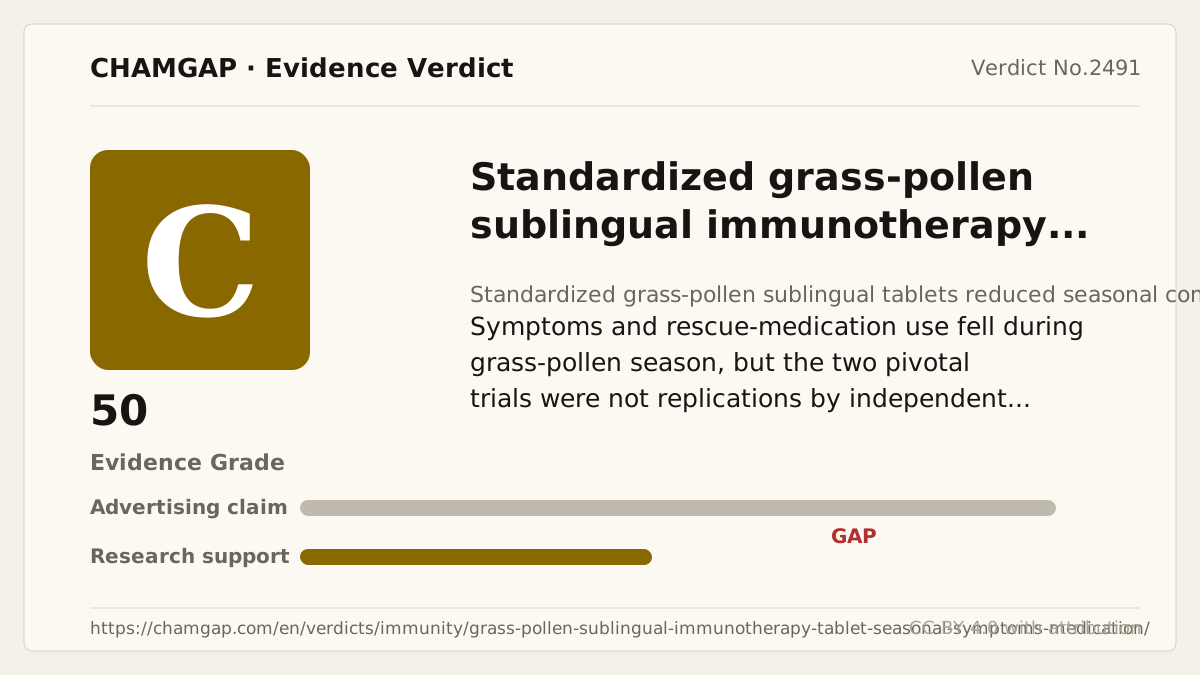
[Chamgap] Grass-pollen sublingual immunotherapy tablets x reduced seasonal symptoms and rescue medication — Evidence Grade C·50. 4 cited sources checked. Source: https://chamgap.com/en/verdicts/immunity/grass-pollen-sublingual-immunotherapy-tablet-seasonal-symptoms-medication/ · CC BY 4.0CC BY 4.0 — free to use with attribution; do not distort grades, numbers, or verdict meaning.
What this document does and does not do
Chamgap is an information source. It reports what research has and has not confirmed; it does not tell readers what to take or buy. That decision belongs to readers and, when needed, medical or legal professionals. This verdict reflects literature available up to the search date and may change as new research appears. Nothing here is medical advice.