
Genetically modified food,
does it really help with More clinical allergic symptoms or disease than conventional foods?
research showsThe grade is D with 28 points. The available human evidence does not support the harm claim that genetically modified food causes more allergy. An oral challenge in 21 apple-allergic patients found fewer symptoms with two Mal d 1-silenced lines than with wild-type apple, while skin testing in 1,716 allergy patients found 65 positives to conventional soybean and 66 to EPSPS soybean. One apple event cannot establish that all genetically modified foods cause less allergy either.
ads claimGenetic modification is a production method, not one exposure. Risk depends on the introduced protein and crop event. Identical sensitization results for commercial EPSPS soybean are real, but they do not establish a clinical allergy rate for all marketed genetically modified foods.
Useful facts when choosing a product
- The EPSPS soybean study used 10 micrograms of extract per ELISA well and skin-prick testing; it had no oral dose in grams per day.
- Among 1,716 allergy patients, 65 reacted to conventional soybean and 66 to EPSPS soybean, both 3.8% after rounding.
- An experimental soybean expressing Brazil-nut 2S albumin transferred IgE and skin reactivity, was discontinued, and was never marketed.
- Search record, August 4, 2026: PubMed was searched for ('genetic modification'[Title/Abstract] OR 'genetically modified'[Title/Abstract] OR transgenic[Title/Abstract] OR GMO[Title/Abstract]) AND ('food allergy'[Title/Abstract] OR 'allergic reaction'[Title/Abstract] OR 'oral food challenge'[Title/Abstract] OR allergenicity[Title/Abstract]), with the Humans filter. Dubois was included as a direct oral challenge, Kim as skin-test context, Nordlee excluded from direct ingestion evidence, and Nybom included as conventional-cultivar context. ClinicalTrials.gov was searched for (genetic modification OR genetically modified OR transgenic OR GMO) AND (food allergy OR allergenicity OR oral food challenge), filtered to interventional studies. No registry for the apple trial was found, and the paper gave no registration number. NCT02341040 enrolled five people, terminated early, posted no results, and assessed new wheat varieties rather than genetically modified versus conventional food, so it was excluded.
Chamgap Semantic Classification Code
Candidate index · review held
F.commercial-genetically-modified-foods-and-their-introduced-proteins.food.more-clinical-allergic-symptoms-or-disease-than-conventional-foods.assess.UNKFoods and beverages > Commercial genetically modified foods and their introduced proteins > Food consumption > More clinical allergic symptoms or disease than conventional foods > Association or change assessment > Unknown
An automated migration candidate, not an issued permanent code; exact claim scope remains under review. This machine-generated migration candidate helps retrieval but is not a permanent assignment. The original verdict ID and URL remain authoritative.
What the research actually shows
Dubois et al. orally challenged 21 apple-allergic patients with two Mal d 1-silenced apple lines and wild-type Elstar. Maximum first-dose symptoms were 3.0 mm with wild type versus 0 mm with both silenced lines; mean symptoms per dose were 2.2 versus 0.2 and 0, and symptom-free proportions were 5% versus 43% and 63%. The funding source could not be confirmed. Kim et al. found 65, or 3.8%, skin-test positives to conventional soybean and 66, or 3.8%, to genetically modified soybean among 1,716 allergy patients, with no response to purified EPSPS. This was skin testing, not oral challenge. Nordlee et al. studied a discontinued Brazil-nut-allergen soybean with serum and skin tests, not human ingestion. Nybom et al. also found oral-challenge symptom differences among conventional apple cultivars, showing that cultivar variation is not unique to genetic modification.
Why this is classified as D (28)
A human oral challenge in one specific apple event did not support increased allergy, but it cannot be generalized across genetically modified foods and precision was not established, giving D with 28 points.
Counterpoint. Transfer of an allergen by a specific introduced protein was demonstrated, so a blanket claim of safety for every event is also unsupported. Product-specific evaluation is necessary.
Rejudgment record. Cross-check applied — The repeat searches added the previously missed phrase 'genetic modification' and separated oral symptoms from skin testing, a discontinued event, and conventional cultivar differences
| Endpoint | P | Symptom or function itself is the target - including patient reports and performance tests |
| Replication | R1 | Single confirmatory trial |
| Independence | I1 | Mixed funding sources |
| Effect size | E0 | Null |
| Precision | CX | No pooled confidence interval could be confirmed |
Stored derived and displayed grades match; this is not a current recalculation or validity check (D).
Sub-claim grades by effect
This ingredient is marketed for several effects. A single overall grade blends strong and weak claims together, so each effect is graded separately here. The overall grade reflects the strongest disconfirming or core claim.
| Effect (sub-claim) | Grade | Basis |
|---|---|---|
| Commercial EPSPS soybean increases sensitization versus conventional soybean | D | Skin positivity was about 3.8% for each, with no response to EPSPS. |
| Commercial genetically modified food increases clinical allergic symptoms | D | One Mal d 1-silenced apple challenge caused fewer symptoms than wild type and did not support harm, but cannot be generalized to all foods. |
| A specific introduced allergen can transfer sensitization risk | C | Serum and skin tests confirmed this for an experimental Brazil-nut-protein soybean that was never marketed. |
Cross-check — AI research and Codex final gate
Evidence Table
| Study | Design | Sample | Funding | Endpoint | Result | Weight |
|---|---|---|---|---|---|---|
| Dubois et al. 2015 | Oral challenge comparison in apple-allergic patients | Twenty-one apple-allergic patients | Funding source not confirmed | Clinical allergic symptoms from two Mal d 1-silenced lines and wild type | First-dose maxima 3.0 mm versus 0 and 0 (P=.017 and .043); mean symptoms per dose 2.2 versus 0.2 and 0; symptom-free proportions 5% versus 43% and 63% | Direct human oral-symptom evidence for one specific event |
| Kim et al. 2006 | Skin-prick and serum-IgE comparison in allergy patients | 1,716 allergy patients and 40 nonatopic controls | KISTEP research support | Skin response and specific IgE to conventional and EPSPS soybean | Skin positivity 65 versus 66, about 3.8% each; zero positive to purified EPSPS; oral symptoms not measured | Human sensitization evidence, not a clinical ingestion outcome |
| Nordlee et al. 1996 | Serum and skin testing of experimental Brazil-nut-protein soybean | Serum from nine; skin tests in three allergic participants and three controls | Academic and Pioneer Hi-Bred collaborative research | IgE binding and skin wheal response | All three Brazil-nut-allergic participants were skin-positive to transgenic soybean and negative to conventional soybean; no oral challenge | Nonmarketed-event evidence showing sensitization risk from one introduced protein |
Receipt — 6 References
All 6 cited sources were verified for existence at the original page (as of 2026-08-04).
Final verification and publication gate: Codex · Evidence date: 2026-08-04 · Corrections: none
Cite this verdict
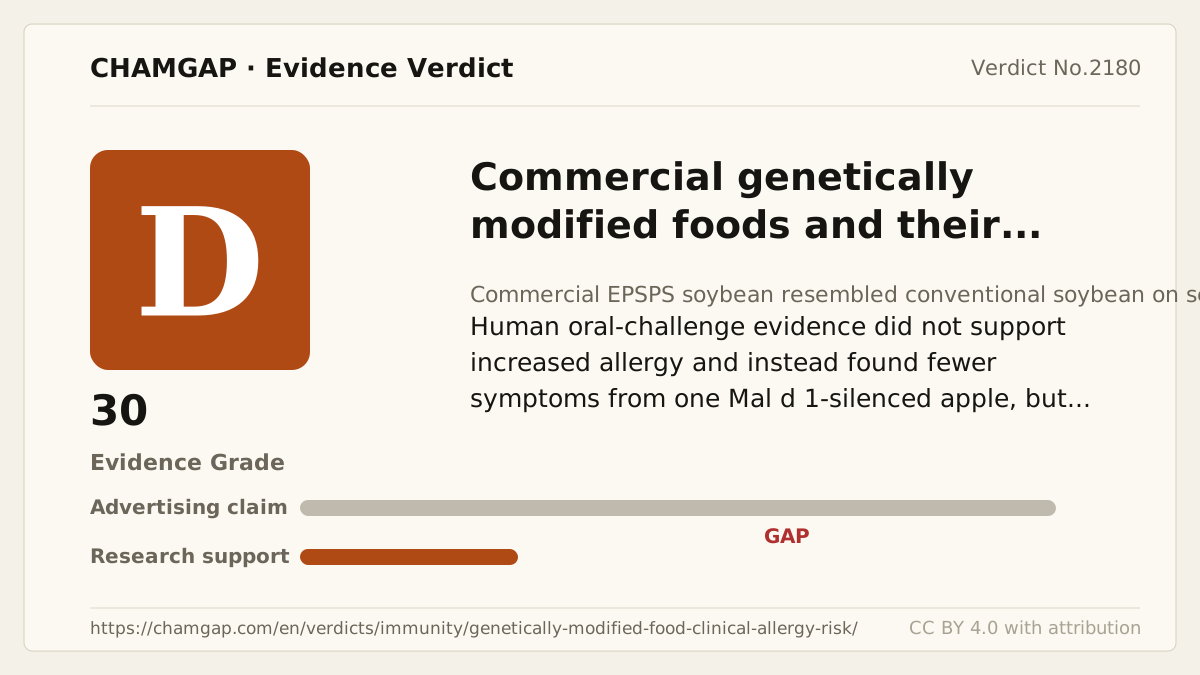
[Chamgap] Genetically modified food x increased clinical allergy — Evidence Grade D·28. 6 cited sources checked. Source: https://chamgap.com/en/verdicts/immunity/genetically-modified-food-clinical-allergy-risk/ · CC BY 4.0CC BY 4.0 — free to use with attribution; do not distort grades, numbers, or verdict meaning.
What this document does and does not do
Chamgap is an information source. It reports what research has and has not confirmed; it does not tell readers what to take or buy. That decision belongs to readers and, when needed, medical or legal professionals. This verdict reflects literature available up to the search date and may change as new research appears. Nothing here is medical advice.