
Fexofenadine,
does it really help with Reduction of sneezing, rhinorrhea, and nasal itching in seasonal allergic rhinitis?
research showsFexofenadine is rated C because it repeatedly reduces patient-reported total symptom scores, sneezing, rhinorrhea, and itching in seasonal allergic rhinitis. The STAR trial randomized 688 people and analyzed 639 for efficacy; its key primary variable, change in 24-hour reflective total symptom score, improved versus placebo with P at or below .0001, so it succeeded. A meta-analysis of eight double-blind placebo-controlled trials and 3,532 participants also found a consistent TSS effect, SMD -0.42. Most trials lasted about two weeks, primary-trial funding disclosure was incomplete, and evidence concentrated in commercial development programs, imposing a C ceiling.
ads claimClaims that the medicine cures rhinitis or changes an allergic constitution are exaggerated. Fexofenadine suppresses symptoms while taken; it does not remove sensitization or establish long-term modification of the disease course.
Useful facts when choosing a product
- STAR used fexofenadine hydrochloride 120 mg once daily in adults; country- and indication-specific product labeling takes priority.
- Aluminum- or magnesium-containing antacids can reduce absorption and should be separated, while apple, orange, and grapefruit juice can also impair absorption.
- Drowsiness is less common than with first-generation antihistamines but can occur, and impaired renal function may require dose adjustment.
Chamgap Semantic Classification Code
Candidate index · review held
UNK.fexofenadine.UNK.sneezing-rhinorrhea-and-nasal-itching-in-seasonal-allergic-rhinitis.reduce.MULTIUnknown > Fexofenadine > Unknown > sneezing, rhinorrhea, and nasal itching in seasonal allergic rhinitis > Reduction claim > Multiple: primary unresolved
An automated migration candidate, not an issued permanent code; exact claim scope remains under review. This machine-generated migration candidate helps retrieval but is not a permanent assignment. The original verdict ID and URL remain authoritative.
What the research actually shows
STAR randomly assigned 688 people with seasonal allergic rhinitis to fexofenadine 120 mg, loratadine 10 mg, or placebo under double masking, but the actual efficacy analysis included 639 participants. The key primary assessment, change in 24-hour reflective TSS, significantly favored fexofenadine over placebo with P at or below .0001 and succeeded. The meta-analysis in Int Arch Allergy Immunol. 2011;156(1):1-15 was specific to fexofenadine rather than the entire antihistamine class. It included 8 randomized trials and 3,532 participants, 1,833 on active treatment and 1,699 on placebo, and found TSS SMD -0.42 (95% CI -0.49 to -0.35). Despite nonprofit funding for the meta-analysis, most pivotal included trials were manufacturer studies, and no clear large nonmanufacturer independent replication was identified.
Why this is classified as C (58)
The fexofenadine-specific meta-analysis of 8 trials and 3,532 participants found TSS SMD -0.42 (95% CI -0.49 to -0.35), but most pivotal included trials were manufacturer studies and no clear large nonmanufacturer independent replication was identified, yielding C with 58 points. The difference from verdict 1662, which is B with 70 points, is the smaller effect size and weaker independent replication.
Counterpoint. It is a practical short-term option for people whose seasonal symptoms respond to an antihistamine. Persistent congestion or inadequate control may call for an intranasal corticosteroid or another clinician-guided strategy.
Rejudgment record. Cross-check applied — Credited the fexofenadine-specific 8-trial, 3,532-participant meta-analysis with TSS SMD -0.42 (95% CI -0.49 to -0.35), but retained C because most pivotal included trials were manufacturer studies and no clear large nonmanufacturer independent replication was identified; the smaller effect and weaker replication distinguish verdict 1662, which is B with 70 points
Sub-claim grades by effect
This ingredient is marketed for several effects. A single overall grade blends strong and weak claims together, so each effect is graded separately here. The overall grade reflects the strongest disconfirming or core claim.
| Effect (sub-claim) | Grade | Basis |
|---|---|---|
| Reduction of total symptom score in seasonal allergic rhinitis | C | The pivotal trial and eight-trial meta-analysis were positive, but evidence is concentrated in short commercial trials. |
| Reduction of sneezing, rhinorrhea, and nasal itching | C | Individual treatment-target symptoms repeatedly improved, but independent long-term replication is sparse. |
| Improvement in rhinitis-related quality of life | C | Short-term quality-of-life improvement is reported but does not establish long-term disease modification. |
Cross-check — AI research and Codex final gate
Evidence Table
| Study | Design | Sample | Funding | Endpoint | Result | Weight |
|---|---|---|---|---|---|---|
| Van Cauwenberge P, Juniper EF, and the STAR Study Investigating Group. 2000 | Multinational randomized double-blind placebo- and active-controlled parallel-group trial | 688 randomized; 639 in the actual efficacy analysis | Funding was not clearly reported in publicly accessible abstract and bibliographic records; commercial product-development context | Change in 24-hour reflective and instantaneous total symptom scores | Fexofenadine significantly improved both total symptom scores versus placebo, with P at or below .0001, so the key primary variable succeeded. | Key direct symptom randomized trial |
| Compalati E et al. 2011 | Systematic review and meta-analysis of double-blind placebo-controlled randomized trials | Eight randomized trials and 3,532 participants; 1,833 fexofenadine and 1,699 placebo | Nonprofit support for the meta-analysis from Associazione Ricerca Malattie Immunologiche e Allergiche and LIBRA Argentina; most pivotal included trials were manufacturer studies, and no clear large nonmanufacturer independent replication was identified | Daily reflective total symptom score and individual nasal symptoms | TSS SMD -0.42 (95% CI -0.49 to -0.35), P<.00001; sneezing, rhinorrhea, itching, and congestion also favored fexofenadine. | Replication synthesis |
Receipt — 2 References
All 2 cited sources were verified for existence at the original page (as of 2026-07-24).
Final verification and publication gate: Codex · Evidence date: 2026-07-24 · Corrections: none
Cite this verdict
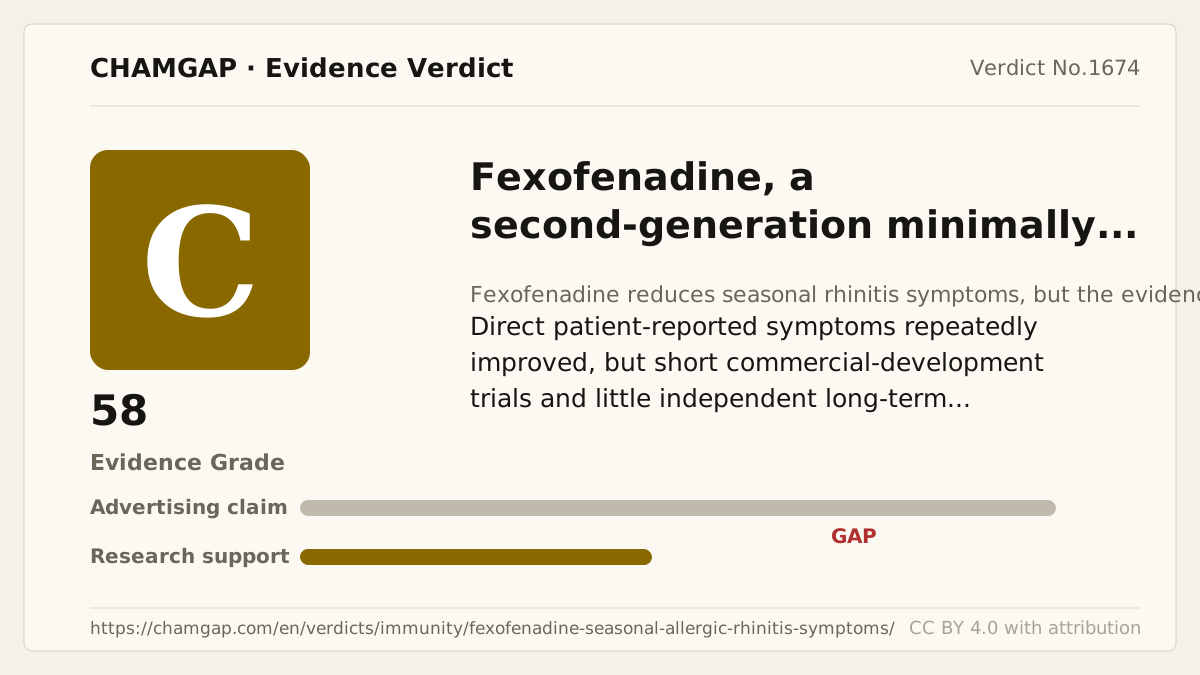
[Chamgap] Fexofenadine x reduction of seasonal allergic rhinitis symptoms — Evidence Grade C·58. 2 cited sources checked. Source: https://chamgap.com/en/verdicts/immunity/fexofenadine-seasonal-allergic-rhinitis-symptoms/ · CC BY 4.0CC BY 4.0 — free to use with attribution; do not distort grades, numbers, or verdict meaning.
What this document does and does not do
Chamgap is an information source. It reports what research has and has not confirmed; it does not tell readers what to take or buy. That decision belongs to readers and, when needed, medical or legal professionals. This verdict reflects literature available up to the search date and may change as new research appears. Nothing here is medical advice.