
Epinephrine,
does it really help with Rapid first-line reversal of respiratory distress, hypotension, and airway edema in anaphylaxis?
research showsImmediate intramuscular epinephrine is rated B as the irreplaceable first-line standard in every major guideline for rapidly reversing respiratory distress, hypotension, and airway edema in anaphylaxis. Placebo-controlled randomization is ethically impossible, however, and no such trial exists: the Cochrane review found zero eligible trials and EAACI rated the certainty of relevant evidence very low. Support comes from guidance, receptor physiology, and observational research; hospitalization was 17% with early versus 43% with later treatment, adjusted OR 0.25. The absence of strong independent large randomized trials prevents an A, while life-saving relevance, universal guidance, and irreplaceability justify the top of B at 79 points. This is below the A score of 88 for vaccines supported by randomized trials and does not weaken the clinical recommendation at all.
ads claimOwning an autoinjector does not eliminate risk or replace medical evaluation. Prompt correct use, repeat dosing when necessary, and emergency observation remain essential.
Useful facts when choosing a product
- Autoinjectors are weight-selected prescription emergency medicines for the outer thigh, and patients and caregivers need repeated device training.
- Anaphylaxis can cause respiratory, laryngeal, or hypotensive symptoms without skin findings, so treatment should not be delayed.
- Persistent or recurrent symptoms may require another intramuscular dose and medical observation after use.
- Expiration, discoloration, and storage should be checked, and device instructions take priority because needle length and delivery vary.
Chamgap Semantic Classification Code
Candidate index · review held
M.epinephrine.UNK.rapid-first-line-reversal-of-respiratory-distress-hypotension-and-airway-edema-in-anaphylaxis.assess.MULTIMedicinal interventions > Epinephrine > Unknown > Rapid first-line reversal of respiratory distress, hypotension, and airway edema in anaphylaxis > Association or change assessment > Multiple: primary unresolved
An automated migration candidate, not an issued permanent code; exact claim scope remains under review. This machine-generated migration candidate helps retrieval but is not a permanent assignment. The original verdict ID and URL remain authoritative.
What the research actually shows
The 2008 Sheikh Cochrane review found zero eligible randomized or quasi-randomized trials. In 384 food-anaphylaxis emergency visits, Fleming 2015 found hospitalization in 17% after early and 43% after later epinephrine, adjusted OR 0.25. WAO 2020, the EAACI 2021 update, and the AAAAI/ACAAI Joint Task Force 2023 practice parameter retain intramuscular epinephrine as first-line treatment. The clinical standard is therefore firm, although no placebo trial precisely estimates effect size and EAACI rated the certainty of relevant evidence very low.
Why this is classified as B (79)
There are zero placebo trials in actual anaphylaxis, the Cochrane review found zero eligible trials, and EAACI rated the certainty of relevant evidence very low, so the A requirement for strong independent large randomized trials is not met. Receptor physiology, hospitalization of 17% versus 43% with early treatment, convergent international guidance, direct life-saving relevance, and lack of a substitute support the top of B at 79 points. This is below the A 88 vaccine benchmark and does not weaken immediate-treatment guidance; adverse effects remain separate safety issues.
Counterpoint. Transient tachycardia or tremor does not create an absolute contraindication; rapid intravenous dosing is restricted to expert monitoring.
Rejudgment record. Cross-check revision — Cross-check: the absence of placebo randomized trials means the A definition is not met; observational evidence and guidance place the claim at the top of B. Incorporated zero eligible Cochrane trials, EAACI very-low-certainty evidence, lower hospitalization with early treatment, universal guidance, life-saving directness, and irreplaceability
Sub-claim grades by effect
This ingredient is marketed for several effects. A single overall grade blends strong and weak claims together, so each effect is graded separately here. The overall grade reflects the strongest disconfirming or core claim.
| Effect (sub-claim) | Grade | Basis |
|---|---|---|
| Rapid reversal of respiratory distress, hypotension, and airway edema | B | Immediate intramuscular treatment is the first-line standard in all major guidance, but placebo trials are ethically unavailable and EAACI rated certainty very low. |
| Lower hospitalization and death risk with early intramuscular dosing | B | Observational evidence found hospitalization of 17% with early versus 43% with later treatment, adjusted OR 0.25; mortality evidence is also observational. |
Cross-check — AI research and Codex final gate
Evidence Table
| Study | Design | Sample | Funding | Endpoint | Result | Weight |
|---|---|---|---|---|---|---|
| Sheikh A et al. 2008 | Cochrane systematic review | Zero eligible randomized or quasi-randomized trials | Academic review with disclosed support | Benefits and harms of epinephrine | No placebo or no-treatment trial existed; intramuscular treatment remained first-line. | Key evidence for the trial gap |
| Fleming JT et al. 2015 | Retrospective chart review | 384 emergency visits | Academic observational study | Early treatment and hospitalization | Hospitalization was 17% versus 43%; adjusted OR 0.25. | Observational direct-outcome evidence |
| Cardona V et al. 2020 WAO | International guidance | Multidisciplinary guidance | WAO | Emergency management | Reaffirmed intramuscular epinephrine as first-line treatment. | Global guidance |
| Muraro A et al. EAACI 2021 update | European multidisciplinary GRADE-based clinical guideline | Systematic evidence review and multidisciplinary recommendations | European Academy of Allergy and Clinical Immunology | Recognition, emergency management, and prevention of anaphylaxis | Strongly recommended intramuscular epinephrine first-line while rating the certainty of relevant evidence very low. | European guidance and certainty assessment |
| Golden DBK et al. 2023 practice parameter | AAAAI/ACAAI Joint Task Force practice-parameter update | Updated literature review and consensus-based recommendations | AAAAI/ACAAI Joint Task Force on Practice Parameters | Diagnosis, emergency management, and follow-up of anaphylaxis | Reaffirmed epinephrine as first-line treatment for anaphylaxis. | United States joint practice guidance |
Receipt — 5 References
All 5 cited sources were verified for existence at the original page (as of 2026-07-20).
Final verification and publication gate: Codex · Evidence date: 2026-07-20 · Corrections: none
Cite this verdict
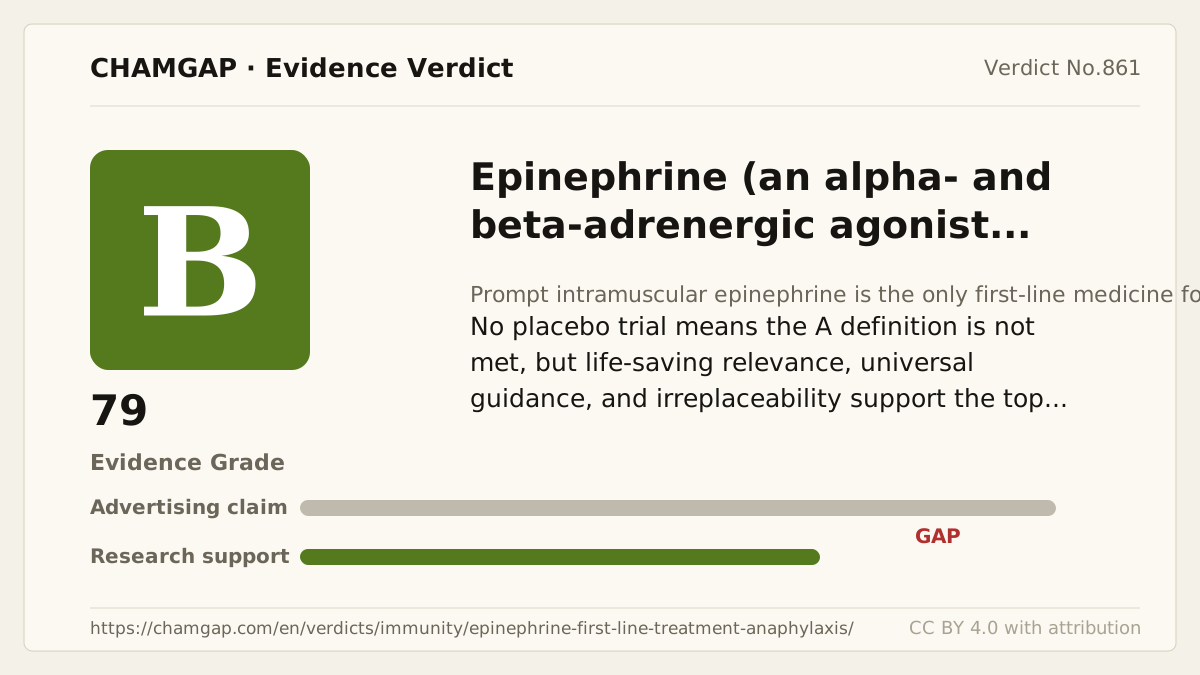
[Chamgap] Epinephrine x rapid reversal of respiratory distress and hypotension in anaphylaxis — Evidence Grade B·79. 5 cited sources checked. Source: https://chamgap.com/en/verdicts/immunity/epinephrine-first-line-treatment-anaphylaxis/ · CC BY 4.0CC BY 4.0 — free to use with attribution; do not distort grades, numbers, or verdict meaning.
What this document does and does not do
Chamgap is an information source. It reports what research has and has not confirmed; it does not tell readers what to take or buy. That decision belongs to readers and, when needed, medical or legal professionals. This verdict reflects literature available up to the search date and may change as new research appears. Nothing here is medical advice.