
Emtricitabine-tenofovir DF PrEP,
does it really help with Prevention of HIV acquisition with adherent pre-exposure prophylaxis?
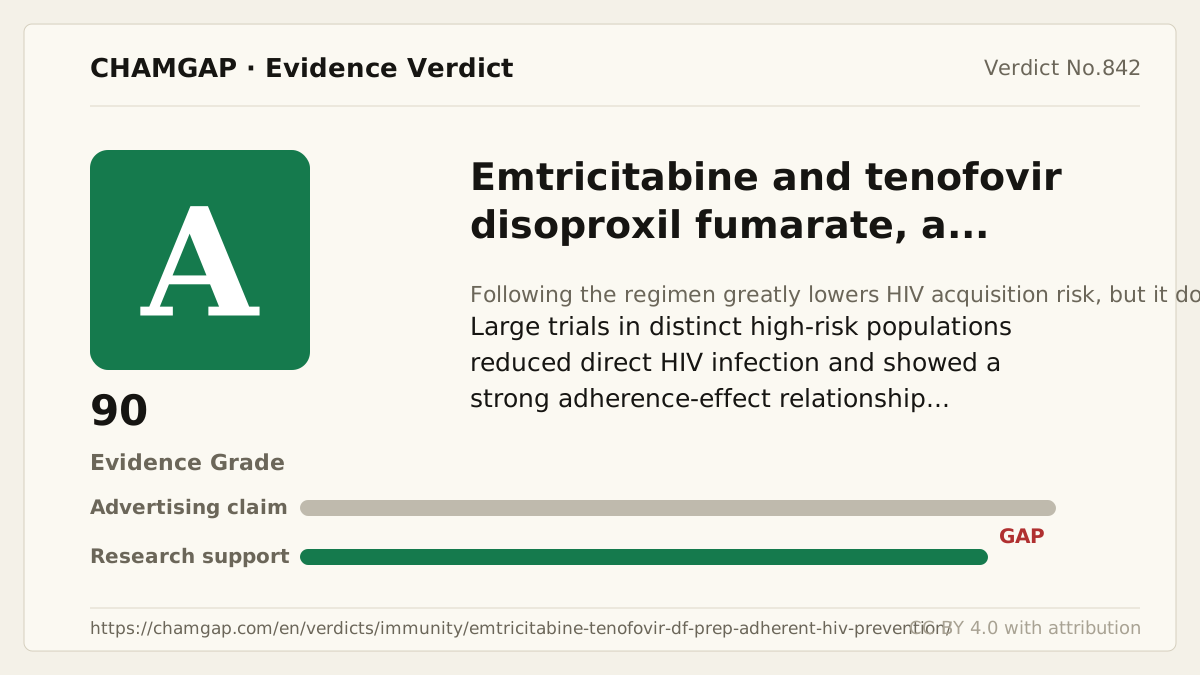
research showsEmtricitabine-tenofovir DF PrEP receives A with 90 points. In iPrEx, involving 2,499 participants, overall HIV incidence fell by 44% and protection was much greater when drug was detectable in blood. Among 4,747 heterosexual serodiscordant couples in Partners PrEP, FTC/TDF reduced HIV acquisition by 75%. Independent large randomized trials repeatedly used the direct infection endpoint in different populations, and drug-concentration analyses showed approximately 90% or greater protection with high adherence and a strong dose-response relationship. Effectiveness nevertheless depends heavily on taking the medicine, and PrEP neither prevents other sexually transmitted infections nor replaces all other sexual-health measures.
ads claimAn HIV prevention pill does not mean an impenetrable shield despite missed doses or omitted testing. PrEP targets HIV and does not prevent gonorrhea, chlamydia, syphilis, other sexually transmitted infections, or pregnancy.
Useful facts when choosing a product
- FTC/TDF PrEP is an antiretroviral combination prescribed after confirming HIV-negative status and assessing exposure risk, kidney function, and hepatitis B status.
- Protection depends strongly on following the prescribed regimen, and frequent missed doses lower effectiveness.
- Regular HIV testing and kidney assessment are needed during use, and suspected acute HIV infection must not be managed by starting or continuing PrEP alone.
- The medicine does not prevent other sexually transmitted infections or pregnancy, so condoms, screening, vaccination, and broader sexual-health care remain important.
Chamgap Semantic Classification Code
Candidate index · review held
M.emtricitabine-and-tenofovir-disoproxil-fumarate.UNK.hiv-acquisition-with-adherent-pre-exposure-prophylaxis.prevent.placeboMedicinal interventions > Emtricitabine and tenofovir disoproxil fumarate > Unknown > HIV acquisition with adherent pre-exposure prophylaxis > Occurrence-prevention claim > Placebo
An automated migration candidate, not an issued permanent code; exact claim scope remains under review. This machine-generated migration candidate helps retrieval but is not a permanent assignment. The original verdict ID and URL remain authoritative.
What the research actually shows
iPrEx randomized 2,499 HIV-negative men or transgender women to daily FTC/TDF or placebo, reducing infection by 44%, while drug detection was markedly lower in cases. A follow-up concentration analysis estimated 96% risk reduction at concentrations corresponding to four doses weekly and 99% with daily dosing. Partners PrEP randomized 4,747 heterosexual serodiscordant couples at nine African sites to TDF, FTC/TDF, or placebo and reduced infection risk by 75% with FTC/TDF. Renal analysis found a small nonprogressive eGFR decline, and bone density also falls slightly, supporting periodic monitoring.
Why this is classified as A (90)
Independent large iPrEx and Partners PrEP trials reduced direct HIV infection in different populations, with a strong drug-concentration and protection relationship. Because adherence is explicit in the claim, real-world dilution is not hidden, supporting A with 90 points. Kidney function, bone density, and early gastrointestinal symptoms remain separate safety issues.
Counterpoint. Exposure type, kidney function, hepatitis B status, and dosing feasibility may make another PrEP option more appropriate than daily oral FTC/TDF.
Rejudgment record. New verdict — Large independent randomized trials including iPrEx and Partners PrEP repeatedly reduced the direct HIV infection endpoint across distinct populations and demonstrated a strong drug-concentration adherence-protection relationship
Sub-claim grades by effect
This ingredient is marketed for several effects. A single overall grade blends strong and weak claims together, so each effect is graded separately here. The overall grade reflects the strongest disconfirming or core claim.
| Effect (sub-claim) | Grade | Basis |
|---|---|---|
| Prevention of HIV acquisition with adherence | A | Independent large trials in distinct high-risk populations repeatedly reduced the direct infection endpoint. |
| Dependence of effectiveness on adherence | A | A strong dose-response relationship linked detectable drug concentrations with HIV protection. |
| Prevention of other sexually transmitted infections | F | FTC/TDF targets HIV and does not prevent gonorrhea, chlamydia, syphilis, or other sexually transmitted infections. |
| Complete replacement for condoms and regular testing | F | Condoms and regular testing remain relevant for other infections and confirmation and monitoring of HIV-negative status. |
Cross-check — AI research and Codex final gate
Evidence Table
| Study | Design | Sample | Funding | Endpoint | Result | Weight |
|---|---|---|---|---|---|---|
| Grant RM et al. 2010 iPrEx | Multinational randomized double-blind placebo-controlled trial | 2,499 HIV-negative men and transgender women | United States NIH and the Bill & Melinda Gates Foundation | Incident HIV infection during follow-up | There were 36 infections with FTC/TDF and 64 with placebo, a 44% reduction, and drug detection was strongly associated with protection. | Key independent large direct randomized trial |
| Baeten JM et al. 2012 Partners PrEP | Three-arm multinational randomized double-blind placebo-controlled trial | 4,747 heterosexual HIV-serodiscordant couples | Bill & Melinda Gates Foundation and United States NIH, with donated study drug | HIV-1 acquisition | FTC/TDF reduced HIV acquisition risk by 75% versus placebo. | Key replicated independent large direct randomized trial |
| Anderson PL et al. 2012 iPrEx concentration analysis | Nested drug-concentration case-control and dose-response analysis within a randomized trial | iPrEx infection cases and matched controls with directly observed STRAND dosing data | Public support including the United States NIH | Intracellular TFV-DP concentration and HIV acquisition risk | Concentrations corresponding to four weekly doses estimated 96% risk reduction and daily dosing 99%. | Key mechanistic-clinical link for the adherence condition |
Receipt — 4 References
All 4 cited sources were verified for existence at the original page (as of 2026-07-20).
Final verification and publication gate: Codex · Evidence date: 2026-07-20 · Corrections: none
Cite this verdict
[Chamgap] Emtricitabine-tenofovir DF PrEP x prevention of HIV acquisition with adherence — Evidence Grade A·90. 4 cited sources checked. Source: https://chamgap.com/en/verdicts/immunity/emtricitabine-tenofovir-df-prep-adherent-hiv-prevention/ · CC BY 4.0CC BY 4.0 — free to use with attribution; do not distort grades, numbers, or verdict meaning.
What this document does and does not do
Chamgap is an information source. It reports what research has and has not confirmed; it does not tell readers what to take or buy. That decision belongs to readers and, when needed, medical or legal professionals. This verdict reflects literature available up to the search date and may change as new research appears. Nothing here is medical advice.